

Solidarity: The Polish Union That Changed the World!
Images

KWK Wujek


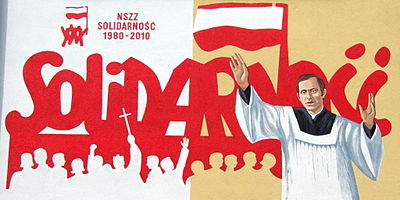

The Genesis of an Unprecedented Movement
The Independent Self-Governing Trade Union 'Solidarity' (Niezależny Samorządny Związek Zawodowy „Solidarność”) emerged not merely as a labor organization but as a powerful social phenomenon. Its origins trace back to the August 1980 strikes at the Lenin Shipyard in Gdańsk, Poland. These strikes, initially focused on economic grievances, quickly evolved into a broader demand for political freedoms and workers' rights.
Solidarity's establishment was a watershed moment, marking the first time a state in the Soviet bloc officially recognized an independent trade union. This defiance of the established political order, which strictly controlled labor and suppressed dissent, sent shockwaves across Eastern Europe. The union's membership rapidly swelled, reaching an astonishing 10 million by September 1981, representing a staggering one-third of Poland's working-age population.
This immense popular backing transformed Solidarity from a trade union into a nationwide civic movement, embodying the aspirations of a society yearning for change and self-determination.
Navigating Repression
The Polish government, under immense pressure from Moscow, responded to Solidarity's growing influence with severe repression. In December 1981, martial law was imposed, leading to the arrest of thousands of activists and the outlawing of the union. The state apparatus sought to dismantle Solidarity through political persecution and propaganda.
However, the movement proved remarkably resilient. Operating clandestinely, Solidarity maintained its organizational structure and continued its resistance efforts. Crucially, it garnered significant international support, including substantial financial aid from the Vatican and the United States.
This external backing was vital for sustaining the underground network, funding publications, and supporting families of imprisoned activists. The union's ability to survive and regroup under such oppressive conditions demonstrated the deep-seated commitment of its members and the growing international solidarity with their cause, setting the stage for future negotiations.
The Round Table Talks and the Dawn of Pluralism
The late 1980s witnessed a shift in the political climate, driven partly by internal pressures within Poland and broader changes in the Soviet Union under Mikhail Gorbachev. Solidarity, having weathered years of repression, re-emerged as a key negotiating partner. The pivotal moment arrived with the 1989 Round Table Talks, a series of negotiations between the communist government and the Solidarity-led opposition.
These talks were unprecedented, signaling a willingness from the authorities to engage with civil society. The outcome was a landmark agreement that paved the way for semi-free legislative elections in June 1989. Solidarity's success in these elections was overwhelming, leading to the formation of the first non-communist-led government in Poland since the 1940s by August of that year.
This event was a critical domino in the collapse of communist regimes across Eastern Europe, demonstrating the power of negotiated transition and peaceful revolution.
Lech Wałęsa's Presidency and Solidarity's Evolving Role
The culmination of Solidarity's political struggle arrived in December 1990 when its iconic leader, Lech Wałęsa, was elected President of Poland. This marked a definitive end to communist rule and the beginning of Poland's transition to a democratic and market-based economy. Wałęsa's presidency, however, also ushered in a new set of challenges.
The subsequent decade saw extensive privatization of state assets and the implementation of liberal economic policies. This economic transformation, while necessary for modernization, had a profound impact on Solidarity's membership base. As the industrial landscape shifted and state-owned enterprises were dismantled or restructured, the union's traditional power base eroded.
By 2010, its membership had plummeted by over 90% from its peak. Despite this decline, Solidarity's legacy as a transformative force remains undeniable. It stands as a testament to the power of collective action, civil resistance, and the enduring human desire for freedom and dignity, continuing to advocate for workers' rights in contemporary Poland.
Enduring Significance and Global Resonance
Solidarity's significance extends far beyond Poland's borders. It served as a powerful inspiration for democratic movements across the globe, demonstrating that even seemingly insurmountable authoritarian systems could be challenged and changed through sustained, organized, and non-violent resistance. The union's success provided a blueprint and a moral boost for dissidents in other Eastern Bloc countries, contributing to the broader wave of democratization that swept the region in the late 1980s and early 1990s.
The award of the Nobel Peace Prize to Lech Wałęsa in 1983 underscored the international recognition of Solidarity's struggle for human rights and peaceful change. While its membership numbers have decreased significantly in the post-communist era, Solidarity's historical role as a catalyst for the end of the Cold War and the re-establishment of democracy in Eastern Europe is indelible. It continues to be a symbol of the power of collective action and the pursuit of justice, reminding us that ordinary citizens, when united, can indeed change the course of history.
See also
Frequently Asked Questions
What was Solidarity?+
How did Solidarity start?+
Why was Solidarity so important?+
What did the government do to stop Solidarity?+
Who became president after Solidarity won the elections?+
Based on content from Wikipedia · Licensed under CC BY-SA 4.0