

Sol de Mañana: Bolivia's Steaming Surprise!
Images
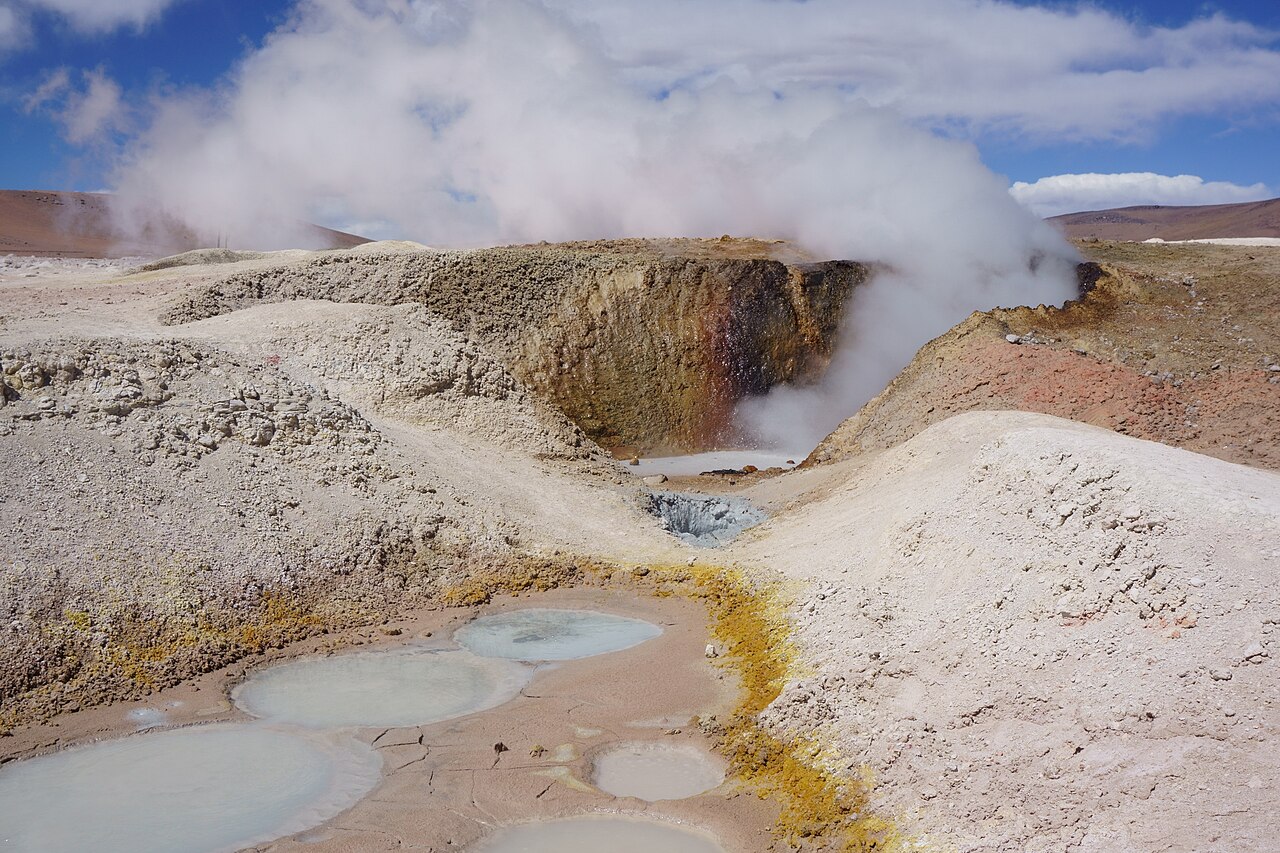
Sol de Mañana 2018


Geological Dynamics of Sol de Mañana
Sol de Mañana is a prime example of active geothermal systems found in volcanically and tectonically active regions. Situated at an extreme altitude of approximately 4,900 meters (16,100 feet) in southern Bolivia, its location is geologically significant, lying within the Altiplano region, a vast high-altitude plateau formed by tectonic uplift and volcanic activity. The geothermal manifestations observed here-fumaroles, hot springs, and mud pools-are direct results of subsurface heat transfer.
This heat originates from the Earth's mantle and crust, likely driven by underlying magmatic intrusions associated with the Andean volcanic arc. Water, percolating through fractured rock formations, becomes superheated by this thermal energy. As this hot fluid rises, it loses pressure, causing dissolved gases to flash into steam, which then escapes to the surface through fissures, creating fumaroles. The interaction of this hot, mineral-rich water with surface materials, including clay and volcanic ash, results in the characteristic bubbling and churning of mud pools.
The presence of sulfurous gases often gives these areas a distinct odor, a common characteristic of active geothermal fields worldwide.
A History of Exploration and Future Potential
The scientific and economic interest in Sol de Mañana dates back to the 1970s when initial prospecting began to assess its potential for geothermal power generation. Geothermal energy is a highly attractive renewable resource due to its consistent availability and low environmental impact compared to fossil fuels. However, after the initial phase of research, development efforts were paused for several decades. This period of inactivity allowed for natural processes to continue undisturbed and for further geological understanding to develop.
The renewed interest and recommencement of research in 2010 signify a global push towards diversifying energy portfolios with sustainable sources. Ongoing development as of 2023 indicates a serious consideration of harnessing this natural heat for electricity. This involves complex engineering challenges, including drilling, well construction, and the installation of power generation equipment, all while operating in a harsh, high-altitude environment and within a protected ecological reserve.
The success of these endeavors could provide a significant source of clean energy for Bolivia.
Ecological and Tourism Significance
Sol de Mañana is strategically located within the Eduardo Avaroa Andean Fauna National Reserve, a protected area crucial for conserving the unique biodiversity of the high Andes. This reserve is home to iconic species such as flamingos, vicuñas, and Andean condors, and its protection is paramount. The geothermal features themselves create a unique micro-environment that can support specialized extremophile organisms, though the harsh conditions limit widespread flora and fauna directly within the hottest zones.
Beyond its ecological value, Sol de Mañana is a significant tourism attraction. It lies along a popular route connecting major tourist hubs like Uyuni and Antofagasta, drawing visitors eager to witness Earth's raw geological power. This tourism contributes to the local economy and raises awareness about the importance of natural conservation.
Balancing the potential for geothermal energy development with the imperative to protect this fragile ecosystem and its tourism appeal is a critical challenge that requires careful planning and sustainable practices.
The Science of Geothermal Energy Production
Harnessing geothermal energy, as is being explored at Sol de Mañana, involves tapping into the Earth's internal heat. The process typically begins with geological surveys to identify areas with high subsurface temperatures and permeable rock formations. Once a suitable site is confirmed, wells are drilled deep into the Earth to access the geothermal reservoirs of hot water and steam.
This superheated fluid is then brought to the surface. In a flash steam system, the reduction in pressure causes the hot water to vaporize into steam, which directly drives a turbine connected to a generator, producing electricity. In a binary cycle system, the hot geothermal fluid is used to heat a secondary fluid with a lower boiling point, which then vaporizes and drives the turbine.
The cooled geothermal fluid is often reinjected back into the reservoir to maintain pressure and sustainability. Sol de Mañana's potential lies in its high-temperature resources, which are ideal for efficient electricity generation, offering a continuous and reliable power source that is not dependent on weather conditions, unlike solar or wind power.
Broader Implications and Related Fields
The study and development of geothermal fields like Sol de Mañana have far-reaching implications. It directly contributes to the field of renewable energy, offering a pathway to reduce reliance on fossil fuels and mitigate climate change. Geothermal exploration also advances our understanding of Earth's internal processes, volcanology, and plate tectonics.
Furthermore, the challenges of operating in high-altitude, remote, and ecologically sensitive areas push the boundaries of engineering and environmental management. Related scientific disciplines include geology, geophysics, hydrology, and environmental science. The economic aspects involve resource assessment, project financing, and the development of local expertise.
As global energy demands rise and the urgency to transition to sustainable sources intensifies, sites like Sol de Mañana become increasingly important not just as natural wonders but as vital components of a future energy landscape.
See also
Frequently Asked Questions
What is Sol de Mañana?+
Why does Sol de Mañana smell like eggs?+
How high is Sol de Mañana?+
Where can people visit Sol de Mañana?+
Why are scientists interested in Sol de Mañana?+
Based on content from Wikipedia · Licensed under CC BY-SA 4.0