

Sol
Images

Puesta de Sol en Acapulco


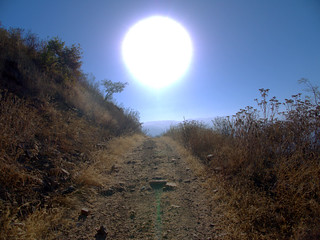


Sol
Sol, universally recognized as the Sun, is a G2V star, a classification that places it as a main-sequence star of intermediate mass and temperature. Its immense gravitational pull dictates the orbital mechanics of the entire solar system, from the innermost rocky planets to the distant Kuiper Belt objects. Sol's radiant energy, generated through continuous nuclear fusion, is the primary driver of Earth's climate, weather systems, and biosphere.
It is the anchor of our solar system, providing the fundamental energy budget that makes complex life possible. Understanding Sol is crucial for comprehending stellar evolution, planetary formation, and the conditions necessary for habitability beyond our own world. Its predictable behavior allows for precise astronomical calculations and technological applications like solar power.
Chronicles of a Star
Sol's genesis dates back approximately 4.6 billion years to the gravitational collapse of a vast molecular cloud, a nebula rich in hydrogen, helium, and heavier elements forged in previous stellar generations. As the core of this collapsing cloud became dense and hot enough, nuclear fusion ignited, marking the birth of Sol and the dawn of the solar system. For the past 4.6 billion years, Sol has been steadily fusing hydrogen into helium in its radiative and convective zones, a process that will continue for another 5 billion years.
Its current phase as a main-sequence star is characterized by relative stability. However, Sol's future evolution will involve expanding into a red giant, engulfing the inner planets, before shedding its outer layers and contracting into a white dwarf, leaving behind a planetary nebula.
The Indispensable Influence of Sol on Earth's Systems
The significance of Sol to Earth extends far beyond mere illumination. Its electromagnetic radiation, particularly in the visible and ultraviolet spectrum, is the fundamental energy input for photosynthesis, the cornerstone of terrestrial food webs. The differential heating of Earth's surface by Sol drives atmospheric circulation, creating wind patterns and influencing global weather phenomena.
Solar energy also powers the water cycle through evaporation. Furthermore, Sol's magnetic field and the solar wind it emits interact with Earth's magnetosphere, creating auroras and influencing satellite operations and communication systems. The very rhythm of life on Earth, from circadian cycles to seasonal changes, is dictated by Sol's apparent movement across the sky.
The Engine Room
At the heart of Sol lies its core, a region of extreme temperature (around 15 million Kelvin) and pressure where nuclear fusion occurs. Here, protons (hydrogen nuclei) undergo a series of reactions, primarily the proton-proton chain, to form helium nuclei. This process converts mass into energy according to Einstein's famous equation, E=mc².
This energy then propagates outward through Sol's interior via radiation and convection. The visible surface, the photosphere, emits the light we see. Sol's complex magnetic field, generated by the movement of charged particles within its interior, gives rise to phenomena like sunspots, solar flares, and coronal mass ejections (CMEs), which can have significant impacts on space weather and technology.
Sol's Place in the Cosmic Tapestry
Sol is not unique; it is one of billions of G-type stars in the Milky Way galaxy. However, its proximity makes it an invaluable subject for scientific study. By observing Sol, astronomers gain insights into the processes common to many stars, including their formation, energy generation, and eventual demise.
Its planetary system, the Solar System, serves as a crucial case study for understanding planetary formation and the diversity of exoplanetary systems discovered around other stars. The study of Sol's activity, such as solar flares and CMEs, also informs our understanding of space weather and its potential hazards to astronauts, satellites, and terrestrial power grids, highlighting its relevance to modern technological society.
See also
Frequently Asked Questions
What is Sol and why is it important for Earth?+
How does Sol make light and heat?+
Why does Sol have sunspots and solar flares?+
What will happen to Sol in the future?+
How does Sol help plants grow?+
Based on content from Wikipedia · Licensed under CC BY-SA 4.0