

Soap: The Super Cleaner!
Images
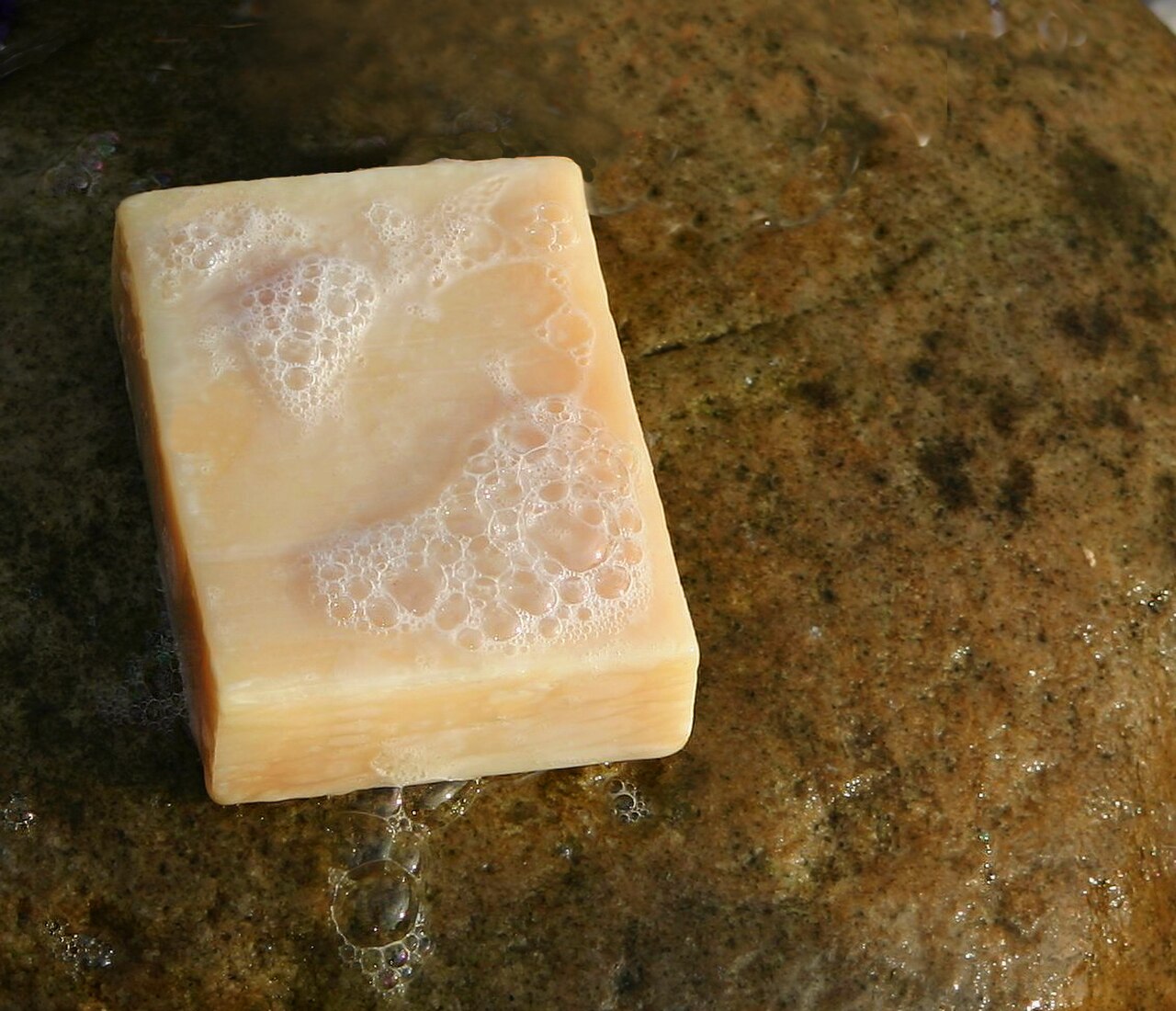
Soap


The Molecular Dance
Soap's efficacy as a cleaning agent is rooted in its amphipathic molecular structure. A typical soap molecule, a salt of a fatty acid, possesses a long hydrocarbon tail that is hydrophobic (water-repelling) and lipophilic (oil-attracting), and a polar carboxylate head that is hydrophilic (water-attracting). This dual nature is key to its function.
When introduced to a mixture of water and oil (like skin oils and dirt), the hydrophobic tails embed themselves into the oily substances, while the hydrophilic heads remain oriented towards the surrounding water. This arrangement causes the oil and dirt to be surrounded by soap molecules, forming structures called micelles. The water then easily rinses away these micelles, effectively lifting and dispersing the grime.
This process, known as emulsification, is fundamental to how soap cleanses surfaces and skin, making it an indispensable tool for hygiene.
A Chronicle of Cleansing
The history of soap is a testament to humanity's persistent quest for cleanliness and health. Archaeological evidence suggests that rudimentary soap-like substances were produced as early as 2800 BC by the Babylonians, who combined animal fats with wood ash. Ancient Egyptians and Romans also utilized early forms of soap, often for medicinal or textile purposes rather than widespread personal hygiene.
For centuries, soap production remained a relatively small-scale, artisanal craft, often involving the boiling of animal fats with alkaline lye derived from wood ash. The true industrialization of soap manufacturing began in the late 18th and 19th centuries with the development of more efficient chemical processes, such as the Leblanc process and later the Solvay process, for producing sodium carbonate (soda ash), a key alkali. This dramatically lowered production costs, enabling mass manufacturing and making soap accessible to the general populace, profoundly impacting public health and societal standards of living.
The Indispensable Role of Soap in Public Health and Beyond
Soap's significance extends far beyond mere personal cleanliness; it is a cornerstone of modern public health infrastructure. The simple act of handwashing with soap and water is recognized by global health organizations as one of the most critical interventions for preventing the transmission of infectious diseases. By effectively removing pathogens like bacteria and viruses, soap significantly reduces the incidence of illnesses ranging from gastrointestinal infections to respiratory diseases.
Beyond its direct health benefits, soap production is a major global industry, employing numerous people and contributing to economies worldwide. Furthermore, the principles of surfactant chemistry, pioneered by soap development, have led to a vast array of other applications in detergents, cosmetics, pharmaceuticals, and industrial processes, highlighting soap's foundational importance in both daily life and technological advancement.
The Chemistry of Soap
The core chemical reaction behind soap making is saponification, the hydrolysis of an ester (fat or oil) with a base (alkali) to produce an alcohol and a salt of a fatty acid. Traditionally, this involved reacting triglycerides (fats and oils) with strong alkalis like sodium hydroxide (lye) for hard soaps or potassium hydroxide for soft soaps. Modern soap manufacturing often employs more sophisticated techniques, including continuous processes and the use of synthetic detergents, which are chemically distinct but perform similar functions.
While traditional soaps are biodegradable and derived from natural sources, synthetic detergents can be engineered for specific properties, such as enhanced performance in hard water or greater stability. Understanding saponification is crucial not only for soap production but also for comprehending the behavior of fats and oils in various chemical and biological systems.
Beyond the Bar
The fundamental principles of soap chemistry have paved the way for a wide spectrum of applications that extend far beyond personal hygiene. The ability of surfactants to reduce surface tension and interact with both polar and nonpolar substances makes them invaluable in numerous industries. In household cleaning, detergents are formulated with various surfactants, builders, and enzymes to tackle different types of stains and soils.
In industry, surfactants are used as emulsifiers in the production of plastics, paints, and adhesives; as wetting agents in agriculture to improve pesticide distribution; and as foaming agents in fire-fighting foams. The pharmaceutical industry utilizes surfactants in drug delivery systems to enhance absorption. Even in food production, emulsifiers derived from fatty acids play a role in creating stable food products.
This demonstrates how the basic science of soap has evolved into a sophisticated field with far-reaching technological and economic implications.
Go deeper
Frequently Asked Questions
What makes soap so good at cleaning dirt and germs?+
How does soap work on a tiny level to lift dirt from skin?+
When did people first start making soap?+
Why is handwashing with soap important for keeping people healthy?+
What are some other things that soap helped invent or improve?+
Based on content from Wikipedia · Licensed under CC BY-SA 4.0