

Snow White and the Seven Dwarfs (1937 movie)
Images

Snow White and the Seven Dwarfs


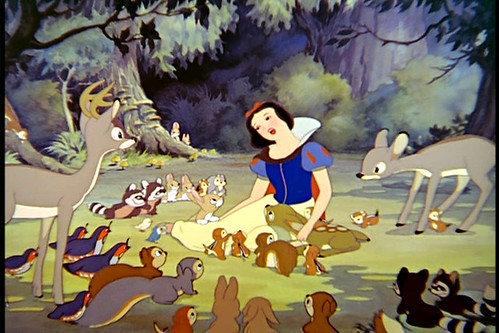


Challenging the Status Quo
In the 1930s, the notion of a full-length animated feature film was considered a pipe dream, a financially ruinous endeavor. Walt Disney, however, possessed an unshakeable conviction that animation could transcend its status as a novelty for short subjects and evolve into a powerful narrative medium. This ambition was met with widespread skepticism, famously dubbed 'Disney's Folly' by his peers and even his brother, Roy. The production process was a Herculean task, demanding unprecedented levels of artistic collaboration and technical innovation.
Hundreds of artists, animators, inkers, and painters worked tirelessly for over three years, developing sophisticated techniques for character animation, multiplane camera work for depth, and synchronized sound to create a seamless and immersive cinematic experience. The film's success was not merely a commercial triumph; it was a validation of Disney's artistic vision and a fundamental shift in what audiences and the industry believed animation was capable of achieving.
Character Archetypes and Narrative Depth
The seven dwarfs are far more than simple caricatures; they represent a spectrum of human personality traits, rendered with remarkable nuance for their time. Doc embodies intellectualism, often undermined by his own verbal tics, while Grumpy's cynicism masks a deep capacity for loyalty and affection. Happy, Sleepy, Bashful, Sneezy, and Dopey further explore different facets of human experience, from joy and fatigue to shyness and physical comedy.
Their communal living and mining operations establish a utopian ideal, a stark contrast to the encroaching darkness represented by the Queen. The detailed design of their cottage and the surrounding forest, brought to life through innovative animation techniques, created a believable and enchanting world that resonated deeply with audiences, establishing a benchmark for animated set design and character interaction.
The Archetypal Villain
The Evil Queen stands as one of cinema's most enduring and psychologically complex villains. Her motivation is rooted in a profound narcissism, fueled by her enchanted mirror, which serves as a constant validation of her perceived superiority. When Snow White surpasses her in beauty, the Queen's vanity transforms into a destructive obsession.
Her descent into increasingly desperate and sinister plots-hiring a huntsman, attempting to suffocate Snow White, and finally delivering the poisoned apple-illustrates the corrupting nature of unchecked jealousy and the lengths to which a desire for absolute control can lead. The visual design of the Queen, particularly her transformation into the hag, is a masterful depiction of inner ugliness manifesting externally, a powerful visual metaphor that continues to captivate and disturb audiences.
The Climax and Its Cinematic Resonance
The film's climax, where Snow White lies in an enchanted sleep, is a moment of profound emotional weight. The dwarfs' collective despair underscores the gravity of the Queen's malice, while the arrival of the Prince offers a narrative resolution steeped in the romantic ideals of the fairy tale. His kiss, a trope of true love's power, not only awakens Snow White but also symbolically awakens the film industry to the potential of animation.
The unprecedented financial success of 'Snow White and the Seven Dwarfs' shattered the prevailing skepticism surrounding animated features. It proved that audiences would embrace longer, more emotionally resonant animated narratives, thereby legitimizing animation as a major cinematic art form and directly paving the way for the subsequent golden age of Disney animation and the broader animation industry worldwide.
A Legacy Forged in Innovation and Storytelling
The impact of 'Snow White and the Seven Dwarfs' extends far beyond its narrative. It was a crucible of innovation, pioneering techniques that would become standard in animation. The multiplane camera, for instance, created a sense of depth and parallax that was revolutionary, making the animated world feel more tangible.
The film's success also established the Walt Disney Company as a dominant force in entertainment, setting a precedent for future animated classics. Its influence can be seen in countless films, television shows, and even theme park attractions. The enduring appeal of Snow White and her companions lies not just in their story, but in the groundbreaking artistry and ambitious storytelling that Walt Disney dared to bring to the screen, forever changing the landscape of cinema.
See also
Based on content from Wikipedia · Licensed under CC BY-SA 4.0