

Small Solar System Bodies: The Solar System's Other Stuff!
Images
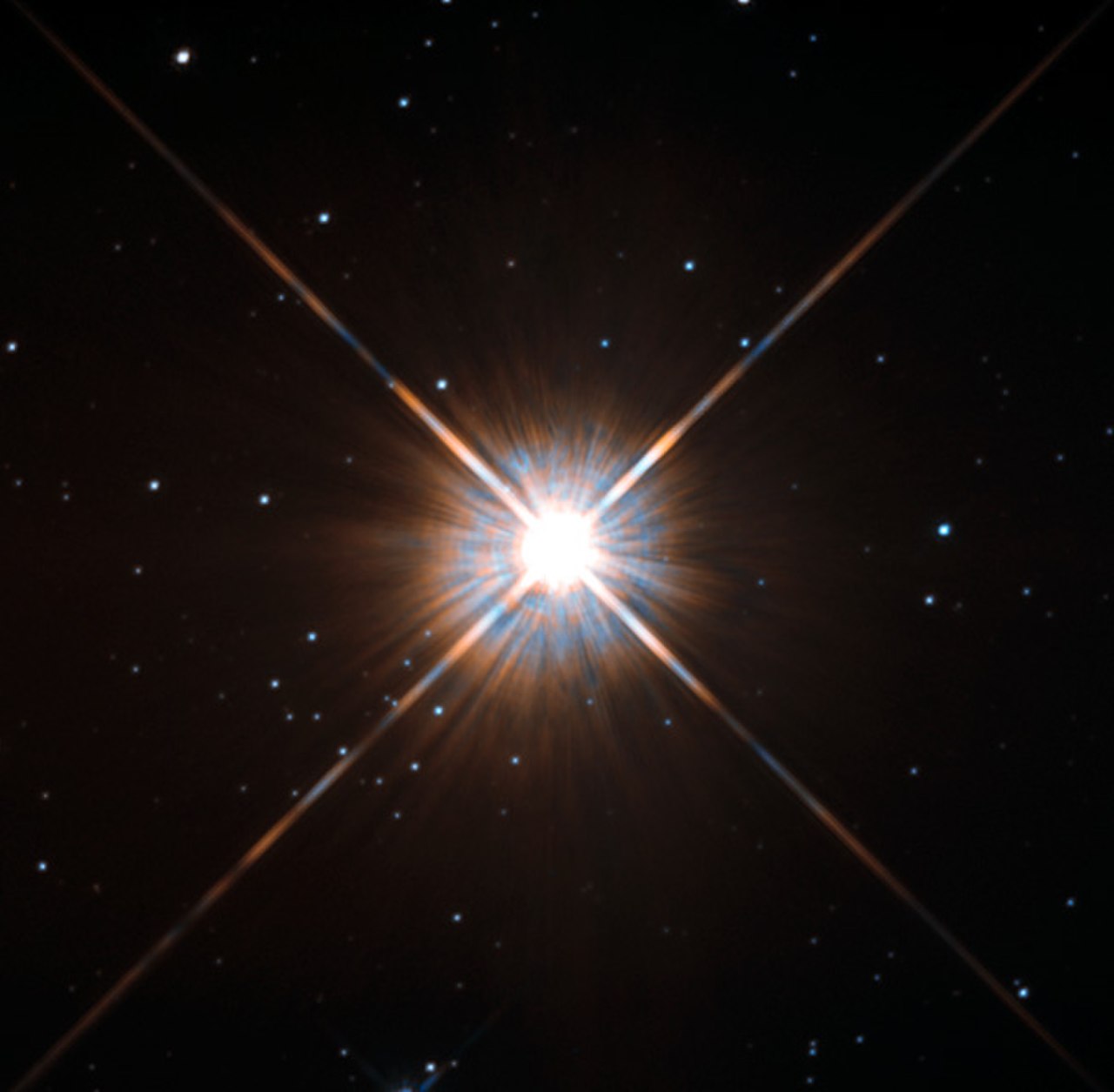
New shot of Proxima Centauri, our nearest neighbour


The IAU's 2006 Definition
The formal definition of a Small Solar System Body (SSSB) emerged from the International Astronomical Union's (IAU) 2006 resolution, which sought to clarify the celestial hierarchy within our Solar System. This definition explicitly excludes objects classified as planets, dwarf planets, and natural satellites, thereby creating a distinct category for the myriad of smaller celestial bodies. The IAU's wording, 'All other objects, except satellites, orbiting the Sun shall be referred to collectively as 'Small Solar System Bodies'', is comprehensive.
It encompasses not only the well-known comets and classical asteroids (excluding Ceres, which is a dwarf planet) but also Trojan asteroids, Centaurs, and Trans-Neptunian Objects (TNOs). This categorization is vital for astronomical research, allowing for focused study of these objects' unique characteristics and their collective role in the Solar System's architecture and evolution. It distinguishes them from larger, gravitationally dominant bodies and highlights their status as primordial material.
Primordial Archives
Small Solar System Bodies are invaluable scientific artifacts, representing the pristine material from the protoplanetary disk that coalesced to form our Solar System approximately 4.6 billion years ago. Unlike planets, which have undergone significant geological processing, differentiation, and atmospheric evolution, many SSSBs have remained largely unchanged since their formation. Their orbits, often stable and distant, have protected them from the intense heat and gravitational interactions that reshaped larger bodies.
This preservation makes them akin to time capsules, containing chemical and isotopic signatures of the early solar nebula. Studying their composition allows scientists to reconstruct the physical and chemical conditions of the primordial disk, including temperature gradients, elemental abundances, and the presence of volatile compounds, offering direct evidence for theories of planetary formation and the distribution of materials in the nascent Solar System.
Scientific Significance
The scientific importance of SSSBs cannot be overstated. Comets, with their volatile ice content, serve as crucial probes of the outer Solar System's composition and delivery mechanisms for water and organic molecules to the inner planets, potentially seeding the origins of life. Asteroids, particularly those in the main belt and near-Earth objects (NEOs), provide insights into the processes of accretion, collision, and the early differentiation of planetesimals.
Their study also informs planetary defense strategies against potential impact hazards. Furthermore, the diversity of SSSBs, from the icy TNOs in the Kuiper Belt to the rocky asteroids, helps us understand the complex gravitational dynamics that shaped the Solar System, including the migration of giant planets and the scattering of smaller bodies. Their orbits and compositions are direct records of these dynamic events.
A Spectrum of Objects
The SSSBs category is remarkably diverse, encompassing several distinct groups. Comets are characterized by their highly elliptical orbits and the development of a coma and tail when near the Sun, originating from the Kuiper Belt and Oort Cloud. Asteroids are predominantly rocky or metallic bodies, with the majority residing in the main asteroid belt between Mars and Jupiter.
Trojan asteroids are a unique group that share an orbit with a planet, occupying stable Lagrange points (L4 and L5). Centaurs are icy bodies with unstable orbits that cross the paths of giant planets, exhibiting characteristics of both asteroids and comets. Trans-Neptunian Objects (TNOs) are a broad classification for bodies beyond Neptune, including those in the Kuiper Belt and the more distant scattered disk, many of which are icy and represent a significant population of SSSBs, with some being large enough to be classified as dwarf planets.
Modern Relevance
The study of Small Solar System Bodies is an active frontier in space exploration. Missions like Rosetta to Comet 67P/Churyumov-Gerasimenko and OSIRIS-REx to asteroid Bennu have provided unprecedented data and samples, revolutionizing our understanding of cometary and asteroidal composition and evolution. Future missions aim to further explore these bodies for scientific research, resource potential (e.g., water ice, rare metals), and planetary defense.
The ongoing discovery and characterization of SSSBs, including the potential identification of new dwarf planets and other unique objects, continue to refine our models of Solar System formation and evolution. Their accessibility and primordial nature make them prime targets for both robotic and, potentially in the future, human exploration, offering tangible links to the origins of our cosmic home and the potential for extraterrestrial resources.
See also
Frequently Asked Questions
What are Small Solar System Bodies?+
Why do scientists study Small Solar System Bodies?+
How do comets differ from asteroids?+
Where can we find different types of Small Solar System Bodies?+
Are Small Solar System Bodies dangerous to Earth?+
Based on content from Wikipedia · Licensed under CC BY-SA 4.0