

Slyudyanka
Images

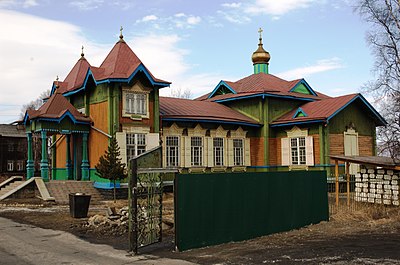
Church of Saint Nicholas in Slyudyanka (September 2025) - 2



Geopolitical and Environmental Significance
Slyudyanka occupies a geographically strategic position at the southern extremity of Lake Baikal, the planet's largest freshwater lake by volume and a UNESCO World Heritage site. Located 126 kilometers south of Irkutsk, the administrative center of Irkutsk Oblast, Slyudyanka serves as a vital gateway to the lake's southern reaches. The town experiences a harsh continental climate, characterized by frigid, extended winters and brief, temperate summers, with average January temperatures around -15°C (5°F) and July temperatures near 15°C (59°F).
This climate profoundly influences the local ecosystem and the lifestyles of its inhabitants. The surrounding landscape is a dramatic interplay of taiga forests, rugged mountains, and the immense, pristine waters of Lake Baikal. This proximity to such a globally significant natural wonder imbues Slyudyanka with an environmental importance, necessitating careful management of its impact on the lake's delicate ecosystem.
Its location also places it within a region of considerable geological interest, with the Baikal Rift Zone being one of the most active continental rift zones on Earth.
From Railway Construction to a Historic Hub
The historical development of Slyudyanka is inextricably linked to the monumental undertaking of the Trans-Siberian Railway. While the area was historically inhabited by indigenous peoples, the town's modern identity was forged during the railway's construction in the late 19th and early 20th centuries. Slyudyanka emerged as a critical operational node, serving as a major junction and stopover point.
Its strategic placement facilitated the movement of resources, personnel, and passengers across the vast expanse of Siberia. The subsequent development of the Circum-Baikal Railway, a marvel of engineering that skirts the lake's shoreline, further cemented Slyudyanka's importance. This historic line, completed in the early 20th century, was an engineering feat in its own right, involving numerous tunnels and bridges.
Slyudyanka became the starting point for this scenic route, attracting travelers and solidifying its reputation as a railway heritage site. The town's growth trajectory mirrors the expansion and consolidation of Russia's railway network.
Demographics and Cultural Fabric of a Railway Town
Slyudyanka's population, recorded at 18,574 in the 2010 census, is predominantly Russian, with Russian being the primary language. The town's demographic profile reflects its historical role as a settlement established and sustained by the railway industry. Daily life in Slyudyanka is shaped by the rhythm of train schedules and the unique environmental context of Lake Baikal.
The community likely exhibits a strong sense of local identity, forged through shared experiences of living in a remote yet strategically vital location. Cultural expressions may draw inspiration from both the industrial heritage of the railway and the natural grandeur of the lake. While specific cultural traditions are not detailed in the provided source, it can be inferred that the resilience required to thrive in Siberia's climate and the communal spirit often found in railway towns are defining characteristics of Slyudyanka's populace.
The town serves as a microcosm of Russia's vast Siberian interior.
Economic Drivers
The economic landscape of Slyudyanka is overwhelmingly dominated by its function as a major railway junction. The Trans-Siberian Railway is not merely a transport route but the primary engine of the local economy, supporting jobs in railway operations, maintenance, logistics, and related services. The Circum-Baikal Railway, while perhaps less economically significant in terms of freight, contributes to the local economy through tourism, attracting visitors interested in its historical and scenic value.
Beyond the railway, the proximity to Lake Baikal presents economic opportunities, primarily through fishing and potentially nascent forms of ecotourism. The lake's rich biodiversity offers resources, though sustainable practices are crucial given the lake's ecological sensitivity. While Slyudyanka may not host large-scale heavy industry, its role as a critical node in Russia's national transportation network ensures a steady economic base, making it a vital economic outpost in the Siberian region.
Governance and Administration in a District Center
Slyudyanka functions as the administrative center of Slyudyansky District within Irkutsk Oblast. This designation means it serves as the seat of local government for the surrounding rural and potentially smaller urban areas within the district. The town's governance structure would typically involve a local administration responsible for public services, infrastructure maintenance, and local policy implementation.
As part of Irkutsk Oblast, Slyudyanka falls under the broader administrative and political framework of the Russian Federation. The specific political system would align with Russia's federal structure, involving elected officials at the local and regional levels. The administrative role underscores Slyudyanka's importance beyond its economic functions, positioning it as a hub for regional governance and public administration in its geographical area.
See also
Frequently Asked Questions
What is Slyudyanka and where is it located?+
Why is Slyudyanka important for trains?+
How does the weather in Slyudyanka feel?+
What kind of nature surrounds Slyudyanka?+
Who lives in Slyudyanka?+
Based on content from Wikipedia · Licensed under CC BY-SA 4.0