

Sierra Nevada subalpine zone
Images

Yosemite National Park, Wawona area, Grizzly Giant


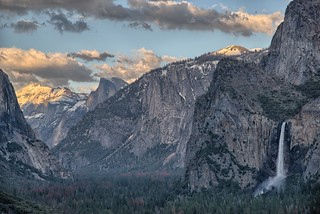


Defining the Sierra Nevada's Upper Ecological Boundary
The Sierra Nevada subalpine zone represents a distinct biotic zone situated within the Sierra Nevada mountain range of California, USA. It occupies a critical elevational band, acting as a transitional ecotone between the more mesic upper montane forests, such as those dominated by red fir (Abies magnifica), and the absolute treeline, above which environmental conditions preclude tree establishment. This zone is typically found between approximately 2,450 and 3,660 meters (8,000 to 12,000 feet) in elevation.
The landscape is characterized by an open woodland structure, a stark contrast to the denser forests below. The harsh climatic regime, coupled with geological factors, dictates the unique ecological composition and structure of this high-altitude environment, making it a fascinating subject for ecological study.
Adaptations to Extremes
The defining characteristic of the subalpine zone is its extreme environmental conditions, which profoundly influence its ecology. The climate is severe, marked by prolonged periods of sub-freezing temperatures, heavy snowfall that can persist for many months, and powerful, desiccating winds. These winds are a significant morphogenetic force, often leading to krummholz formations, where trees grow low and contorted, hugging the ground for protection.
Furthermore, the soils are typically thin, poorly developed, and nutrient-limited due to the short growing season and the slow decomposition rates of organic matter in cold climates. These edaphic and climatic stresses result in slow plant growth rates and reduced stature for the dominant conifer species. The harshness of the environment also inherently suppresses interspecific competition, creating conditions where only the most resilient species can survive and often fostering mutualistic relationships among them.
The Resilient Flora of the High Sierra
The flora of the Sierra Nevada subalpine zone is dominated by a select group of hardy conifer species that have evolved remarkable adaptations for survival. Key species include the whitebark pine (Pinus albicaulis), known for its ability to colonize harsh, exposed sites and its role as a keystone species in some subalpine ecosystems; the lodgepole pine (Pinus contorta), which can regenerate rapidly after disturbances; the western white pine (Pinus monticola), often found on less exposed slopes; and mountain hemlock (Tsuga mertensiana), which tolerates shade and moist conditions.
Sierra juniper (Juniperus occidentalis) may also be present. These species exhibit traits such as small, leathery needles, slow growth rates, and the ability to survive with limited resources. Their presence defines the open woodland structure, creating a mosaic of trees, shrubs, and alpine meadows that is characteristic of this elevational band.
A Sentinel Ecosystem for Environmental Change
The marginal conditions that define the Sierra Nevada subalpine zone make it exceptionally sensitive to environmental perturbations. Changes in climate, such as rising global temperatures, altered precipitation patterns, and shifts in snowpack dynamics, can have profound and rapid impacts on this ecosystem. Increased temperatures can lead to drought stress, increased susceptibility to pests and diseases (like the white pine blister rust affecting whitebark pine), and changes in the competitive balance between species. Pollution, even at low concentrations, can also negatively affect these sensitive high-elevation environments.
The long-lived nature of many subalpine species, particularly the whitebark pine which can live for over a thousand years, makes this zone a valuable natural laboratory. These ancient trees serve as living archives, allowing scientists to reconstruct past environmental conditions and to monitor the ongoing effects of contemporary environmental changes, providing crucial data for understanding global ecological trends and informing conservation strategies.
See also
Based on content from Wikipedia · Licensed under CC BY-SA 4.0