

Shoebill
Images

Shoebill




Morphological Marvel
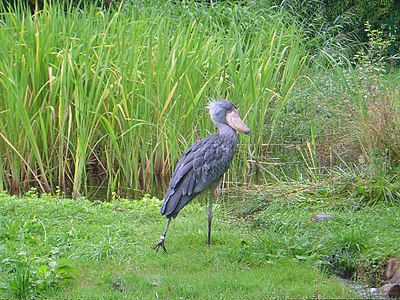
The Shoebill (Balaeniceps rex) is an imposing avian species, characterized by its immense size and its most prominent feature: a massive, clog-shaped bill. Standing between 110 and 140 cm (43-55 inches) tall and weighing 4-7 kg (8.8-15.4 lb), with a wingspan reaching up to 2.6 meters (8.5 feet), it is one of the largest wading birds. The bill, measuring up to 22 cm (8.7 inches) long, is not only enormous but also exceptionally strong, featuring a sharp, hooked tip used for grasping prey.
Its cryptic plumage, a mottled grey, provides excellent camouflage within its marshy environment. The Shoebill's legs are long and sturdy, adapted for wading through shallow waters, and its large, piercing eyes are positioned forward, granting it binocular vision crucial for hunting. Its slow, deliberate movements and ability to remain motionless for extended periods are key behavioral adaptations for ambushing prey, contributing to its 'living fossil' appearance.
Ecological Niche
As a specialized carnivore, the Shoebill occupies a unique predatory niche within African wetlands. Its diet is heavily reliant on fish, with a particular preference for lungfish (Protopterus spp.), which are capable of surviving in hypoxic water by aestomatically breathing air. This preference makes the Shoebill an indicator species for healthy wetland ecosystems that support lungfish populations.
The Shoebill employs a 'stand-and-wait' hunting strategy, standing motionless in shallow water for minutes or even hours before executing a rapid 'snap-strike' with its powerful bill. This technique is highly effective for capturing agile prey. Beyond lungfish, its diet includes other fish, amphibians, reptiles such as snakes and young crocodiles, and occasionally small mammals.
This dietary flexibility, coupled with its specialized hunting method, allows it to thrive in its specific habitat, though it also makes it vulnerable to changes in prey availability.
Geographic Distribution and Habitat Requirements
The Shoebill's geographic range is confined to tropical freshwater swamps and marshes across eastern Africa. Its distribution spans countries including Uganda, South Sudan, Tanzania, Rwanda, Zambia, and the Democratic Republic of Congo. These birds require extensive, undisturbed wetland areas characterized by shallow, slow-moving water and abundant emergent vegetation, such as papyrus reeds.
These conditions are essential for both successful hunting and nesting. Shoebills are typically solitary and territorial, with large home ranges necessary to find sufficient food resources. The integrity of these wetland ecosystems is paramount; they are sensitive to hydrological changes, pollution, and the conversion of land for agriculture or human settlement, all of which directly threaten the Shoebill's survival.
Conservation Challenges and Future Outlook
The Shoebill is currently classified as Vulnerable by the IUCN, reflecting significant threats to its population. The estimated number of mature individuals ranges from 3,700 to 5,300, a figure that underscores the urgency of conservation efforts. The primary driver of its decline is habitat loss and degradation, stemming from agricultural expansion, drainage of wetlands for development, and increased human encroachment. Poaching, though less prevalent, and disturbance at nesting sites also pose risks.
Effective conservation strategies must focus on protecting and restoring critical wetland habitats, implementing sustainable land-use practices in surrounding areas, and engaging local communities in conservation initiatives. Raising global awareness about the Shoebill's plight and its role as an indicator species for wetland health is also crucial for its long-term survival.
See also
Frequently Asked Questions
What does a Shoebill look like?+
Where does a Shoebill live?+
What does a Shoebill eat?+
How does a Shoebill catch its food?+
Why are Shoebills considered endangered?+
Based on content from Wikipedia · Licensed under CC BY-SA 4.0