

Shenzhou 13: China's Awesome Space Trip!
Images

Shenzhou-13 at NMC 04


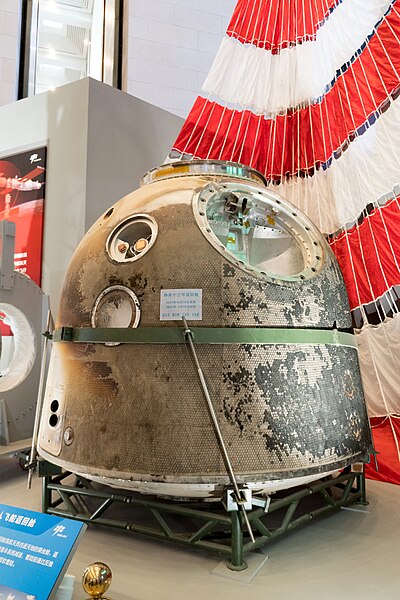


The Genesis of Shenzhou 13
The Shenzhou 13 mission, launched on October 16, 2021, was not an isolated event but the culmination of decades of dedicated effort and incremental progress within China's human spaceflight program. As the eighth crewed mission and the thirteenth overall flight of the Shenzhou program, it represented a mature stage of development for the Shenzhou spacecraft, a vehicle based on Russian Soyuz technology but significantly adapted and enhanced by Chinese engineers.
The primary objective was to rendezvous with and occupy the Tiangong space station, China's ambitious modular orbital laboratory. This mission was specifically designed to test and validate the systems and procedures necessary for extended human stays in orbit, a critical step towards establishing a permanent Chinese presence in space. The selection of the crew, comprising veteran astronaut Zhai Zhigang and mission specialists Wang Yaping and Ye Guangfu, reflected a strategic choice to leverage experience while also breaking new ground, particularly with Wang Yaping's historic spacewalk.
A Six-Month Sojourn
The defining characteristic of the Shenzhou 13 mission was its unprecedented duration for Chinese astronauts: approximately six months. This extended stay aboard the Tiangong space station was a deliberate test of both human physiological and psychological resilience, as well as the reliability of the station's life support and operational systems under prolonged use. The taikonauts were tasked with a demanding schedule that included conducting a wide array of scientific experiments across disciplines such as space medicine, materials science, and fundamental physics.
Furthermore, they performed critical external maintenance and upgrades to the Tiangong station, including the installation of new equipment and the testing of robotic arm capabilities. These Extravehicular Activities (EVAs), or spacewalks, were particularly significant, with Wang Yaping becoming the first Chinese woman to perform such a feat, underscoring advancements in spacesuit technology and EVA protocols. The data gathered from this long-duration mission is invaluable for understanding the long-term effects of microgravity and for refining the operational strategies for future space habitats.
The Crew
The Shenzhou 13 crew embodied the dedication and skill required for such a demanding mission. Commander Zhai Zhigang, a veteran of the Shenzhou 7 mission where he performed China's first spacewalk, provided crucial leadership. Wang Yaping, a highly respected pilot and astronaut, made history not only with her spacewalk but also by becoming the first Chinese woman to live and work on the Tiangong space station, inspiring a new generation.
Ye Guangfu, a mission specialist, brought his expertise to support the scientific and operational objectives. Their collective ability to adapt to the confined environment of the spacecraft and station, manage complex tasks, and maintain peak performance over an extended period highlights the rigorous training and psychological fortitude instilled by the People's Liberation Army Astronaut Corps. Their successful collaboration was instrumental in achieving the mission's ambitious goals.
Strategic Significance
The Shenzhou 13 mission served as a powerful demonstration of China's strategic intent and growing capabilities in space exploration. By successfully executing a long-duration mission and establishing a sustained human presence on Tiangong, China solidified its status as a major global space power, on par with established entities like NASA and Roscosmos. This achievement is not merely symbolic; it represents a significant step towards China's long-term goal of developing a permanent, self-sufficient space station and potentially undertaking more complex endeavors, such as lunar exploration.
The mission's success enhances China's technological prestige, fosters national pride, and opens avenues for international collaboration on future space projects. It underscores a shift in the global space landscape, with China playing an increasingly central and independent role.
Technological Underpinnings
The Shenzhou 13 mission relied on the sophisticated integration of the Shenzhou spacecraft and the Tiangong space station. The Shenzhou spacecraft, comprising an orbital module, a re-entry capsule, and a service module, is designed for crew transport and short-duration stays. For Shenzhou 13, its docking with Tiangong transformed it into a temporary extension of the station, providing additional living and working space.
The mission also showcased advancements in EVA technology, particularly the Feitian spacesuit, which allows for greater mobility and autonomy during spacewalks. The successful docking, undocking, and the complex EVAs performed by the crew highlight the robust engineering and meticulous planning involved. The mission's success is a testament to China's comprehensive approach to human spaceflight, encompassing spacecraft design, launch capabilities, orbital operations, and astronaut training.
See also
Frequently Asked Questions
What was Shenzhou 13?+
When did Shenzhou 13 launch?+
How long did the Shenzhou 13 crew stay in space?+
Who were the astronauts on Shenzhou 13?+
What special thing did Wang Yaping do on the mission?+
Based on content from Wikipedia · Licensed under CC BY-SA 4.0