

Servers: The Super Helpers of the Internet!
Images
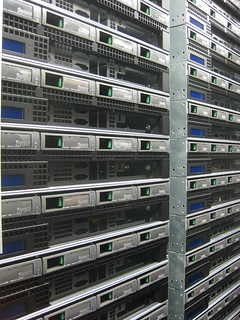
Server porn


Defining the Server
A server is a sophisticated piece of hardware and software designed to manage network resources and provide services to other computers, known as clients. Unlike a typical personal computer, servers are engineered for high availability, reliability, and performance, often operating 24/7. They can be physical machines housed in data centers or virtual instances running on shared hardware.
The core function of a server is to 'serve' data, applications, or resources upon request. This encompasses a vast range of tasks, from hosting websites and managing email to running complex databases and facilitating cloud computing. The architecture of a server typically involves robust components like multiple high-speed processors, extensive RAM, redundant power supplies, and high-capacity, fast storage solutions (like SSDs or NVMe drives).
Their operating systems are often specialized, such as Windows Server or various Linux distributions, optimized for network services and security.
Evolution of the Server
The genesis of the server concept can be traced back to the early days of computer networking, particularly the ARPANET project in the late 1960s and early 1970s. These early networks utilized centralized mainframe computers to share resources among connected terminals. The term 'server' gained traction in the 1980s with the proliferation of Local Area Networks (LANs) and the advent of personal computers, where dedicated machines began to offer services like file and print sharing.
The true explosion in server demand, however, was catalyzed by the World Wide Web in the early 1990s. The need to host and deliver web pages led to the development of specialized web servers. As the internet matured, so did server technology, moving towards distributed systems, clustering, and eventually, the massive scale of cloud computing.
Today's servers are the product of decades of innovation, evolving from single-purpose machines to highly scalable, distributed, and often virtualized components of vast data center infrastructures.
The Indispensable Infrastructure
Servers form the bedrock of the modern digital economy and global society. Their significance cannot be overstated, as they underpin virtually every digital service we rely on. Economically, servers are critical for e-commerce, financial transactions, supply chain management, and the operation of countless businesses.
They enable remote work, facilitate global trade, and drive innovation in technology sectors. Socially, servers are the conduits for communication, education, entertainment, and access to information. They power social media platforms, streaming services, online learning environments, and vast digital archives.
The reliability and performance of servers directly impact user experience, business continuity, and national infrastructure. Disruptions to server operations can lead to significant financial losses, communication breakdowns, and erosion of public trust. Therefore, the development, maintenance, and security of server infrastructure are paramount concerns for governments and organizations worldwide.
Architectures and Operations
Server functionality is achieved through a complex interplay of hardware, operating systems, and application software. At the hardware level, servers are built for endurance and speed, featuring powerful multi-core processors, large amounts of ECC (Error-Correcting Code) RAM to prevent data corruption, and high-speed storage arrays (SSDs, NVMe). Network interfaces are typically high-bandwidth and may be redundant.
Operating systems for servers, like Linux distributions (e.g., Ubuntu Server, CentOS) or Windows Server, are optimized for multitasking, network services, security, and remote management. Application software ranges from web server software (Apache, Nginx) and database management systems (MySQL, PostgreSQL, SQL Server) to specialized applications for virtualization, containerization, and AI/ML workloads. Key operational aspects include load balancing to distribute traffic across multiple servers, failover mechanisms for automatic switching to backup servers, and robust monitoring systems to track performance and detect issues proactively.
Security is paramount, involving firewalls, intrusion detection systems, regular patching, and access controls.
The Diverse Ecosystem of Server Applications
The server landscape is characterized by a wide array of specialized server types, each tailored for specific functions. Web servers (e.g., Apache, Nginx) are fundamental for delivering web content. Application servers host and execute business logic for applications.
Database servers (e.g., Oracle, SQL Server, MySQL) manage structured data, enabling complex queries and transactions. File servers provide centralized storage and access to files for multiple users. Mail servers (e.g., Postfix, Exchange) handle the sending, receiving, and storing of emails. DNS servers translate human-readable domain names into IP addresses.
Proxy servers act as intermediaries between clients and other servers, enhancing security and performance. Game servers host multiplayer online games, managing player interactions and game state. Furthermore, the rise of cloud computing has led to the concept of massive server farms providing Infrastructure as a Service (IaaS), Platform as a Service (PaaS), and Software as a Service (SaaS), abstracting away the underlying hardware and offering resources on demand.
This diverse ecosystem ensures that virtually any digital service requiring centralized processing, storage, or distribution can be effectively supported.
Go deeper
Based on content from Wikipedia · Licensed under CC BY-SA 4.0