

Serpentinite
Images

Spinifex metakomatiite (serpentinite) (Upper Komatiitic Unit, Kidd-Munro Assemblage, Neoarchean, 2.711-2.717 Ga; Pyke Hill, Ontario, Canada) 2


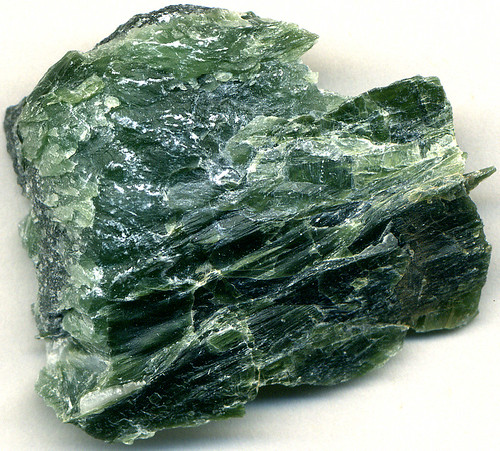

The Genesis and Mineralogy of Serpentinite
Serpentinite is a fascinating class of metamorphic rocks characterized by the predominance of minerals belonging to the serpentine group, such as antigorite, chrysotile, and lizardite. These rocks are not formed from direct crystallization but rather through a process of alteration called serpentinization. This transformation typically occurs when mafic or ultramafic igneous rocks, rich in minerals like olivine and pyroxene, react with water under specific temperature and pressure conditions.
These conditions are often found in the Earth's mantle or in oceanic crust that has been subducted or uplifted. The hydration reactions involve the breakdown of primary minerals and the formation of serpentine minerals, often accompanied by the release of significant amounts of heat and hydrogen gas. The resulting Serpentinite can exhibit a wide range of textures, from fine-grained and massive to fibrous, and its color can vary from deep green to bluish-green, yellow, or even red, depending on trace elements and oxidation states.
The name 'serpentine' itself is derived from the Latin 'serpens' (snake), referencing the rock's characteristic mottled appearance, which historically led to beliefs in its protective qualities against snake venom, as documented by ancient scholars like Dioscorides.
A Dynamic Geological Process
The process of serpentinization is a key driver in various geological settings, particularly in subduction zones and ophiolite complexes (fragments of oceanic crust and upper mantle thrust onto continental crust). As water percolates through the porous ultramafic rocks under elevated pressures and temperatures (typically 200-500°C), it triggers a series of chemical reactions. For instance, olivine reacts with water to form serpentine and brucite, while pyroxene yields serpentine and magnetite.
This process is exothermic, meaning it releases heat, which can further influence the surrounding rock and fluid chemistry. Serpentinization also leads to a significant volume increase, which can generate substantial stress and fracture the rock, facilitating further fluid infiltration and accelerating the alteration. The hydrogen gas produced during this reaction is a potent reducing agent and can be utilized by certain microorganisms, hinting at its biological relevance.
Understanding serpentinization is crucial for comprehending mantle dynamics, fluid circulation within the Earth's crust, and the formation of unique mineral deposits.
A Potential Incubator for Abiogenesis
One of the most compelling scientific hypotheses regarding Serpentinite is its potential role as a cradle for the origin of life on Earth. The chemical environment created during serpentinization is remarkably conducive to the synthesis of organic molecules. Specifically, the reactions can generate acetyl-CoA, a central molecule in cellular metabolism, and provide the necessary energy through the production of hydrogen gas and the creation of pH gradients across mineral surfaces.
These gradients, coupled with the catalytic properties of mineral surfaces, could have facilitated the self-assembly of more complex organic compounds from simpler precursors. Ancient Serpentinite-associated hydrothermal systems are considered prime candidates for abiogenesis because they offered a stable, energy-rich environment where life's fundamental building blocks could form and concentrate. The continuous supply of reactants and energy, along with protection from harsh surface conditions, makes these environments theoretically ideal for the transition from prebiotic chemistry to early biology.
Historical Perceptions and Modern Scientific Relevance
Historically, Serpentinite was recognized primarily for its distinctive appearance and the folklore surrounding it. Its association with snakes led to its use in amulets and talismans, reflecting a deep-seated human tendency to find meaning and utility in the natural world. In geological literature, it was often referred to simply as 'serpentine rock,' underscoring its widespread recognition but perhaps obscuring the complexity of its formation and significance.
The shift in scientific understanding has transformed Serpentinite from an object of ancient superstition into a subject of intense modern research. Its relevance now extends to fields such as geochemistry, astrobiology, and the study of deep biosphere ecosystems. The ongoing investigation into Serpentinite's role in abiogenesis is particularly significant, as it provides a tangible geological model for understanding how life might have originated not only on Earth but potentially on other celestial bodies with similar geological processes, such as Mars or icy moons.
Serpentinite's Broader Geological and Environmental Impact
Beyond its connection to the origin of life, Serpentinite plays a role in various geological phenomena and environmental considerations. The uplift and exposure of Serpentinite rocks can lead to the formation of unique soil types that support specialized plant communities adapted to high magnesium and low calcium content. In some regions, Serpentinite outcrops are known for their distinctive flora.
Furthermore, the process of serpentinization can influence the geochemistry of groundwater and surface water, sometimes leading to elevated levels of dissolved minerals. In construction, Serpentinite's fibrous form (chrysotile asbestos) was historically used for its fire-resistant properties, though its health hazards are now well-understood and its use is heavily regulated. Understanding the distribution and behavior of Serpentinite is therefore important for environmental management, ecological studies, and even historical industrial practices.
Its presence in the geological record offers insights into past tectonic regimes and mantle processes.
See also
Frequently Asked Questions
What is serpentinite?+
Why does serpentinite look like snake skin?+
How is serpentinite made?+
Where can we find serpentinite?+
Why is serpentinite important for life?+
Based on content from Wikipedia · Licensed under CC BY-SA 4.0