

Senate of Spain
Images

File:Coat of Arms of the Senate of Spain.svg

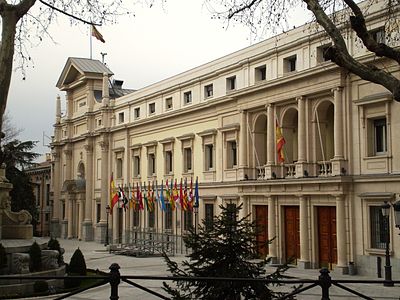





The Senate's Constitutional Mandate and Location
The Senate (Senado) serves as the upper house of the Cortes Generales, Spain's bicameral parliament, alongside the Congress of Deputies. Its seat is the historic Palace of the Senate in Madrid, a testament to its enduring significance in Spanish governance. The Spanish Constitution, specifically in Part III, meticulously outlines the Senate's composition and function.
It is constitutionally defined as a 'territorial chamber,' a designation that underscores its primary purpose: to represent the diverse territories of Spain, including provinces, autonomous cities, and autonomous communities. This territorial representation is a cornerstone of Spain's decentralized political structure, aiming to balance national interests with regional autonomy and ensure that the voices of different parts of the country are heard at the highest legislative level. The President of the Senate, elected by the senators themselves following each general election, presides over the chamber's proceedings and plays a crucial role in its functioning.
Complex Composition
The composition of the Senate is a complex mosaic designed to reflect Spain's territorial diversity. Mainland provinces are equally represented by four senators each, irrespective of their population size, a principle that ensures equitable representation for all provinces. Insular provinces have a different allocation, with larger islands receiving three senators and smaller islands one.
The autonomous cities of Ceuta and Melilla each elect two senators. This direct election process accounts for 208 senators. In addition to these directly elected members, the regional legislatures of the autonomous communities also designate senators.
Each autonomous community appoints one senator, with an additional senator for every million inhabitants within that community. This indirect appointment mechanism, totaling 58 additional senators, further reinforces the Senate's role as a chamber of territorial representation, bringing regional perspectives directly into national legislative debates and decision-making processes.
Exceptional Powers and Territorial Oversight
While the Senate's legislative powers are generally comparable to those of the Congress of Deputies, it is endowed with specific, exceptional powers that highlight its territorial role. These powers are crucial for managing Spain's decentralized state. Notably, the Senate can authorize the central government to implement direct rule in an autonomous community if that community fails to fulfill its constitutional obligations or acts in a way that seriously undermines the national interest.
Furthermore, it has the authority to dissolve local government councils under certain circumstances. These powers demonstrate the Senate's function not just as a debating chamber but as a crucial mechanism for ensuring constitutional compliance and maintaining the integrity of the Spanish state, particularly in its interactions with the autonomous communities.
Ongoing Debates on Reform and Relevance
The role and function of the Spanish Senate have been subjects of continuous and intensive debate for many years, with no definitive resolution reached. Discussions often revolve around enhancing its territorial representation, clarifying its legislative powers, and improving its overall effectiveness in a modern, decentralized Spain. Critics argue that its current structure does not fully achieve its intended purpose of territorial representation, leading to calls for significant reform.
Proponents of reform suggest various changes, from altering the electoral system to redefining its legislative competencies. These ongoing discussions reflect the dynamic nature of Spanish governance and the persistent effort to adapt its institutions to meet contemporary challenges and ensure that the Senate remains a relevant and vital component of the nation's political landscape.
See also
Frequently Asked Questions
What is the Senate of Spain?+
How are senators chosen?+
Why does the Senate represent territories?+
What special powers does the Senate have?+
Where does the Senate meet?+
Based on content from Wikipedia · Licensed under CC BY-SA 4.0