

Semites
Images

Semitic languages - Chronology


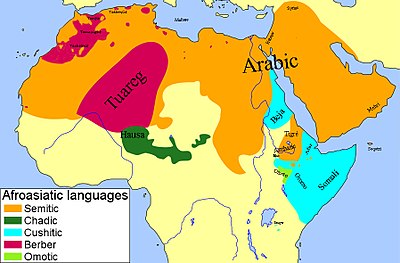


The Semitic Linguistic Nexus
The term 'Semitic' primarily denotes a linguistic classification, referring to a branch of the Afro-Asiatic language family. These languages, including Akkadian (ancient Mesopotamian), Ugaritic, Phoenician, Hebrew, Aramaic, Arabic, and Ge'ez (Ethiopic), share demonstrable commonalities in phonology, morphology, and lexicon, pointing to a shared proto-Semitic ancestor. The earliest attested Semitic language is Akkadian, dating back to the mid-3rd millennium BCE.
The development and spread of Semitic languages were intrinsically linked to the rise and fall of ancient Near Eastern civilizations, serving as the lingua francas of empires and trade routes. The innovation of the alphabet, particularly the Phoenician script, a consonantal abjad, was a revolutionary development that dramatically simplified writing, making literacy more accessible and facilitating the transmission of knowledge, religious texts, and administrative records across diverse cultures.
This linguistic heritage forms the bedrock of communication for hundreds of millions today.
The Semitic Diaspora
The geographical origins of the Semitic peoples are debated, with theories placing their earliest homeland in the Levant, Mesopotamia, or the Arabian Peninsula, with significant migrations into Northeast Africa. Early Semitic-speaking groups were instrumental in the development of foundational civilizations. The Akkadians, Amorites, and Arameans in Mesopotamia, the Canaanites and Phoenicians in the Levant, and the Sabaeans and later Arabs in the Arabian Peninsula all contributed significantly to the cultural and political landscape of the ancient world.
These groups were not monolithic; they comprised diverse tribes, city-states, and kingdoms, each with unique traditions, yet bound by shared linguistic and cultural threads. Their interactions, trade networks, and sometimes conflicts, facilitated the exchange of ideas, technologies, and religious concepts across vast distances, shaping the interconnectedness of the ancient Near East and North Africa.
The Enduring Significance
The Semitic peoples are perhaps most widely recognized for their pivotal role in the development and dissemination of major world religions. Judaism, Christianity, and Islam, the three Abrahamic faiths, all trace their origins to Semitic cultural and linguistic contexts. The Hebrew Bible (Tanakh), the New Testament (written in Koine Greek but deeply rooted in Jewish Semitic thought), and the Quran were all composed within Semitic cultural spheres and, in the case of the first and third, in Semitic languages (Hebrew and Arabic, respectively).
This has led to the profound influence of Semitic ethical frameworks, theological concepts, and narrative traditions on global spirituality and morality. Beyond religion, Semitic cultures have contributed immensely to philosophy, law, literature, and science, leaving an indelible mark on the trajectory of human intellectual and social development.
Linguistic Mechanisms
A defining characteristic of Semitic languages is their root-and-pattern morphology. Most words are derived from a consonantal root, typically three consonants, which carries a basic semantic meaning. This root is then inflected with vowels and affixes to create different grammatical forms and related lexical items.
For instance, the root k-t-b in Arabic and Hebrew is associated with 'writing,' yielding words like 'kataba' (he wrote), 'kātib' (writer), and 'kitāb' (book). This system allows for a highly economical and productive vocabulary. Furthermore, the development of the alphabet, evolving from earlier logographic and syllabic scripts, represents a paradigm shift in human communication.
The Phoenician alphabet, in particular, served as the progenitor for numerous other scripts, including Greek, Latin, Aramaic, and Hebrew, underscoring the profound and lasting impact of Semitic linguistic innovations on global literacy and cultural transmission.
Modern Relevance and Contemporary Semitic Identities
While the term 'Semitic' is primarily a linguistic and historical descriptor, it has also been invoked in modern political and social contexts, sometimes controversially. Contemporary groups who speak Semitic languages, such as Arabs and Jews, maintain distinct cultural and national identities, yet their shared linguistic heritage is a significant, albeit complex, aspect of their collective histories. The study of Semitic languages and cultures remains vital for understanding historical texts, religious traditions, and the geopolitical dynamics of the Middle East and North Africa.
The ongoing evolution and use of languages like Arabic and Hebrew demonstrate the enduring vitality of this ancient linguistic family, connecting modern populations to millennia of history and cultural exchange.
See also
Based on content from Wikipedia · Licensed under CC BY-SA 4.0