

Semiconductor memory
Images

duong dan bao, Digital DNA, City of Palo Alto, Art in Public Places, 9.01.05, California, USA 9365


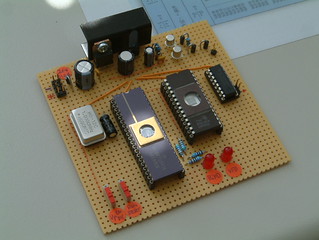


Foundations of Digital Data Retention
Semiconductor memory represents a cornerstone of modern digital electronics, primarily functioning as high-speed digital data storage. At its core, it leverages the properties of semiconductor materials, most notably silicon, to create intricate arrays of memory cells. The dominant technology for these cells is Metal-Oxide-Semiconductor (MOS) field-effect transistors (FETs).
These transistors act as electrically controlled switches, enabling the storage and retrieval of binary data (0s and 1s). The architecture of semiconductor memory is characterized by its 'random access' capability, a critical differentiator from sequential access storage like magnetic tapes or optical discs. This means that the time required to access any memory location is constant, irrespective of its physical position on the chip.
This property is fundamental to the efficiency of modern computing, allowing processors to fetch instructions and data with minimal latency. The speed of semiconductor memory is measured in nanoseconds, orders of magnitude faster than mechanical storage, making it indispensable for primary memory roles.
Evolutionary Trajectory
The genesis of semiconductor memory is deeply intertwined with the development of transistor technology and integrated circuits (ICs). Early forms of computer memory were bulky and slow, utilizing technologies like vacuum tubes or magnetic cores. The invention of the transistor in the late 1940s paved the way for solid-state electronics.
By the 1960s and 1970s, the advent of ICs allowed for the fabrication of multiple transistors and other components on a single silicon chip. This miniaturization dramatically increased memory density and reduced costs. Key milestones include the development of MOS memory, which offered advantages in power consumption and scalability over bipolar transistor-based memory.
The distinction between volatile and non-volatile memory also emerged, with technologies like DRAM and SRAM becoming standard for main memory, while EPROM, EEPROM, and later Flash memory provided persistent storage solutions. This continuous innovation has driven the exponential growth in storage capacity and performance, often referred to as Moore's Law.
The Indispensable Role in the Digital Ecosystem
The significance of semiconductor memory extends far beyond its technical specifications; it is the engine that powers the digital revolution. As primary storage, it holds the operating system, applications, and data that a computer is actively using. This immediate accessibility is crucial for the responsiveness and functionality of all computing devices, from personal computers and smartphones to complex servers and embedded systems.
The sheer volume of data generated and processed daily necessitates memory solutions that are not only fast but also dense and cost-effective. The global semiconductor memory market, valued at $124 billion annually as of 2017 and comprising 30% of the total semiconductor industry, underscores its economic and technological importance. It enables advancements in artificial intelligence, big data analytics, high-performance computing, and virtually every other field reliant on rapid data manipulation.
Architectural Diversity
Semiconductor memory is not a monolithic entity but a diverse family of technologies, each optimized for specific applications. Random-Access Memory (RAM) is broadly categorized into Static RAM (SRAM) and Dynamic RAM (DRAM). SRAM employs a bistable latching circuit, typically comprising six transistors per bit, to store data.
Its advantage lies in its speed and lack of need for periodic refreshing, making it ideal for CPU caches. DRAM, conversely, uses a transistor and a capacitor per bit. The capacitor stores the charge representing the bit, but it leaks over time, necessitating constant 'refresh' cycles.
This makes DRAM denser and cheaper than SRAM, rendering it the predominant choice for main system memory. Non-volatile memory technologies, such as EPROM (Erasable Programmable Read-Only Memory), EEPROM (Electrically Erasable Programmable Read-Only Memory), and Flash memory, utilize floating-gate transistors. These transistors can trap electrical charge, allowing data to be retained even without power.
Flash memory, in particular, has become ubiquitous in solid-state drives (SSDs), USB drives, and mobile devices due to its high density, speed, and endurance.
Future Frontiers and Emerging Technologies
The relentless pursuit of higher performance, greater density, and lower power consumption continues to drive innovation in semiconductor memory. Researchers are exploring novel materials and architectures to overcome the physical limitations of current technologies. Emerging areas include resistive RAM (ReRAM), magnetoresistive RAM (MRAM), and phase-change memory (PCM), which offer potential advantages in speed, non-volatility, and energy efficiency.
These technologies aim to bridge the gap between traditional volatile and non-volatile memory, potentially leading to unified memory architectures. Furthermore, advancements in 3D stacking and advanced packaging techniques are enabling the integration of memory components in more complex and efficient ways. The ongoing evolution of semiconductor memory is critical for supporting the ever-increasing demands of future computing paradigms, including edge computing, the Internet of Things (IoT), and advanced AI applications.
See also
Frequently Asked Questions
What is semiconductor memory and why is it called "memory"?+
How does semiconductor memory get data so fast?+
Why are there different types like DRAM, SRAM, Flash?+
When did semiconductor memory start to become small and cheap?+
How important is semiconductor memory for everyday devices?+
Based on content from Wikipedia · Licensed under CC BY-SA 4.0