

The Great Game: A War in Afghanistan!
Images

War Flag of Afghanistan (1879)



The Great Game's Crucible
The Second Anglo-Afghan War (1878-1880) was not an isolated conflict but a critical manifestation of the 'Great Game,' the intense geopolitical struggle between the British Raj and the Russian Empire for dominance in Central Asia. For Britain, Afghanistan represented a vital strategic buffer zone, a bulwark against perceived Russian expansionism threatening its most prized colony, India.
The British sought to control Afghanistan's foreign policy, ensuring it would not align with Russia and would act as a friendly, or at least neutral, territory. This ambition was rooted in a deep-seated fear of Russian encroachment and a desire to secure the northwestern frontier of British India. The war was thus a calculated move by the British to assert their influence and establish a compliant regime in Kabul, thereby solidifying their imperial boundaries and safeguarding their economic and political interests in the region.
The conflict underscored the complex interplay between imperial ambitions and the sovereignty of smaller nations caught in the crossfire of great power politics.
Campaigns of Conquest, Betrayal, and Resurgence
The war unfolded in two distinct campaigns, each marked by significant events. The first campaign commenced in November 1878 with a multi-pronged British invasion from India. The Afghan ruler, Sher Ali Khan, sought diplomatic and military aid from the Russian Empire, a move that underscored the triangular nature of the Great Game.
His death en route to Mazar-e Sharif left his son, Mohammad Yaqub Khan, to inherit a precarious situation. Yaqub Khan promptly sued for peace, leading to the Treaty of Gandamak in May 1879. This treaty, intended to establish a new order, conceded significant British influence, including the right to station a representative in Kabul.
However, this arrangement proved tragically short-lived. The massacre of the British envoy, Sir Louis Cavagnari, and his mission in September 1879 shattered the peace and reignited hostilities. This event not only demonstrated the deep-seated Afghan resistance to foreign control but also led to Yaqub Khan's abdication, plunging Afghanistan back into conflict and creating a power vacuum.
The Emergence of Abdur Rahman Khan
While the British and Afghan leadership grappled with the immediate consequences of the war, a formidable contender for the Afghan throne was consolidating his power in the north: Abdur Rahman Khan. An opponent of British influence and a charismatic leader, he distinguished himself through military exploits and political maneuvering. As the British sought a stable and manageable ruler to replace the fractured leadership, Abdur Rahman Khan emerged as the most viable candidate.
His eventual march on Kabul and subsequent coronation, followed by British recognition, marked a pivotal shift. He was instrumental in establishing the very buffer state the British desired, a strategically neutral Afghanistan positioned between the two imperial giants. His reign, though initially dependent on British acknowledgment, laid the foundation for a more centralized Afghan state and significantly shaped the geopolitical landscape of Central Asia for decades to come.
The Second Campaign's Climax and the Enduring Legacy
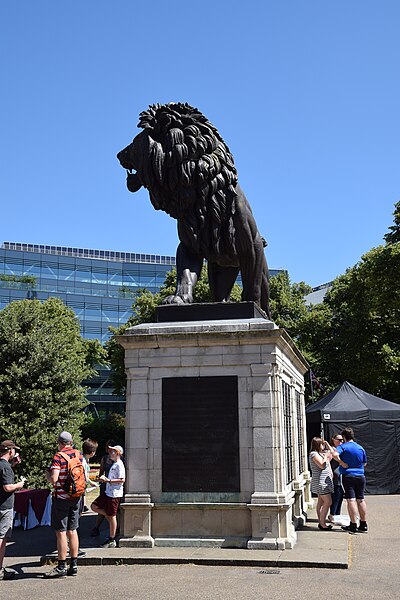
The final phase of the war was characterized by the resurgence of Afghan resistance, notably led by Ayub Khan, the governor of Herat. In July 1880, Ayub Khan launched a rebellion, marching on Kandahar and achieving a significant victory against British forces at the Battle of Maiwand. This battle, a testament to Afghan military prowess, temporarily shifted the momentum.
However, the British responded with decisive force. In September 1880, they defeated Ayub Khan's army in a climactic engagement outside Kandahar. This military conclusion solidified British strategic objectives.
With Abdur Rahman Khan firmly established as the undisputed Amir, Afghanistan was effectively positioned as the buffer state envisioned by the British, separating their Indian Empire from Russian ambitions. The subsequent withdrawal of British and Indian troops marked the end of the military conflict, but the war's legacy resonated, influencing regional power dynamics and Afghan national identity for generations.
See also
Based on content from Wikipedia · Licensed under CC BY-SA 4.0