

Sebastiano del Piombo
Images

Ritratto di Clemente VII con barba, Sebastiano del Piombo 001



The Venetian Foundation and Roman Metamorphosis
Sebastiano del Piombo, originally Sebastiano Luciani, emerged from the vibrant artistic milieu of Venice, where he trained under the esteemed Giovanni Bellini and the influential Giorgione. This Venetian education instilled in him a profound understanding of color theory, atmospheric perspective, and the luminous qualities of light, hallmarks of the Venetian school. His early works reflect this rich heritage, characterized by a sensuous use of pigment and a keen observation of naturalistic detail.
The pivotal move to Rome in 1511 marked a significant stylistic evolution. Immersed in the classical grandeur and monumental aspirations of the Roman school, Sebastiano began to integrate its emphasis on disegno (drawing and form) and sculptural solidity with his innate Venetian sensibility for color. This fusion was not merely superficial; it represented a conscious effort to reconcile two dominant artistic philosophies.
He became a crucial conduit, bringing the expressive power of Venetian color to the structural rigor of Roman art, thereby forging a distinctive artistic language that offered an alternative to the prevailing styles of his contemporaries. His ability to synthesize these traditions made him a unique figure in the High Renaissance.
A Lutenist's Touch and the Weight of Papal Office
Sebastiano's artistic career was preceded by a notable period as a successful lutenist in Venice. This musical background likely informed his artistic sensibilities, perhaps contributing to his sophisticated understanding of composition, harmony, and emotional resonance in his paintings. His transition to painting was remarkably successful, quickly establishing him in Rome.
However, his professional life took an extraordinary turn in 1531 when he was appointed Keeper of the Seal (Piombatore) to the Papacy. This prestigious but demanding role, which gave him his enduring nickname, required constant attendance upon the Pope, including extensive travel and participation in papal ceremonies. The position necessitated his ordination as a friar, a significant commitment given he was married with children.
This dual career profoundly impacted his artistic productivity. The responsibilities of his papal office constrained his time and energy, leading to a reduced output of paintings. He increasingly focused on portraiture, a genre that could be executed more flexibly than large-scale religious commissions or frescoes, and his engagement with the emerging Mannerist style became more limited due to these constraints.
Michelangelo's Champion and Rome's Post-Raphael Luminary
Sebastiano del Piombo cultivated a close and supportive relationship with Michelangelo, a testament to his personal character and artistic merit. Unlike many artists who were rivals, Sebastiano and Michelangelo maintained a collaborative dynamic. Michelangelo recognized Sebastiano's talent and actively sought to elevate his status within the competitive Roman art scene.
He famously encouraged Sebastiano to compete for major commissions, such as the 'Transfiguration' and 'Last Judgment' altarpieces, against Raphael, aiming to position Sebastiano as a formidable rival. This patronage highlights Michelangelo's respect for Sebastiano's abilities. Following the premature death of Raphael in 1520, Sebastiano ascended to become Rome's preeminent painter.
While his influence on subsequent generations was somewhat curtailed by his limited number of pupils and the relative scarcity of his works being reproduced in prints, his leadership role in Rome during this critical period is undeniable. He became the benchmark for painting in the city, shaping artistic discourse and practice in the absence of other major figures.
Artistic Contributions and Enduring Legacy
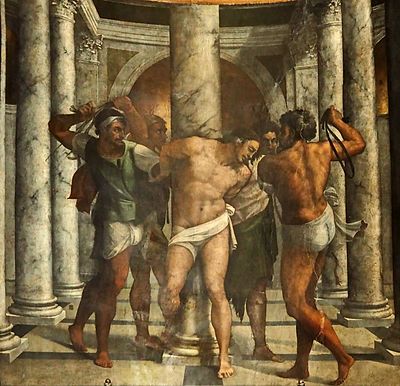
Sebastiano del Piombo's artistic legacy is defined by his masterful synthesis of Venetian colorism and Roman monumentality. He was particularly adept in oil painting, utilizing the medium to achieve rich impasto, subtle tonal gradations, and a profound sense of depth and atmosphere. His religious paintings, such as the 'Raising of Lazarus' (commissioned by Cardinal Giulio de' Medici), exemplify his ability to imbue biblical narratives with dramatic intensity and emotional weight, drawing on both Venetian color and Roman compositional strength.
His portraits, often characterized by their psychological penetration and dignified presentation, offered a compelling alternative to the more idealized portraits of his contemporaries. By largely eschewing the demanding and time-consuming practice of fresco painting, which dominated the careers of Raphael and Michelangelo, Sebastiano carved out a niche that allowed for greater personal control and focus on oil techniques. Although his oeuvre is smaller than that of his most prolific peers, the quality and innovation within his surviving works, coupled with his pivotal role in bridging artistic traditions and leading Roman painting, secure his significant place in the annals of Renaissance art history.
See also
Frequently Asked Questions
Who was Sebastiano del Piombo?+
What was special about his painting style?+
Why did he become a friar and Keeper of the Seal?+
How did his music background help his art?+
Did he work with Michelangelo?+
Based on content from Wikipedia · Licensed under CC BY-SA 4.0