

Sea Spiders: The Ocean's Amazing Walkers!
Images

Sea spider vintage poster


Evolutionary Enigmas and Global Distribution
The class Pycnogonida, commonly known as sea spiders, represents a unique and ancient lineage within the Arthropoda. Their phylogenetic placement has been a subject of considerable debate, with some studies suggesting they might be the sister group to all other extant arthropods, a hypothesis that places them at the very root of the arthropod tree. However, more recent analyses often support their traditional classification within the Chelicerata, alongside arachnids and horseshoe crabs, albeit as a highly derived and ancient offshoot.
This evolutionary ambiguity underscores their distinctiveness. Sea spiders are cosmopolitan, inhabiting all of the world's oceans, from the intertidal zones to the hadal depths. Their distribution is influenced by factors such as temperature and food availability, with larger species often found in the colder, nutrient-rich waters of the Antarctic and deep sea, while smaller species dominate shallower regions.
The over 1,300 described species exhibit remarkable adaptations to diverse marine environments, showcasing the evolutionary success of this group.
Morphological Uniqueness and Body Plan
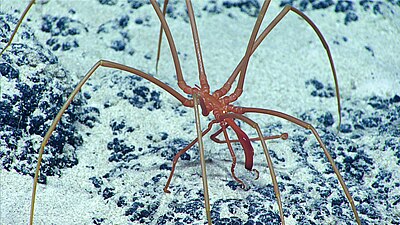
Sea spiders are characterized by their extraordinary morphology, most notably their extremely elongated legs relative to their diminutive bodies. This leg elongation is so pronounced that in many species, the internal organs, including the digestive tract and gonads, extend into the appendages, a condition known as 'cecal herniation.' This unusual body plan means that much of the organism's vital functions occur within its legs. They possess a prominent proboscis, a tubular mouthpart used for feeding, which varies in shape and size depending on the species' diet.
Unlike true spiders, sea spiders lack a distinct cephalothorax and abdomen; instead, their body is segmented into a short trunk and the numerous, often segmented, legs. Their respiratory system is also simplified, with gas exchange occurring directly through the cuticle, and they lack specialized excretory organs, relying on diffusion for waste removal. This highly specialized anatomy reflects a long evolutionary history and adaptation to a benthic lifestyle.
Feeding Strategies and Ecological Roles
The feeding ecology of sea spiders is as diverse as their morphology. Their primary mode of feeding involves piercing the tissues of sessile or slow-moving invertebrates and extracting fluids using their proboscis. Common prey items include sponges, hydroids, anemones, bryozoans, and polychaete worms.
Some species are specialized predators, while others are more opportunistic scavengers. Their role in marine ecosystems is multifaceted. As consumers of benthic invertebrates, they can influence the population dynamics of their prey species.
In some environments, they may also serve as a food source for larger marine predators. The wide range of feeding habits and ecological niches occupied by sea spiders highlights their importance in maintaining the balance of marine food webs, particularly in benthic communities. Their presence and abundance can serve as indicators of ecosystem health.
Reproduction and Life Cycle
The reproductive biology of sea spiders is particularly noteworthy. They are gonochoristic, meaning individuals are either male or female, and fertilization is typically external. A unique aspect of their life cycle is the role of the male in brooding the eggs.
After the female deposits her eggs, the male collects them and attaches them to specialized structures on his legs, known as ovigers. He then carries these egg masses until they hatch. This paternal care is a significant reproductive strategy that ensures the survival of the developing embryos.
The larval stages can vary, with some species hatching as protonymphs that are already mobile and capable of feeding, while others hatch as more rudimentary larvae that require further development. The extended leg span and the distribution of organs within the legs also play a role in their reproductive capacity and the transport of gametes.
See also
Frequently Asked Questions
What are sea spiders?+
Why do sea spiders have such long legs?+
Where can I find sea spiders?+
How do sea spiders eat?+
What role do sea spiders play in the ocean?+
Based on content from Wikipedia · Licensed under CC BY-SA 4.0