

Scordatura: When Instruments Play a Different Tune!
Images

Scordatura


The Conceptual Framework of Scordatura
Scordatura, derived from the Italian for 'discord' or 'mistuning,' represents a deliberate departure from the conventional tuning of string instruments. This practice is not an error but a sophisticated artistic strategy employed to achieve a range of musical objectives. Primarily, it serves to expand the instrument's sonic capabilities, enabling the production of unique timbres and resonant qualities that are unattainable with standard tuning.
Furthermore, scordatura can facilitate the execution of technically demanding passages by altering string tension and intervallic relationships, thereby simplifying fingerings for specific chords or melodic lines. It also allows composers to explore novel harmonic territories and create specific expressive effects, such as evoking particular moods or imitating other sounds. The intentional manipulation of pitch through scordatura is a testament to the ingenuity of instrumentalists and composers seeking to push the boundaries of their craft.
A Historical Trajectory
The historical application of scordatura spans centuries of Western musical tradition. During the Baroque era, it was frequently utilized to enhance the brilliance or somberness of string instruments, with composers like J.S. Bach employing it to achieve distinct tonal colors and facilitate intricate contrapuntal writing, particularly on instruments like the lute and viola da gamba.
The practice continued into the Classical period, where it was often used for specific programmatic effects or to simplify challenging repertoire. A notable instance is Wolfgang Amadeus Mozart's Sinfonia Concertante for Violin, Viola and Orchestra, where the viola part is specifically notated for scordatura. This deliberate mistuning allowed Mozart to achieve a richer, more resonant sound from the viola and integrate it more seamlessly with the violin.
These historical examples underscore scordatura's role as an evolving tool for instrumental innovation and compositional expression.
The Multifaceted Significance of Scordatura in Musical Practice
The importance of scordatura extends across performance, composition, and musicology. For performers, mastering scordatura is crucial for accurately interpreting historical works and for expanding their technical and expressive repertoire. It requires a heightened awareness of pitch relationships and the ability to mentally transpose or adjust fingerings.
For composers, scordatura offers a palette of sonic possibilities beyond standard tuning, enabling them to craft unique instrumental voices and textures. It can be used to create dramatic contrasts, achieve specific timbral effects, or even to evoke historical performance practices. Musicologists study scordatura to gain deeper insights into historical performance techniques, instrumental construction, and the creative intentions of composers.
Its continued relevance in contemporary music, particularly in avant-garde and experimental genres, highlights its enduring power as a means of artistic exploration.
Mechanisms and Notational Conventions of Scordatura
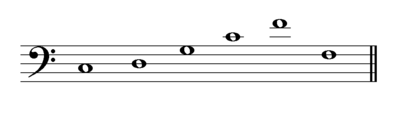
The practical application of scordatura involves altering the tension of one or more strings on an instrument. For example, on a standard-tuned violin (G-D-A-E), a composer might request the E string to be tuned down to D, or the G string tuned up to A. This change in fundamental pitch affects every note played on that string.
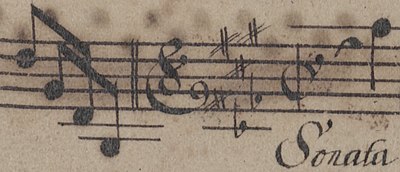
A key aspect of scordatura is its notational convention. Often, the music is written as if the instrument were in standard tuning – a practice known as 'scordatura notation.' This means the player reads the finger position and note name as if playing normally, but the actual resulting pitch is different due to the mistuning. For instance, if a string is tuned a whole step higher, a written 'C' would sound as a 'D.' This requires the performer to possess a sophisticated understanding of intervallic relationships and to adjust their playing accordingly, demonstrating a high level of instrumental proficiency.
Contemporary Relevance and Cross-Genre Influence
While deeply rooted in classical traditions, the spirit of scordatura continues to thrive in modern musical landscapes. Contemporary musicians across diverse genres, including rock, jazz, folk, and electronic music, frequently employ alternative tunings. Guitarists, in particular, are known for their extensive experimentation with tunings such as 'drop D,' open tunings (like open G or DADGAD), and modal tunings.
These tunings are often adopted to achieve specific sonic signatures, facilitate complex chord voicings, or enhance the emotional resonance of a piece. The accessibility of information and the collaborative nature of modern music production have further encouraged this exploration. The legacy of scordatura is evident in how musicians today continue to view their instruments not as fixed entities but as adaptable tools for sonic innovation, constantly seeking new ways to express themselves through pitch and timbre.
See also
Frequently Asked Questions
What is scordatura?+
Why do musicians change the tuning of their instruments?+
How does scordatura affect the sound of a violin or guitar?+
When did people first start using scordatura?+
Can I try scordatura on my guitar or violin?+
Based on content from Wikipedia · Licensed under CC BY-SA 4.0