

Schengen Area
Images
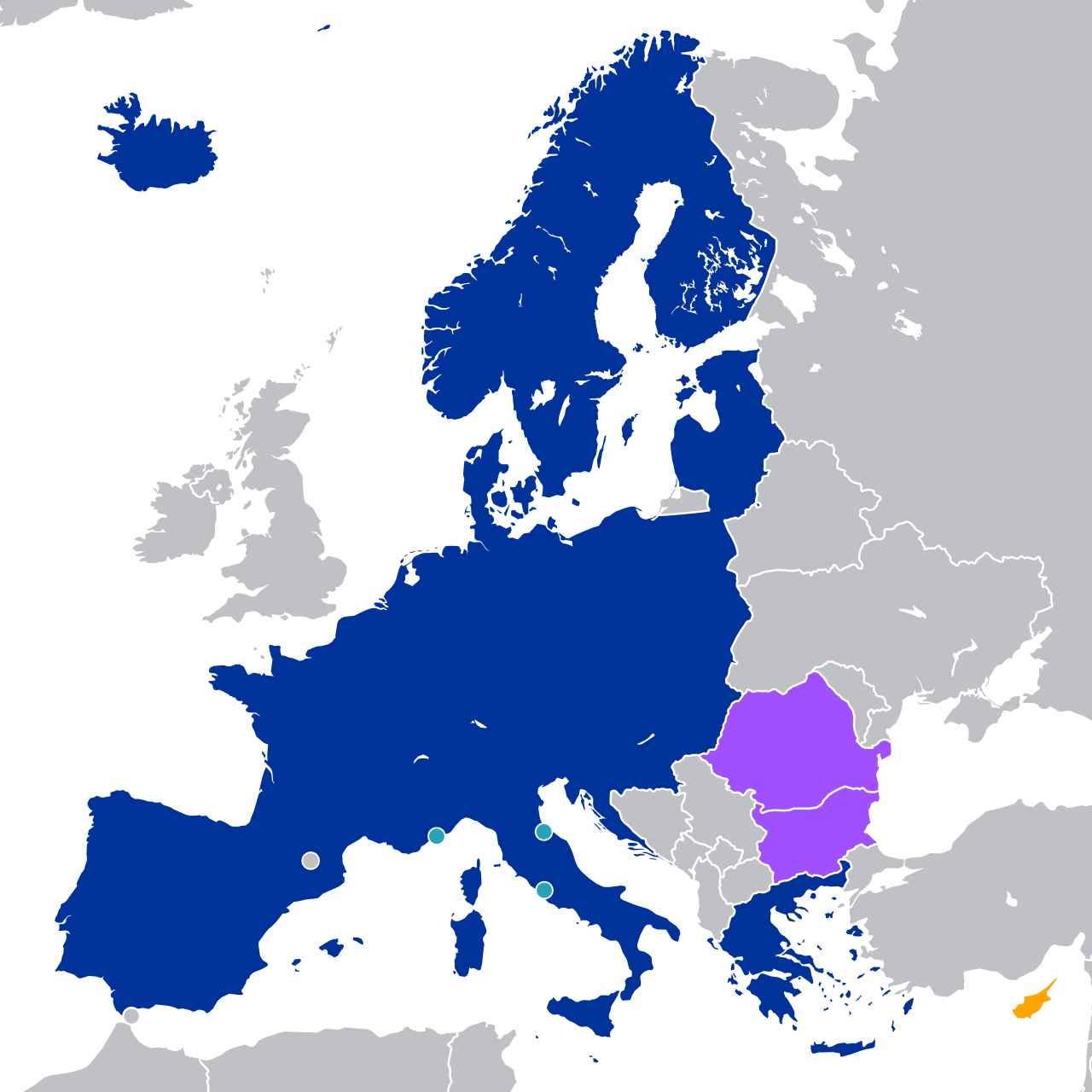
Map of the Schengen Area


Genesis of a Borderless Europe
The Schengen Area represents a profound shift in European integration, born from the desire to facilitate the free movement of people and goods across national boundaries. Its origins lie in the Schengen Agreement of 1985 and the subsequent Schengen Convention of 1990, signed in the small Luxembourgish town of Schengen. These foundational documents aimed to dismantle internal border checks, creating a single external border and a common visa policy.
This initiative was conceived as a key component of the European Union's broader policy on the Area of Freedom, Security, and Justice (AFSJ). The core principle is that once a person has legally entered the Schengen Area, they can travel freely throughout all member states without further immigration checks. This has transformed travel and commerce, making Europe feel like a single, interconnected entity for millions of residents and visitors alike.
Economic Catalysis and Trade Facilitation
The economic implications of the Schengen Area are substantial. By removing border controls, the cost of trade between member states has decreased significantly, with estimates varying from 0.42% to 1.59% depending on various economic factors. This reduction in friction allows for more efficient supply chains and greater competitiveness for businesses operating within the zone.
The sheer volume of trade facilitated is staggering; in 2015, goods transported by road across Schengen borders were valued at €2.8 trillion. Furthermore, the daily movement of approximately 1.7 million commuters across internal borders highlights the deep economic interdependence fostered by the area. This seamless movement of labor and capital is a powerful engine for economic growth and integration across Europe.
Geographical Scope and Demographic Impact
The Schengen Area is a vast geographical entity, spanning approximately 4,595,000 square kilometers. This immense territory is home to over 450 million people, representing a significant portion of Europe's population. The area encompasses most of the European Union member states, but notably excludes Ireland, which maintains its opt-out due to its unique relationship with the United Kingdom and its own border policies.
Cyprus is committed to joining but faces complications due to the ongoing political situation. Beyond EU members, the European Free Trade Association (EFTA) countries Iceland, Liechtenstein, Norway, and Switzerland are integral parts of Schengen through association agreements. Additionally, microstates like Andorra, Monaco, San Marino, and Vatican City are de facto included due to their geographical circumstances and close ties with neighboring Schengen countries, further illustrating the complex tapestry of this borderless zone.
Governance, Security, and Future Challenges
While the Schengen Area promotes freedom of movement, it also necessitates robust cooperation on security matters. The abolition of internal borders means that external borders must be more rigorously controlled, and there is a shared responsibility for managing asylum and migration policies. The Schengen Information System (SIS) is a crucial tool, a large-scale database that allows authorities to share information on individuals and objects across member states.
Despite its successes, the Schengen Area faces ongoing challenges. Maintaining security while preserving freedom of movement requires constant adaptation and cooperation. Issues such as managing irregular migration, combating cross-border crime, and responding to potential security threats necessitate a unified and coordinated approach among all member states.
The future of Schengen hinges on its ability to adapt to evolving geopolitical landscapes and security concerns while upholding its core principle of open borders.
Education and Cultural Exchange in a Borderless Europe
The Schengen Area has profoundly impacted educational opportunities and cultural exchange within Europe. The ease of travel allows students to pursue studies in different countries without the bureaucratic hurdles of border crossings. Universities and educational institutions can foster stronger international collaborations, leading to richer academic environments and diverse student bodies.
Cultural festivals, artistic performances, and sporting events can draw audiences from across the entire Schengen zone, fostering a shared European identity and appreciation for diverse traditions. This free movement encourages a deeper understanding and exchange of ideas, breaking down cultural barriers and promoting a more interconnected and cosmopolitan European society. The ability to easily visit museums, historical sites, and experience different ways of life across multiple countries enriches the educational experience for individuals of all ages.
Go deeper
Frequently Asked Questions
What is the Schengen Area?+
Why does Ireland not belong to the Schengen Area?+
How many people live in the Schengen Area?+
What happens to the borders inside the Schengen Area?+
How does the Schengen Area help businesses?+
Based on content from Wikipedia · Licensed under CC BY-SA 4.0