

Samarra Culture
Images
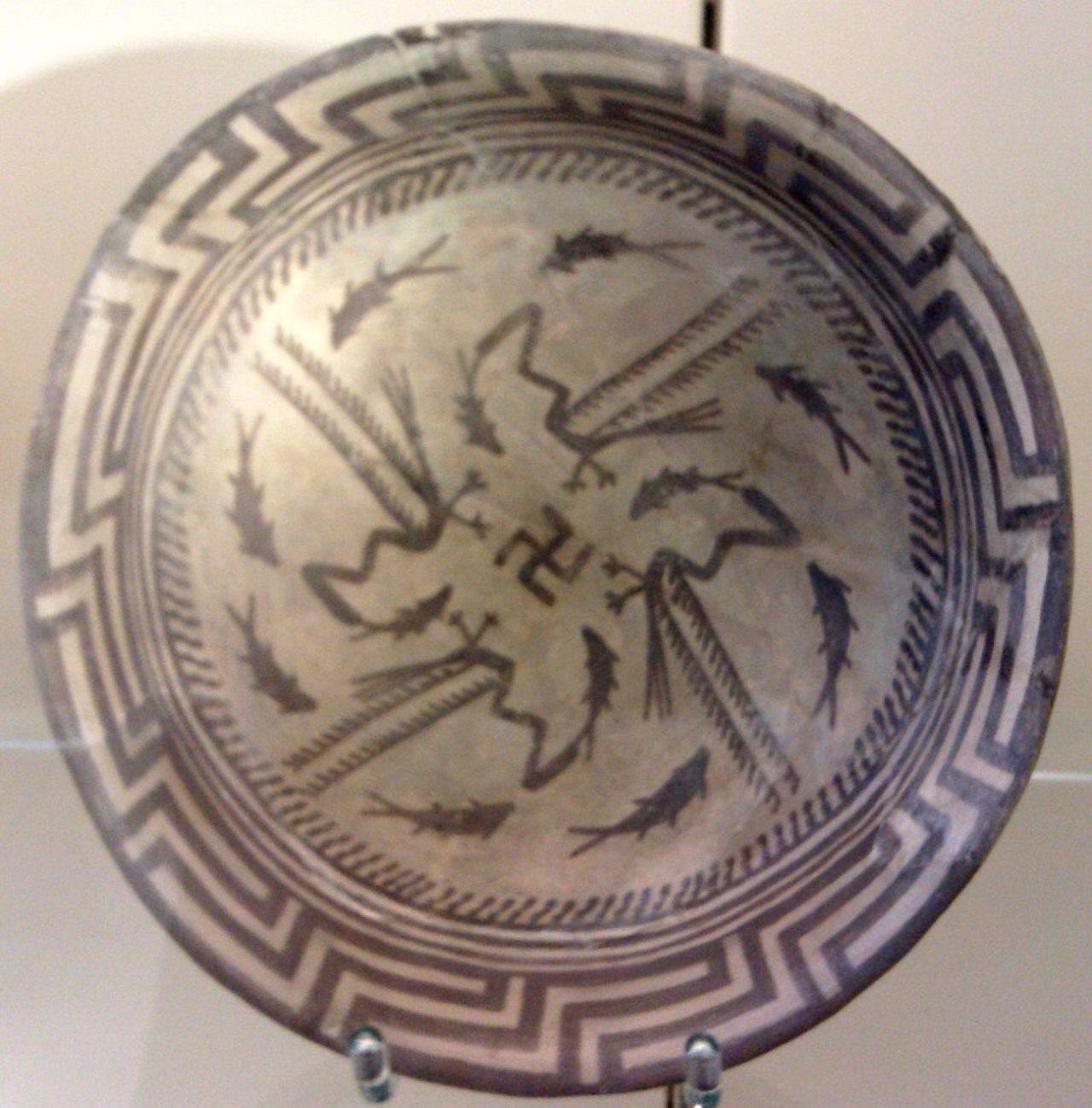
Samarra bowl


The Samarran Horizon
The Samarra culture represents a distinct archaeological entity within the Late Neolithic period of northern Mesopotamia, flourishing roughly between 5500 and 4800 BCE. This period is crucial as it marks a transition towards more complex societal structures and technological advancements. The culture's material signature was first identified by Ernst Herzfeld at the eponymous site of Samarra, with subsequent excavations at Tell Shemshara, Tell es-Sawwan, and Yarim Tepe further delineating its geographical and temporal boundaries.
The Samarran period partially overlaps with the Hassuna culture and the nascent stages of the Ubaid period, suggesting a dynamic interplay of cultural development and diffusion in the Fertile Crescent. Understanding the Samarra culture is key to tracing the roots of Mesopotamian civilization, particularly its early agricultural and ceramic traditions. The term 'Samarran' itself has been extended, sometimes loosely, to describe similar material assemblages found in neighboring regions like Syria, indicating a broader cultural sphere of influence or interaction that scholars are still working to fully comprehend.
Ceramic Standardization and Exchange
Perhaps the most defining characteristic of the Samarra culture is its highly distinctive and widely distributed pottery. This pottery is renowned for its fine craftsmanship, featuring intricate decorations that include stylized representations of animals, particularly birds, and complex geometric patterns. These designs are typically executed in dark paint on a light background, creating a striking visual contrast.
What makes this ceramic tradition particularly significant is its uniformity and widespread export across the Ancient Near East. This represents one of the earliest instances of a relatively standardized pottery style being recognized over a vast geographical area. Such standardization implies not only sophisticated production techniques but also robust trade networks and a shared cultural aesthetic that transcended local boundaries.
The export of Samarran pottery facilitated the exchange of not just goods, but also ideas, technologies, and social customs, contributing to a more interconnected ancient world.
Agricultural Innovation and Social Organization at Tell es-Sawwan
The Samarra culture was not solely defined by its artistic output; it also demonstrated remarkable advancements in agriculture and social organization. Excavations at Tell es-Sawwan have provided compelling evidence of sophisticated irrigation systems, a critical innovation for sustaining settled life and agricultural surplus in the Mesopotamian environment. The cultivation of crops like flax, used for linen production, further highlights their agricultural expertise.
The presence of these organized irrigation works points towards a highly structured society capable of communal labor and resource management. This level of organization is indicative of a settled, prosperous culture with established social hierarchies and a capacity for planning and execution of large-scale infrastructure projects. These developments in food production and social complexity were fundamental to the subsequent growth of larger settlements and the eventual emergence of urbanism in Mesopotamia.
The Samarran Legacy
The Samarra culture's importance extends far beyond its own temporal existence; it is recognized as a crucial precursor to the subsequent Ubaid period culture, which itself laid the groundwork for the great Sumerian civilizations. The innovations in pottery, agriculture, and social organization pioneered by the Samarra people provided essential building blocks for later developments. Their standardized ceramic production influenced subsequent pottery traditions, and their mastery of irrigation techniques was vital for the intensification of agriculture that supported larger populations and more complex societies.
The widespread distribution of Samarran material culture suggests an early form of regional integration that fostered cultural exchange and technological diffusion. Understanding the Samarra culture is therefore indispensable for comprehending the long trajectory of human development in the Near East, from early settled farming communities to the rise of the world's first civilizations.
Interconnections and Influences
While the core of the Samarra culture is situated in northern Mesopotamia, its influence and connections extended into neighboring regions, notably Syria. Scholars often use terms like 'Samarra-influenced' or 'Samarra-related' when discussing sites in Syria, such as Tell Sabi Abyad, Tell Chagar Bazar, Tell Boueid II, and Tell Halula. This reflects a complex relationship where direct Samarran settlement may not have occurred, but where local cultures adopted or adapted Samarran technologies, artistic styles, or organizational principles.
These 'impulses' from the Samarran heartland contributed to the cultural landscape of the broader Late Neolithic Near East. The precise nature of these interactions, whether through trade, migration, or the diffusion of ideas, remains an active area of research, highlighting the interconnectedness of ancient societies and the challenges of defining distinct cultural boundaries in the archaeological record.
See also
Frequently Asked Questions
What is the Samarra culture?+
When did the Samarra culture exist?+
Why is Samarra pottery special?+
How did Samarra people grow food?+
Where were Samarra sites found?+
Based on content from Wikipedia · Licensed under CC BY-SA 4.0