

Saltwater Crocodile
Images
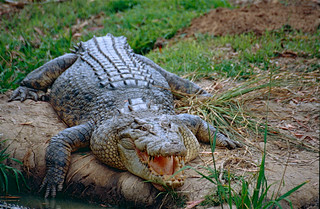
Saltwater Crocodile (Crocodylus porosus)


Geographic Distribution and Ecological Niches
The saltwater crocodile (Crocodylus porosus) boasts the widest distribution of any crocodilian species, spanning a vast swathe of the Indo-Pacific region. Its range extends from the eastern coast of India, through Southeast Asia, including countries like Thailand, Malaysia, Indonesia, and the Philippines, down to northern Australia and across to Micronesia.
This remarkable adaptability allows it to inhabit a variety of environments. Primarily, it thrives in estuarine systems where freshwater rivers meet the sea, creating brackish conditions. However, it is also found in mangrove swamps, coastal marshes, and even ventures into the open ocean, demonstrating an exceptional tolerance for salinity.
Freshwater rivers and billabongs also serve as important habitats, particularly for juvenile crocodiles. This broad habitat preference underscores its resilience and its significant ecological presence across diverse coastal and riverine landscapes.
Predatory Strategies and Trophic Impact
As a hypercarnivorous apex predator, Crocodylus porosus exerts a profound influence on its ecosystems. Its diet is exceptionally broad and opportunistic, reflecting its status as an efficient hunter. Prey items include a wide array of aquatic and terrestrial animals. Fish, from small reef dwellers to large pelagic species, form a significant part of the diet, alongside crustaceans, amphibians, and other reptiles.
Birds and mammals are also frequently targeted. Larger crocodiles are capable of taking down prey as large as water buffalo, wild pigs, and even sharks. Their hunting technique typically involves an ambush strategy, utilizing their camouflage and explosive bursts of speed from a submerged position.
They often employ a 'death roll' to dismember larger prey or to drown it. This top-down predatory pressure helps regulate populations of prey species, influencing community structure and maintaining the health and balance of aquatic and semi-aquatic environments.
Morphology, Physiology, and Longevity
The sheer physical presence of the saltwater crocodile is awe-inspiring. Adult males are significantly larger than females, with maximum recorded lengths rarely exceeding 6.3 meters (21 ft) and weights reaching up to 1,500 kg (3,300 lb). This makes them the largest living reptiles. Their bodies are heavily armored with osteoderms (bony plates) embedded in their skin, providing robust protection.
Their powerful jaws possess an immense bite force, estimated to be among the strongest in the animal kingdom. Physiologically, they possess adaptations for both aquatic and terrestrial life, including valvular nostrils and ear openings that can be closed underwater. Their thermoregulation involves basking in the sun to raise body temperature and seeking shade or water to cool down.
While precise lifespan data in the wild is challenging to obtain, estimates suggest they can live for 70 years or more, contributing to their role as long-term ecosystem engineers.
Conservation Status and Human Interactions
Historically, saltwater crocodiles were heavily exploited for their skins, leading to severe population declines throughout much of their range by the mid-20th century. International trade bans and dedicated conservation programs, including the establishment of protected areas and captive breeding initiatives, have been instrumental in their recovery. Consequently, Crocodylus porosus is currently listed as Least Concern on the IUCN Red List, reflecting a stabilization and increase in populations in many regions.
However, threats such as illegal hunting, habitat destruction due to coastal development and pollution, and human-wildlife conflict persist. Their large size and predatory nature mean they are considered dangerous to humans, and understanding their behavior and maintaining safe distances is crucial for coexistence in areas where human and crocodile populations overlap.
See also
Based on content from Wikipedia · Licensed under CC BY-SA 4.0