

Salar de Atacama
Images

Recuerdos del Salar de Atacama / Memories from Salar de Atacama
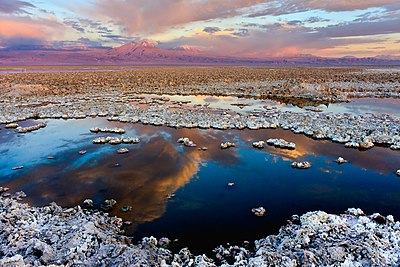


Geological Formation and Volcanic Spectacle
The Salar de Atacama is a testament to geological processes in an arid environment. Situated in northern Chile, it is the country's largest salt flat, characterized by its immense size and the absence of external drainage systems. This endorheic basin is cradled by significant mountain ranges: the main Andes chain to the east and the Cordillera de Domeyko to the west.
The landscape is dramatically punctuated by a series of imposing volcanoes, including the iconic Licancabur, Acamarachi, Aguas Calientes, and the highly active Láscar. These stratovolcanoes, aligned along the eastern edge, not only define the visual grandeur of the Salar but also hint at the intense geothermal and tectonic activity shaping the region. The extreme aridity of the Atacama Desert plays a crucial role in the formation and preservation of the salt crust, as minimal rainfall allows for maximum evaporation of water, concentrating dissolved minerals over millennia.
Cultural Heritage and Indigenous Stewardship
The Salar de Atacama and its surrounding territories have been the ancestral lands of the Likan Antay people for generations. Their deep historical and cultural connection to this unique environment is fundamental to understanding the region. The Likan Antay have developed intricate knowledge systems related to the desert's ecology, water resources, and mineral wealth, often employing sustainable practices passed down through oral traditions.
Their presence predates modern industrialization and national borders, making them the original stewards of this land. As the Salar de Atacama has become a focal point for resource extraction, the Likan Antay community's rights, cultural preservation, and involvement in decision-making processes are increasingly important considerations in regional governance and development strategies. Their continued presence and advocacy are vital for maintaining the cultural integrity of the area.
The Global Significance of Lithium Extraction
In recent decades, the Salar de Atacama has risen to international prominence as a major source of lithium. The subterranean brines beneath the salt flat are exceptionally rich in this alkali metal, a critical component for modern technology. Lithium is indispensable for the production of rechargeable batteries, which power everything from portable electronics like smartphones and laptops to the rapidly expanding electric vehicle (EV) market.
The extraction process involves pumping the mineral-rich brine into vast solar evaporation ponds. The intense desert sun facilitates the evaporation of water, concentrating the lithium salts. This method, while effective in arid climates, requires significant water usage and can have environmental impacts.
The Salar de Atacama's substantial lithium reserves position it as a key player in the global supply chain, influencing geopolitical dynamics and the transition towards renewable energy solutions.
Socio-Economic Dynamics and Governance
The economic activities centered around the Salar de Atacama, particularly lithium extraction, have profound socio-economic implications for the region and Chile as a whole. While providing significant revenue and employment opportunities, these operations also raise complex questions regarding environmental sustainability, water resource management, and the equitable distribution of benefits. The governance of such a resource-rich area involves navigating national regulations, international market demands, and the rights and concerns of the indigenous Likan Antay population.
Educational initiatives in the region often aim to balance the national curriculum with the specific needs and cultural heritage of the local communities, fostering an understanding of both modern industry and traditional knowledge. Ensuring responsible resource management and inclusive development remains a key challenge for the future of the Salar de Atacama.
See also
Frequently Asked Questions
What is the Salar de Atacama?+
Why is the Salar de Atacama so salty?+
Where are the volcanoes near the Salar de Atacama?+
Who are the Likan Antay people?+
Why is the Salar de Atacama important for batteries?+
Based on content from Wikipedia · Licensed under CC BY-SA 4.0