

Saccade
Images
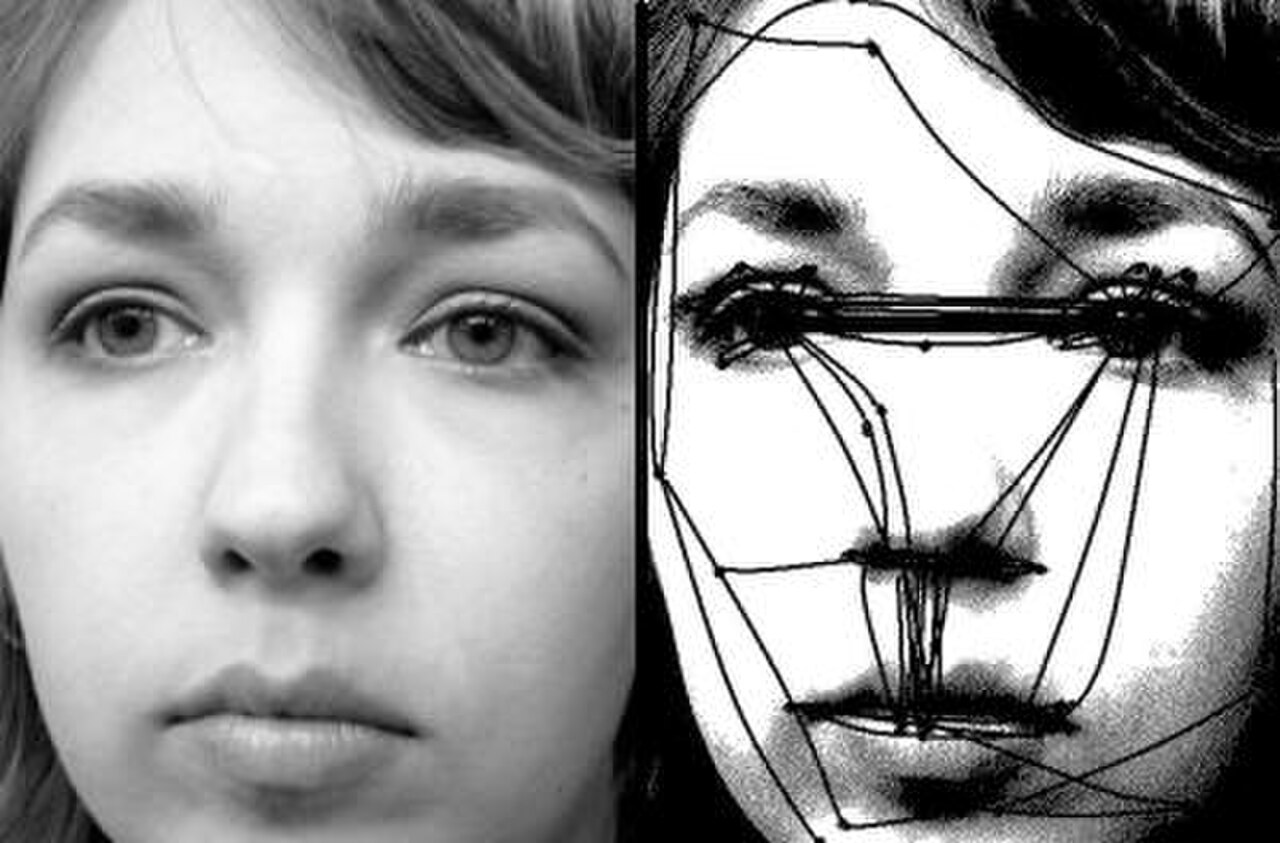
Saccade


The Mechanics and Phenomenology of Saccadic Eye Movements
A saccade represents a fundamental mode of visual exploration, characterized by rapid, ballistic, and simultaneous movements of both eyes between distinct fixation points. Unlike smooth pursuit, which tracks moving objects with continuous motion, saccades are discrete jumps, typically lasting less than 100 milliseconds. These movements are ballistic, meaning once initiated, their trajectory and endpoint are largely predetermined, with minimal capacity for mid-flight correction.
The primary function of saccades is to efficiently reposition the fovea, the area of the retina with the highest photoreceptor density and thus the sharpest visual acuity, onto regions of interest within the visual field. This allows for the rapid acquisition of high-resolution visual data, crucial for tasks ranging from reading text to navigating complex environments. The brain orchestrates these movements to maximize the intake of relevant visual information, effectively building a coherent perception of the world from a series of discrete, high-acuity snapshots.
The phenomenon was first systematically observed by French ophthalmologist Émile Javal in the 1880s, who used mirrors to study eye movements during silent reading, revealing the discontinuous nature of visual scanning.
Historical Context and the Dawn of Visual Neuroscience
The scientific investigation into saccades emerged during a pivotal era in the study of human perception and neuroscience. Émile Javal's pioneering work in the late 19th century marked a significant departure from earlier assumptions about continuous visual scanning. By employing a simple yet ingenious experimental setup involving a mirror to observe eye movements during reading, Javal provided empirical evidence for the jerky, stepwise nature of visual exploration. His term 'saccade,' derived from the French word for 'jerk,' accurately captured the essence of these rapid eye movements.
Javal's findings challenged the prevailing notion of smooth visual processing and highlighted the active, dynamic role of the eyes in constructing our visual experience. This early research laid the groundwork for future investigations into the neural control of eye movements and the intricate relationship between motor commands and sensory perception, contributing significantly to the nascent field of visual science and psychophysics.
The Neural Architecture Underpinning Saccadic Control
The generation and control of saccades involve a sophisticated interplay of cortical and subcortical brain structures. Cortical control is primarily mediated by the frontal eye fields (FEF), located in the prefrontal cortex. The FEF plays a crucial role in the planning, initiation, and execution of volitional saccades, integrating sensory information with behavioral goals to direct gaze.
Complementing the cortical pathways is the subcortical control exerted by the superior colliculus (SC), a midbrain structure. The SC is involved in both reflexive saccades, triggered by salient visual stimuli, and in contributing to the precise motor commands for voluntary saccades. It acts as a critical hub for integrating visual and motor information, helping to generate the rapid, coordinated signals sent to the oculomotor nuclei that control the eye muscles.
The interplay between these systems allows for both rapid, stimulus-driven gaze shifts and deliberate, goal-directed visual exploration, demonstrating the brain's remarkable capacity for precise motor control in service of perception.
Functional Significance and Clinical Implications
Saccades are indispensable for a wide array of cognitive functions and daily activities. Beyond reading and navigation, they are integral to object recognition, visual search, and even social interaction, as eye gaze often conveys communicative intent. The precise timing and accuracy of saccades are critical; even minor deviations can significantly impair visual performance.
Consequently, disorders affecting saccadic eye movements can have profound functional consequences. Conditions such as Parkinson's disease, stroke, and certain neurodegenerative disorders are often associated with impaired saccadic control, manifesting as slowed saccades, inaccurate saccades, or difficulties in initiating them. Studying saccades not only deepens our understanding of normal visual processing and motor control but also provides valuable insights into the neurological underpinnings of various clinical conditions, serving as potential biomarkers for disease progression and therapeutic targets.
See also
Frequently Asked Questions
What is a saccade?+
Why do our eyes do saccades?+
How do our brains control saccades?+
Who first discovered saccades?+
Are saccades the same as smooth pursuit?+
Based on content from Wikipedia · Licensed under CC BY-SA 4.0