

The Rus': Brave Explorers of the East!
Images

Ploschad Revolutsii Metro Station



![2015 US Open Tennis - Qualies - Margarita Gasparyan (RUS) [1] def. Marina Melnikova (RUS)](https://live.staticflickr.com/645/20792113148_f20a8858cf_n.jpg)
The Enigma of Origin and Early Expansion
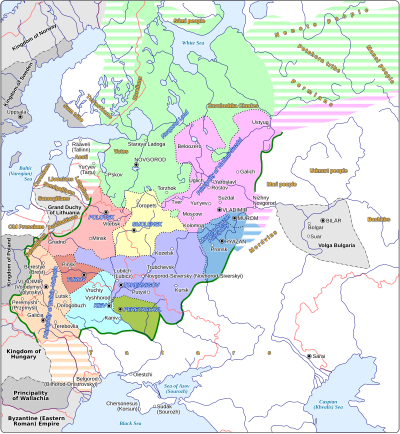
The identity and origins of the Rus' people remain a subject of scholarly debate, often referred to as the 'Normanist controversy.' The prevailing theory posits that the Rus' were a group of Norsemen, likely Swedes, who migrated eastward around the 9th century CE. Driven by trade opportunities and perhaps population pressures, they exploited the extensive river systems of Eastern Europe, particularly the Volga and Dnieper, which provided direct routes to the wealthy markets of the Byzantine Empire and the Abbasid Caliphate.
Their seafaring prowess, honed in Scandinavia, was adapted to riverine navigation, utilizing longships capable of traversing both open waters and shallower channels. This strategic mobility allowed them to establish trading posts and exert influence over disparate Slavic, Finnic, and Baltic tribes, laying the groundwork for future political entities. Their initial presence was primarily as traders and mercenaries, gradually evolving into rulers.
Forging States
The Rus' played a critical role in the formation of early East Slavic polities, most notably Kievan Rus'. Historical accounts, such as the Primary Chronicle, suggest that local Slavic tribes, facing internal strife and external threats, invited or accepted Rus' leadership. The establishment of centers like Novgorod in the north and Kyiv in the south marked the consolidation of Rus' power.
These centers became hubs for trade, administration, and military organization. The Rus' elite, often referred to as 'Varangians' in early sources, imposed tribute systems on the surrounding populations and organized large-scale expeditions. Their military strength, derived from their Norse heritage, was crucial in maintaining control and defending trade routes.
The 'route from the Varangians to the Greeks' became a vital artery, connecting the Baltic to the Black Sea and facilitating immense cultural and economic exchange with the sophisticated Byzantine civilization.
Economic Powerhouse
The economic success of the Rus' was intrinsically linked to their control over vital trade routes and their ability to extract tribute. Their primary exports included valuable commodities like furs, honey, wax, and slaves, which were in high demand in Byzantium and the Islamic world. In return, they acquired vast quantities of silver dirhams from the Islamic caliphates, as well as luxury goods such as silks, spices, and jewelry from Byzantium.
The sheer volume of silver found in Rus' hoards provides compelling evidence of the scale of this long-distance trade. The Rus' acted not just as traders but as organizers of production and collection, integrating diverse regions into a complex Eurasian economic network. This economic dominance allowed the Rus' elite to flourish, fund their military endeavors, and solidify their political authority over a vast and diverse territory.
Cultural Synthesis and Enduring Legacy
The Rus' were not merely conquerors; they were agents of profound cultural transformation. Their interactions with the Byzantine Empire were particularly significant, leading to the adoption of Orthodox Christianity in the late 10th century under Prince Vladimir the Great. This conversion had a lasting impact, shaping the religious, cultural, and artistic landscape of Eastern Europe for centuries.
The introduction of the Cyrillic alphabet, developed by Saints Cyril and Methodius, facilitated literacy and the spread of religious texts. The Rus' also adopted and adapted many aspects of Byzantine governance and law. The very name 'Rus'' evolved to become the ethnonym for the East Slavic peoples and the historical root of the modern name 'Russia.' The legacy of the Rus' is thus multifaceted, encompassing the formation of foundational states (Kievan Rus'), the establishment of crucial trade networks, and the deep cultural and religious imprint that continues to define the identity of millions in Russia, Ukraine, and Belarus today.
See also
Frequently Asked Questions
Who were the Rus' and where did they come from?+
How did the Rus' travel and trade across Europe?+
What cities did the Rus' build and why were they important?+
What did the Rus' trade with and what did they receive in return?+
How did the Rus' influence religion and culture?+
Based on content from Wikipedia · Licensed under CC BY-SA 4.0