

Royal Society of Arts
Images

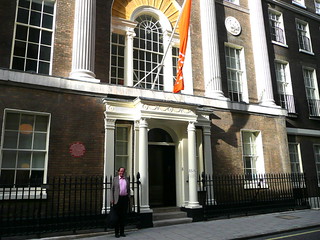
Royal Society of Arts, Strand, WC2




Genesis and Enduring Mandate
Founded in 1754, the Royal Society of Arts (RSA) emerged during a period of profound societal transformation in Britain, driven by the Enlightenment and the burgeoning Industrial Revolution. Its founding charter articulated an ambitious and multifaceted mission: to 'embolden enterprise, enlarge science, refine art, improve our manufacturers and extend our commerce.' This was not merely a call for economic growth but a holistic vision for societal betterment.
Crucially, the charter also recognized the imperative to address social inequities, explicitly aiming 'to alleviate poverty and secure full employment.' This dual commitment to innovation and social welfare has remained a constant thread throughout the RSA's existence, positioning it as a unique institution that bridges the gap between creative endeavors, scientific advancement, economic development, and humanitarian concerns. Its longevity speaks to the timeless relevance of its core objectives in fostering a dynamic and equitable society.
A Pantheon of Influence
The RSA's roster of Fellows reads like a who's who of influential figures who have shaped modern thought and culture. From the literary genius of Charles Dickens and the scientific rigor of Marie Curie and Stephen Hawking to the economic theories of Adam Smith and Karl Marx, the society has consistently attracted individuals at the forefront of their fields. Its historical membership also includes polymaths like Benjamin Franklin, whose contributions spanned science, politics, and invention.
In more contemporary times, the RSA continues to honor luminaries such as Sir David Attenborough, whose work has profoundly influenced environmental awareness, and Dame Judi Dench, a titan of the performing arts. The inclusion of figures like Tim Berners-Lee, the inventor of the World Wide Web, underscores the RSA's adaptability and its recognition of groundbreaking contributions in emerging fields. This diverse assembly of Fellows highlights the society's role as a nexus for interdisciplinary dialogue and a testament to its broad impact on global progress.
Beyond the Arts
While the 'Arts' are central to its identity, the RSA's scope extends far beyond traditional artistic disciplines. The inclusion of 'Manufactures and Commerce' in its founding mission signifies a deep-seated interest in practical application, industrial development, and economic vitality. Throughout its history, the RSA has been instrumental in promoting advancements in agriculture, engineering, design, and trade.
It has acted as a crucial incubator for ideas that translate into tangible improvements in people's lives and the functioning of economies. This broad perspective allows the RSA to foster collaborations between seemingly disparate fields, recognizing that true innovation often arises at the intersection of art, science, technology, and business. By supporting projects that enhance manufacturing processes, encourage entrepreneurship, and facilitate trade, the RSA actively contributes to economic resilience and progress.
Contemporary Relevance
In the 21st century, the RSA's mission to 'embolden enterprise' and address societal challenges remains highly pertinent. The organization actively engages with contemporary issues such as climate change, the future of work, social inequality, and the ethical implications of new technologies. It serves as a vital platform for its global network of Fellows-now spanning over 80 countries-to convene, share insights, and collaborate on solutions.
The RSA's work is not confined to historical reflection; it is forward-looking, aiming to inspire and equip individuals and communities to navigate complex future landscapes. Through its research, public events, and fellowship programs, the RSA continues to champion innovative thinking and practical action, reinforcing its position as a dynamic force for positive societal change and a crucial contributor to the ongoing evolution of culture, economy, and governance.
See also
Frequently Asked Questions
What is the Royal Society of Arts?+
When was the Royal Society of Arts founded?+
Who are some famous people who are members of the Royal Society of Arts?+
What does the Royal Society of Arts do to help people and the world?+
Why does the Royal Society of Arts care about both art and science?+
Based on content from Wikipedia · Licensed under CC BY-SA 4.0