

Roman Aqueducts: Super Waterways!
Images

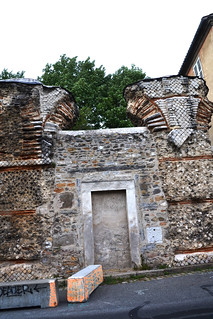
Roman aqueduct Tarragona




Foundations of Urban Life
The construction of aqueducts was a defining characteristic of Roman civilization, transforming urban landscapes and enabling unprecedented population densities. Beginning with the Aqua Appia in 312 BC, Rome embarked on a centuries-long project of water management that would eventually see eleven major aqueducts supplying the capital by the 3rd century AD, sustaining an estimated population exceeding one million. These systems were not merely utilitarian; they were integral to Roman public health, social customs, and economic vitality.
The provision of clean water facilitated the development of extensive public bath complexes, which served as crucial social and recreational hubs. Furthermore, aqueducts supported sanitation through flushing sewers and provided the necessary resources for burgeoning industries such as textile dyeing and milling, underpinning the empire's economic infrastructure. The very existence of these complex water networks allowed Roman cities to flourish, demonstrating a sophisticated understanding of urban planning and resource management that was unparalleled in the ancient world.
Mastering Topography
The engineering prowess behind Roman aqueducts is most evident in their ability to overcome challenging terrain using fundamental principles of physics and structural mechanics. The primary motive force was gravity, achieved through meticulous surveying to establish a consistent, albeit minimal, downward gradient along the entire length of the conduit. This gradient, typically ranging from 1:1000 to 1:5000, ensured a steady flow without excessive erosion or stagnation.
The majority of aqueduct conduits were constructed underground, often following the natural contours of the land to minimize excavation and maintain the precise gradient. Where topography presented insurmountable obstacles, Romans employed tunneling or, most famously, built impressive bridges and viaducts. These structures, characterized by their repetitive use of the arch, not only provided structural stability but also became iconic symbols of Roman engineering.
The use of materials like Roman concrete, a highly durable volcanic ash-based cement, allowed for the construction of massive, long-lasting structures capable of withstanding significant forces.
Water Hierarchy and Economic Symbiosis
The management and distribution of aqueduct water reveal a complex social and economic hierarchy within Roman society. Official regulations established a clear order of priority: water for public fountains, essential for the general populace, came first, followed by water for public baths, and then supplies to private households, which were often metered and charged for. While wealthier citizens could secure private connections, the system ensured that basic water needs were met for the broader community.
Beyond direct consumption, aqueducts fostered significant economic activity. Industries requiring substantial water volumes, such as fulling and dyeing, were concentrated in areas served by aqueducts. Water mills, powered by aqueduct channels, increased the efficiency of grain processing.
Even surplus and waste water played a role, irrigating market gardens and contributing to the flushing of sewers, thereby supporting urban hygiene and food production. The informal diversion of water for agricultural purposes during peak growing seasons, though technically illegal, was often tolerated due to its contribution to food security and low prices, illustrating a pragmatic approach to resource allocation.
A Lasting Blueprint
The Roman aqueduct system served as a model for water management across the empire and influenced subsequent engineering practices for centuries. The detailed accounts of surveyors like Vitruvius in 'De architectura' and administrators like Frontinus in his 'De aquaeductu' provide invaluable historical and technical insights into their design, construction, and maintenance. The durability of these structures is remarkable; many remained functional well into the medieval and early modern periods, and a few continue to supply water today.
Iconic surviving examples, such as the Pont du Gard in France, the Aqueduct of Segovia in Spain, and the remnants of the aqueducts feeding Constantinople, are not only archaeological treasures but also powerful testaments to the ingenuity, ambition, and organizational capacity of the Roman Empire. They represent a critical technological achievement that enabled the growth and sustainability of complex urban societies, leaving an indelible mark on the history of civil engineering.
See also
Based on content from Wikipedia · Licensed under CC BY-SA 4.0