

Robert Indiana: The Man Who Loved LOVE!
Images

LEGO, Robert Indiana Style



The Genesis of Pop Art and Indiana's Unique Voice
Robert Indiana, born Robert Clark in 1928, emerged as a significant force within the American Pop Art movement, a cultural phenomenon that challenged traditional notions of fine art by embracing imagery from mass media and popular culture. Unlike some contemporaries who focused on commercial products, Indiana's Pop Art often delved into more personal and symbolic territories, utilizing bold graphics, numbers, and simple, declarative words.
His artistic journey began with a period of study and experimentation, eventually leading him to adopt the name 'Indiana,' a nod to his time spent in that state, which became intrinsically linked to his artistic persona. His early work often featured stenciled numbers and words, exploring themes of American identity, spirituality, and the passage of time. This distinctive approach set him apart, offering a more introspective and conceptual dimension to the often playful and consumerist-driven Pop Art scene.
The Evolution of the LOVE Symbol
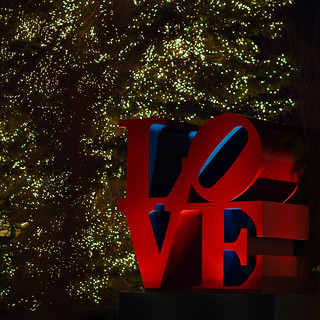
The creation of the LOVE symbol is a cornerstone of Robert Indiana's legacy, yet its genesis is rooted in personal experience and artistic evolution. Initially conceived in 1964 as a Christmas card, the design featuring the stacked letters L-O-V-E, with the 'O' canted at a 45-degree angle, was a direct response to his relationship with fellow artist Ellsworth Kelly. This tilted 'O' is often interpreted as a visual representation of their romantic connection.
The artwork's subsequent adoption by the Museum of Modern Art for its 1965 Christmas card propelled it into the public consciousness, transforming it from a personal motif into a widely recognized emblem. Indiana's decision to then translate this design into monumental sculptures, first in aluminum and later in Cor-Ten steel, cemented its status as a global icon, appearing in numerous cities worldwide and becoming a potent symbol of affection, unity, and the enduring power of love.
A Broader Artistic Spectrum
While the LOVE symbol dominates public perception, Robert Indiana's artistic contributions extend far beyond this singular motif. His oeuvre encompasses a wide range of mediums, including painting, sculpture, printmaking, and even theatrical design. Indiana designed sets and costumes for Virgil Thomson and Gertrude Stein's opera 'The Mother of Us All,' demonstrating his versatility and ability to apply his distinctive visual language to narrative and performance.
His paintings and prints frequently incorporated bold numerical sequences, abstract shapes, and evocative titles, exploring themes of American history, politics, and his own spiritual beliefs. Exhibitions of his work have been held internationally, and his pieces are housed in major museum collections such as the Museum of Modern Art, the Tate Modern, and the San Francisco Museum of Modern Art, underscoring his significant and lasting impact on contemporary art discourse.
Symbolism, Identity, and Cultural Resonance
Robert Indiana's work, particularly the LOVE symbol, has resonated deeply within broader cultural contexts, including the LGBTQ+ rights movement. The revelation that the LOVE design was influenced by his relationship with Ellsworth Kelly added a layer of personal narrative and queer subtext to the symbol, allowing it to be embraced by the LGBTQ+ community as an emblem of love and acceptance. Although Indiana himself was often reticent about discussing his personal life and sexuality, his art has become a powerful, albeit sometimes unintentional, touchstone for discussions about identity, relationships, and social progress.
The enduring popularity and widespread reproduction of the LOVE symbol, despite Indiana's own complex feelings about its commercialization, attest to its profound and multifaceted cultural significance.
See also
Frequently Asked Questions
What is the LOVE symbol and why is it famous?+
Who was Robert Indiana and what kind of art did he make?+
How did the LOVE symbol start as a Christmas card?+
Why does the letter O in LOVE tilt?+
Where can people see the LOVE symbol today?+
Based on content from Wikipedia · Licensed under CC BY-SA 4.0