

RNA Virus
Images

3D medical animation corona virus


The RNA Genome
RNA viruses are distinguished by their genetic material, which is RNA rather than DNA. This RNA genome can exist in several forms: single-stranded positive-sense RNA (+ssRNA), single-stranded negative-sense RNA (-ssRNA), or double-stranded RNA (dsRNA). The Baltimore classification system categorizes these viruses into Groups III (+/- dsRNA), IV (+ssRNA), and V (-ssRNA).
A notable exception is Group VI, the retroviruses, which possess an RNA genome but utilize a DNA intermediate during their replication cycle, a process mediated by reverse transcriptase. This diversity in genome structure and replication strategy contributes to the vast evolutionary adaptability and varied pathogenic potential of RNA viruses.
Evolutionary Tapestry
The precise origins of RNA viruses remain an active area of research, but their ancient lineage is widely accepted. Many scientists hypothesize that RNA viruses may have emerged early in the history of life, potentially predating DNA-based life forms. Their ubiquitous presence across all known ecosystems, from extreme environments to complex host organisms, underscores their long evolutionary history and remarkable adaptability.
Studying their genetic sequences allows researchers to reconstruct phylogenetic trees, providing insights into their diversification and co-evolution with hosts. This deep evolutionary history suggests RNA viruses have been instrumental in shaping the genetic landscape of life on Earth.
The Dual Role
RNA viruses exert a profound influence on global health, serving as etiological agents for numerous significant human and animal diseases. Pathogens like influenza viruses, coronaviruses (responsible for SARS, MERS, and COVID-19), Dengue virus, Ebola virus, and poliovirus highlight their capacity for widespread morbidity and mortality. The rapid mutation rates inherent in many RNA virus replication cycles, particularly those lacking proofreading mechanisms, contribute to antigenic drift and shift, necessitating continuous development of vaccines and antiviral therapies.
Beyond their direct impact on health, RNA viruses also act as significant evolutionary forces, driving genetic variation in host populations through mechanisms like horizontal gene transfer and by influencing host immune system evolution.
Molecular Machinery
The replication of RNA viruses is a complex process heavily reliant on viral enzymes, most notably RNA-dependent RNA polymerase (RdRp). This enzyme is crucial for synthesizing new viral RNA genomes from existing RNA templates. For +ssRNA viruses, the genome can directly serve as mRNA, initiating translation and the synthesis of RdRp.
For -ssRNA viruses, RdRp must be packaged within the virion to transcribe the negative-sense genome into positive-sense mRNA. Retroviruses, classified under Group VI, employ a unique strategy involving reverse transcriptase to convert their RNA genome into DNA, which is then integrated into the host genome. The fidelity of these replication processes, particularly the presence or absence of proofreading capabilities in RdRp, directly impacts the mutation rate and evolutionary trajectory of the virus.
A Spectrum of Impact
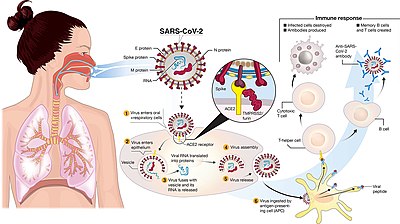
The impact of RNA viruses spans a broad spectrum. They are responsible for some of the most devastating pandemics in human history, including the ongoing COVID-19 pandemic caused by SARS-CoV-2, and historical outbreaks of influenza and polio. Diseases like hepatitis C, West Nile fever, and rabies also underscore their significant public health burden.
However, RNA viruses are not solely agents of disease. Certain RNA viruses, particularly retroviruses like HIV, have become invaluable tools in molecular biology and genetic engineering, particularly in the development of gene therapy vectors. Understanding their life cycles and interactions with host cells continues to be a cornerstone of virology and infectious disease research.
See also
Frequently Asked Questions
What is an RNA virus?+
How do RNA viruses make more copies of themselves?+
Why do RNA viruses cause diseases like COVID‑19 and Ebola?+
Where do RNA viruses live?+
Are RNA viruses always bad?+
Based on content from Wikipedia · Licensed under CC BY-SA 4.0