

RNA interference
Images

1ytu argonaute dsrna





The Intricate Dance of Gene Silencing
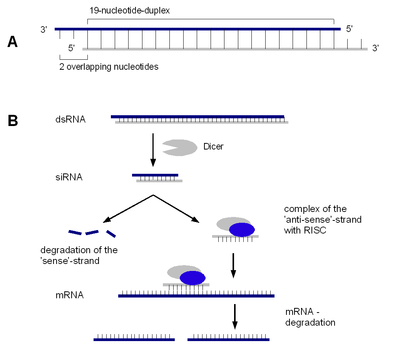
RNA interference (RNAi) represents a sophisticated, evolutionarily conserved mechanism by which cells regulate gene expression through sequence-specific degradation or translational repression of target RNA molecules. At its core, RNAi is initiated by the presence of double-stranded RNA (dsRNA). This dsRNA is processed by the RNase III enzyme Dicer into short interfering RNAs (siRNAs) or microRNAs (miRNAs), typically 21-23 nucleotides in length.
These small RNAs are then incorporated into the RNA-induced silencing complex (RISC), a multi-protein machinery that includes an Argonaute protein. The guide strand of the siRNA or miRNA within RISC directs the complex to complementary target messenger RNA (mRNA) sequences. Upon binding, RISC can either induce cleavage of the mRNA, leading to its degradation and preventing protein synthesis (post-transcriptional gene silencing), or, in some cases, inhibit translation or even lead to transcriptional repression through epigenetic modifications like DNA methylation.
A Historical Convergence of Discoveries
The understanding of RNAi did not emerge from a single eureka moment but rather from the convergence of observations across different research groups studying seemingly distinct phenomena. Early work in plants described 'co-suppression,' where introducing an extra copy of a gene led to the silencing of both the introduced and endogenous copies. In fungi, a similar process was termed 'quelling.' In nematodes, 'post-transcriptional gene silencing' (PTGS) was observed.
The pivotal breakthrough came in 1998 with the publication by Andrew Fire and Craig Mello, who systematically demonstrated that introducing dsRNA into the nematode Caenorhabditis elegans could specifically and efficiently silence target genes. Their work unified these disparate observations under the umbrella of RNA interference and elucidated the fundamental molecular players, earning them the 2006 Nobel Prize in Physiology or Medicine.
This foundational work paved the way for understanding RNAi's broad biological roles.
Evolutionary Significance
RNAi is not merely a laboratory tool; it is a critical component of cellular defense and organismal development across a vast array of eukaryotes. As a defense mechanism, RNAi provides a robust barrier against mobile genetic elements, such as transposons, and viral pathogens that often utilize RNA intermediates. By recognizing and degrading foreign or aberrant nucleic acids, RNAi helps maintain genome integrity and prevent viral replication.
Furthermore, endogenous miRNAs, processed from hairpin structures encoded in the genome, play indispensable roles in regulating endogenous gene expression. They fine-tune developmental processes, control cell differentiation, manage metabolic pathways, and influence cellular responses to stress, demonstrating RNAi's deep integration into the fundamental regulatory networks of life.
The Molecular Toolkit
The RNAi pathway is orchestrated by a conserved set of molecular machinery. The initiation step involves Dicer, an enzyme that recognizes long dsRNA precursors and cleaves them into short duplexes of approximately 20-25 nucleotides. These duplexes are then unwound, and one strand, the guide strand, is loaded into an Argonaute (Ago) protein, forming the core of the RISC.
In mammals, Argonaute 2 (Ago2) is the primary catalytic component responsible for mRNA cleavage. The guide strand within RISC acts as a template, enabling the complex to scan cellular mRNAs for complementary sequences. Upon successful binding, Ago2 mediates the endonucleolytic cleavage of the target mRNA, leading to its rapid degradation.
This precise targeting and destruction of mRNA is the hallmark of siRNA-mediated gene silencing. miRNA pathways share many of these components but often result in translational repression rather than direct cleavage, depending on the degree of complementarity.
Transformative Applications in Research and Therapeutics
The ability to specifically silence genes using synthetic siRNAs has revolutionized biological research, providing an unprecedented tool for functional genomics. Researchers can now systematically 'knock down' gene expression in cell cultures or model organisms to dissect complex biological pathways, identify gene functions, and validate drug targets. Large-scale RNAi screens have accelerated the discovery of genes involved in everything from cell division to disease progression.
Beyond research, RNAi holds immense therapeutic potential. The development of RNAi-based drugs offers a precise and potent strategy for treating diseases caused by the overexpression or aberrant function of specific genes. Conditions like hereditary amyloidosis, certain viral infections, and even some cancers are being targeted by RNAi therapeutics, marking a new era in precision medicine where gene silencing can be harnessed to restore health.
See also
Frequently Asked Questions
What is RNA interference?+
How does RNA interference start?+
What happens after the small RNA is made?+
Why is RNA interference important for protecting the body?+
Who discovered RNA interference?+
Based on content from Wikipedia · Licensed under CC BY-SA 4.0