

Richard Stallman
Images

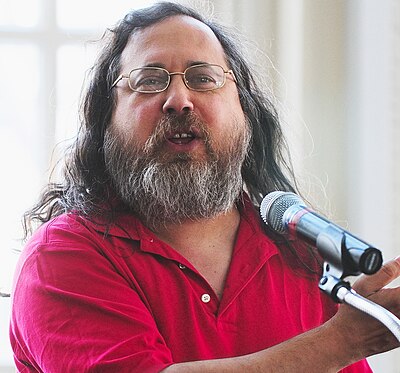
Richard Stallman aux RMLL de Montpellier




The Genesis of a Digital Liberation Movement
Richard Stallman, born March 16, 1953, is a towering figure in computer science, renowned not just for his programming prowess but for his unwavering commitment to user freedom. Emerging from the early hacker culture of MIT, Stallman became disillusioned with the increasing proprietary nature of software. He observed that software was becoming a closed product, limiting users' ability to understand, modify, or share it.
This led him to launch the GNU Project in September 1983, a monumental undertaking to build a complete, free, Unix-like operating system. This initiative was the catalyst for the broader free software movement, a philosophical and practical stance advocating for the liberation of software from restrictive ownership models. Stallman's vision was radical: to empower individuals by granting them control over the digital tools they use daily, fostering collaboration and innovation.
Foundational Contributions to Free Software
Stallman's impact extends beyond philosophy; he is a prolific programmer who developed critical components of the free software ecosystem. He founded the Free Software Foundation (FSF) in October 1985, an organization dedicated to promoting free software and providing essential resources and legal frameworks. Among his most significant technical achievements are the GNU Compiler Collection (GCC), a versatile compiler essential for building software across many platforms, and GNU Emacs, a highly extensible and customizable text editor that remains a favorite among developers.
These tools were not merely functional; they were designed and released under principles that ensured they would remain free, serving as practical examples of his ideals and enabling the development of countless other free software projects.
The Ingenuity of Copyleft and Licensing
Perhaps Stallman's most innovative contribution is the concept of 'copyleft'. Recognizing that copyright law traditionally restricts sharing and modification, Stallman ingeniously repurposed it to guarantee freedom. Through licenses like the GNU General Public License (GPL), the most influential free software license ever created, Stallman established a legal mechanism to preserve user freedoms.
The GPL mandates that any derivative work based on GPL-licensed software must also be released under the GPL. This 'viral' characteristic ensures that freedom propagates, preventing proprietary forks from emerging and locking down the code. Stallman's meticulous drafting of these licenses provided the legal backbone necessary for the free software movement to thrive and protect itself from encroachment.
Advocacy Against Digital Restrictions
Since the mid-1990s, Stallman has dedicated the majority of his time to activism, campaigning vigorously against what he perceives as threats to user autonomy. He is a vocal critic of software patents, arguing they stifle innovation and create artificial barriers. He famously coined the term 'digital restrictions management' (DRM) to reframe 'digital rights management,' asserting that these technologies primarily serve to restrict users rather than protect rights.
His broader critique encompasses a range of practices, including End-User License Agreements (EULAs), non-disclosure agreements (NDAs), activation keys, dongles, proprietary file formats, and the distribution of binary executables without corresponding source code. Stallman argues these systems collectively erode user freedom, turning users into passive consumers rather than active participants in their technological environment.
Navigating Controversy and Continued Influence
While Richard Stallman's contributions to computing and digital freedom are undeniable, his public career has also been marked by controversy. In September 2019, he resigned from his positions as president of the FSF and as a visiting scientist at MIT following remarks he made concerning the Jeffrey Epstein scandal. These events led to significant debate within the free software community regarding his public role and the separation of his ideas from his person.
Despite stepping down from leadership roles, Stallman remained involved with the GNU Project and, in 2021, returned to the FSF board of directors, indicating a continued, albeit complex, influence on the movement he helped create. His legacy remains a subject of ongoing discussion, highlighting the intricate relationship between technological innovation, ethical advocacy, and personal conduct.
See also
Frequently Asked Questions
Who is Richard Stallman?+
What did he start in 1983?+
What is the GNU General Public License?+
What is copyleft?+
What does he oppose?+
Based on content from Wikipedia · Licensed under CC BY-SA 4.0