

Rhineland-Palatinate
Images

Germany (5), Rhineland-Palatinate, Beinhausen


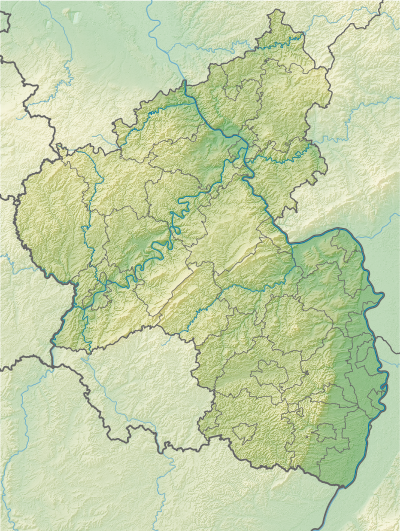


Geographical Foundations and Strategic Location
Rhineland-Palatinate occupies a strategically vital position in western Germany, covering an area of 19,846 square kilometers. Its geography is dominated by the confluence and extensive river valleys of the Rhine and Moselle, which have historically served as crucial arteries for trade, communication, and cultural exchange. This riverine landscape has fostered a unique microclimate ideal for viticulture, making the state Germany's largest wine-producing region.
The state also shares international borders with France, Luxembourg, and Belgium, positioning it as a key player in European integration and cross-border cooperation. Its diverse topography ranges from the volcanic Eifel region to the rolling hills of the Palatinate, offering a rich tapestry of natural environments that influence its economy and lifestyle.
Post-War Genesis and Political Evolution
The establishment of Rhineland-Palatinate in 1946 is a direct consequence of the post-World War II geopolitical landscape. Created by the French military administration, it was an amalgamation of territories previously belonging to Prussia (Rhineland and Nassau provinces), Hesse (Rhenish Hesse), and Bavaria (Palatinate). This deliberate redrawing of boundaries aimed to create a new political entity distinct from the pre-war German states.
Rhineland-Palatinate became a founding member of the Federal Republic of Germany in 1949. A significant historical event was the reintegration of the Saar Protectorate in 1957, which had been administered separately after the war. The state's formation reflects the broader efforts to reconstruct Germany and establish a stable democratic framework.
Cultural Heritage and Societal Fabric
Rhineland-Palatinate is a treasure trove of cultural heritage, most notably its world-renowned wine culture. The extensive vineyards, particularly along the Moselle, Rhine, and Nahe rivers, are not just economic assets but integral to the region's identity and traditions. The landscape is punctuated by a remarkable density of castles and palaces, from the majestic Ehrenbreitstein Fortress in Koblenz to the picturesque Burg Eltz, each whispering tales of medieval power and romantic history.
This rich historical backdrop has also fostered significant emigration; many German-Americans, such as the Pennsylvania Dutch, trace their ancestry directly to Rhineland-Palatinate, carrying their cultural legacy across the Atlantic. The state's cultural fabric is a blend of historical preservation and contemporary life, including its unique status as the only German state hosting extraterritorial nuclear weapons.
Economic Drivers
The economy of Rhineland-Palatinate is characterized by a strong agricultural sector, particularly viticulture, which is a cornerstone of its identity and economic output. It consistently ranks as Germany's leading wine-producing state. Beyond agriculture, the state possesses a robust industrial base, with significant contributions from the chemical industry, automotive manufacturing, and mechanical engineering.
Major economic centers include Ludwigshafen, a global hub for the chemical giant BASF, and Mainz, its capital, which is also a significant media and technology center. The state actively promotes innovation and research, particularly in areas related to its traditional strengths and emerging technologies, fostering a dynamic economic environment that balances its historical legacy with future-oriented development.
Governance, Education, and Modern Relevance
As a federal state within Germany, Rhineland-Palatinate operates under a parliamentary democratic system. Its government is led by a Minister President and a cabinet, responsible to the Landtag (state parliament). The state plays a crucial role in Germany's federal structure, contributing to national policy-making. Education is highly valued, with a comprehensive system encompassing primary, secondary, and tertiary institutions.
Universities in cities like Mainz, Trier, and Kaiserslautern are centers of research and higher learning, contributing to the state's intellectual capital. The presence of US forces and nuclear weapons at Büchel Air Base adds a unique geopolitical dimension, highlighting Rhineland-Palatinate's complex role not just within Germany but on the international stage, touching upon issues of defense, international relations, and historical memory.
See also
Based on content from Wikipedia · Licensed under CC BY-SA 4.0