

Rafflesia: The World's Smelliest Flower!
Images

Rafflesia sp Kinabalu2


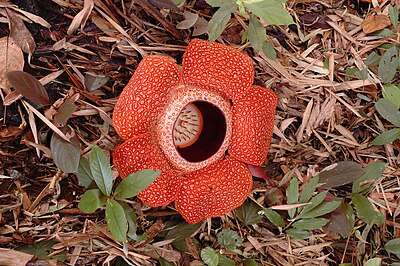


The Enigmatic Morphology and Physiology of Rafflesia
Rafflesia represents a remarkable evolutionary divergence within the plant kingdom, characterized by extreme morphological reduction and a fully parasitic lifestyle. Lacking conventional plant structures such as stems, leaves, and roots, Rafflesia exists primarily as a network of fine, fungal-like filaments (hyphae) embedded within the vascular tissues of its host plant, typically species of the genus Tetrastigma. These internal structures, known as haustoria, are specialized organs that actively penetrate the host's xylem and phloem, enabling the Rafflesia to siphon water and essential nutrients.
The plant's metabolic dependence on its host is absolute, as it cannot photosynthesize. The most conspicuous and scientifically significant feature is its solitary, massive flower, which can reach up to a meter in diameter and weigh over 10 kilograms. This flower emerges directly from the host vine's surface, often near the ground, and is dioecious, meaning individual plants bear either male or female flowers.
The flower's development is slow, taking many months, but its lifespan is brief, typically lasting only a few days before senescence and decomposition set in, releasing a potent carrion-like odor.
A Symphony of Scents
The infamous 'corpse flower' scent emitted by Rafflesia is a sophisticated adaptation for attracting specific pollinators. The odor, a complex blend of volatile organic compounds, mimics decaying flesh, a powerful attractant for carrion flies and certain beetles. These insects, drawn by the smell, land on the flower's surface, often within the central disk or on the reflexed petal margins.
While seeking nectar secreted by glands within the flower or simply exploring, they inadvertently come into contact with the reproductive structures. In male flowers, the anthers are fused into a central column, dusting the visiting insects with pollen. In female flowers, the stigma is also contained within this central disk, allowing visiting insects to deposit pollen from other individuals.
This entomophily, specifically by flies, is crucial for cross-pollination, which is essential for the production of viable seeds. The rarity of successful pollination events, coupled with the limited flowering period and the specific host plant requirements, contributes to the challenging reproductive success of many Rafflesia species.
Historical Encounters and Scientific Discovery
The initial encounters of Westerners with Rafflesia are steeped in the era of colonial exploration and scientific curiosity. French surgeon and naturalist Louis Deschamps documented the plant in Java between 1791 and 1794. However, his detailed notes and exquisite illustrations, which provided the first scientific descriptions, were confiscated by the British in 1798 and remained inaccessible to the scientific community until 1861.
The first documented sighting by a Briton was by Joseph Arnold in 1818 in Sumatra, who was led to a specimen by a local Malay servant. Arnold's awe at the flower's colossal size is vividly captured in his correspondence, describing it as a 'greatest prodigy of the vegetable world.' The genus was subsequently named Rafflesia in honor of Sir Stamford Raffles, the founder of Singapore and leader of the expedition. Modern botanical research, exemplified by the work of botanists like Chris Thorogood, continues to unravel the mysteries of Rafflesia, often involving arduous expeditions into remote rainforests to study its elusive biology and conservation needs.
Conservation Imperatives and Ecological Significance
Rafflesia species are critically important as bio-indicators of the health of Southeast Asian rainforest ecosystems. Their obligate parasitic relationship with specific Tetrastigma vines means that their survival is inextricably linked to the preservation of these host plants and their forest habitats. Unfortunately, widespread deforestation driven by logging, agricultural expansion (particularly for palm oil plantations), and infrastructure development has led to severe habitat fragmentation and loss.
Consequently, many of the approximately 41 recognized Rafflesia species are listed as Endangered or Critically Endangered by the IUCN. Their limited geographic ranges, slow growth, infrequent flowering, and specialized pollination requirements further exacerbate their vulnerability. Conservation efforts focus on protecting remaining forest areas, establishing protected zones, engaging local communities in conservation initiatives, and raising public awareness about the ecological significance of these unique plants.
The continued existence of Rafflesia is a testament to the intricate web of life within these vital tropical ecosystems.
See also
Frequently Asked Questions
What is a Rafflesia and why does it smell like rotten meat?+
How big can a Rafflesia flower get?+
How does a Rafflesia get food without leaves?+
Why does a Rafflesia flower only last a few days?+
Who first discovered the Rafflesia and why is it named after Sir Stamford Raffles?+
Based on content from Wikipedia · Licensed under CC BY-SA 4.0