

Radical (chemistry)
Images

Radical (chemistry)


The Unpaired Electron
At the heart of radical chemistry lies the unpaired electron, a feature that bestows upon these species an extraordinary level of reactivity. Unlike stable molecules where electrons occupy paired orbitals, radicals possess at least one electron in an orbital by itself. This configuration creates a significant energetic driving force for the radical to achieve a more stable, paired state.
This inherent instability means radicals are not typically found in high concentrations in equilibrium but are transient intermediates formed and consumed rapidly during reactions. Their electrophilic or nucleophilic character depends on the specific radical, but their primary mode of action is often through hydrogen atom abstraction, electron transfer, or addition to unsaturated bonds. This makes them potent agents for initiating and propagating complex reaction pathways that are otherwise kinetically inaccessible.
Understanding the electronic structure and spin states of radicals is crucial for predicting their behavior and harnessing their chemical potential.
From Observation to Theory
The concept of radicals emerged gradually from observations of chemical phenomena that defied classical explanations. Early 19th-century chemists noted reactions that proceeded with unusual speed or produced unexpected products, hinting at highly reactive intermediates. The term 'radical' itself, originating from the Latin 'radix' meaning 'root,' was initially used more broadly to describe a stable group of atoms that remained unchanged during a reaction.
However, the modern understanding of free radicals began to crystallize in the early 20th century. Gilbert N. Lewis's seminal work in the 1910s, proposing the existence of unpaired electrons, laid crucial theoretical groundwork. Fritz Haber's studies on reaction kinetics further supported the idea of short-lived, highly reactive species.
By the mid-20th century, techniques like electron paramagnetic resonance (EPR) spectroscopy provided direct experimental evidence for the existence and detection of radicals, transforming the field from theoretical speculation to empirical science and paving the way for detailed mechanistic studies.
Mechanisms of Radical Formation and Propagation
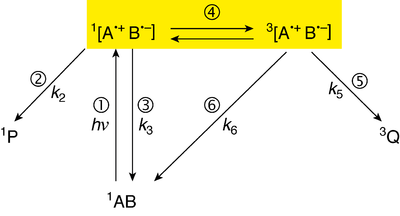
Radicals are typically generated through processes that lead to homolytic bond cleavage, where a covalent bond breaks symmetrically, with each fragment retaining one of the bonding electrons. Common initiation methods include: thermal decomposition of weak bonds (e.g., peroxides, azo compounds), photolysis (bond breaking induced by light absorption), redox reactions, and enzymatic processes. Once formed, radicals propagate through chain reactions.
A typical chain mechanism involves three stages: initiation (formation of radicals), propagation (radicals react with non-radical species to form new radicals and products), and termination (radicals combine or react to form stable, non-radical products, ending the chain). The propagation steps are critical as they allow a small number of initial radicals to trigger the transformation of a large quantity of reactant molecules. Understanding these intricate mechanisms is vital for controlling reaction outcomes, optimizing yields, and preventing unwanted side reactions.
The Pervasive Influence of Radicals
The influence of radicals is far-reaching, permeating biological systems, environmental processes, and industrial applications. Biologically, reactive oxygen species (ROS) and reactive nitrogen species (RNS) are integral to cellular signaling, immune defense, and metabolic processes. However, an imbalance leading to oxidative stress is implicated in aging, carcinogenesis, neurodegenerative diseases, and cardiovascular disorders.
Environmentally, radicals play roles in atmospheric chemistry, such as ozone depletion by halogen radicals, and in the degradation of pollutants and materials. Industrially, radicals are indispensable intermediates in polymerization reactions, enabling the synthesis of plastics like polyethylene and PVC. They are also crucial in combustion processes, organic synthesis, and the production of fine chemicals.
The controlled generation and scavenging of radicals are therefore central to numerous technological advancements and therapeutic strategies, highlighting their dual nature as both agents of damage and essential tools for chemical transformation.
See also
Based on content from Wikipedia · Licensed under CC BY-SA 4.0