

Quantum Fluctuation
Images

Emptiness


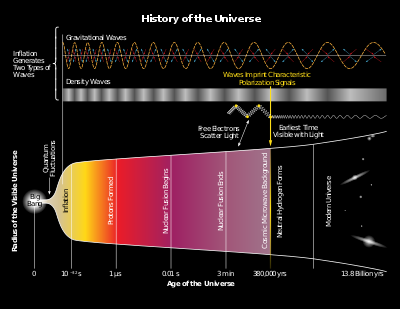


The Energetic Undercurrent of the Quantum Vacuum
Quantum fluctuations, also known as vacuum fluctuations or vacuum state fluctuations, represent a fundamental aspect of quantum field theory. They describe the inherent, temporary, and random variations in the energy density at any given point in space. Far from being a void, the quantum vacuum is a dynamic medium where fields, such as the electromagnetic, weak, and strong force fields, are constantly undergoing minute oscillations.
These fluctuations are a direct consequence of Heisenberg's uncertainty principle, specifically its energy-time relation: ΔE Δt ≥ ½ħ. This inequality implies that for any interval of time Δt, there is a minimum uncertainty in energy ΔE. Consequently, energy can be 'borrowed' from the vacuum for a brief period, leading to the spontaneous creation and annihilation of virtual particle-antiparticle pairs.
These virtual particles exist only for durations shorter than Δt, making them undetectable by direct observation but profoundly influential on the underlying physics of the universe.
Heisenberg's Principle and the Birth of Virtual Particles
The mathematical formulation of the uncertainty principle, ΔE Δt ≥ ½ħ, where ħ is the reduced Planck constant (approximately 5.27286 × 10⁻³⁵ J⋅s), quantifies the trade-off between energy and time. This principle is not merely a limitation on our ability to measure; it is a fundamental property of quantum systems. In the context of the vacuum, it permits the spontaneous emergence of virtual particles.
For instance, a virtual electron-positron pair can momentarily pop into existence, drawing energy from the vacuum, and then annihilate each other, returning the energy. The shorter the lifetime of these virtual particles (Δt), the higher the energy (ΔE) they can possess. This continuous process of creation and annihilation, occurring at every point in space, forms the energetic substratum of the quantum vacuum, often referred to as 'zero-point energy'.
Taming Infinities with Fluctuations
The significance of quantum fluctuations extends to the very definition of fundamental particle properties. Without accounting for these vacuum effects, theoretical calculations for the 'bare' mass and charge of elementary particles yield infinite values. This is because a particle is constantly interacting with a cloud of virtual particles that surround it.
Renormalization theory is a sophisticated set of techniques developed to handle these infinities. It posits that the observable, finite mass and charge of particles are not their bare values but are 'dressed' by the cumulative effects of these virtual particle clouds. The shielding or screening effect of these fluctuations effectively cancels out the infinities, yielding the physically measured, finite quantities we observe.
This process is crucial for the predictive power of quantum field theories like Quantum Electrodynamics (QED).
Observable Manifestations and Modern Frontiers
The existence and impact of quantum fluctuations are not confined to theoretical constructs; they have tangible, observable consequences. The Lamb shift in atomic hydrogen, a minute difference in energy levels between two states that would otherwise be degenerate according to simpler theories, was one of the earliest experimental confirmations of vacuum fluctuations. The Casimir effect provides another compelling demonstration: two closely spaced, uncharged conducting plates in a vacuum experience an attractive force because the allowed modes of vacuum fluctuations between the plates are restricted compared to the unrestricted modes outside, leading to a net pressure pushing the plates together.
More recently, cutting-edge experiments, such as those involving the LIGO gravitational wave observatory, have begun to detect correlations between quantum vacuum fluctuations and the motion of macroscopic objects. These findings suggest that quantum fluctuations can influence even human-scale systems, opening new avenues for research in quantum measurement and fundamental physics.
See also
Frequently Asked Questions
What are quantum fluctuations?+
Why do virtual particles appear and disappear?+
How do quantum fluctuations affect everyday things?+
What is the Lamb shift and how does it show quantum fluctuations?+
Why do scientists use renormalization when studying particles?+
Based on content from Wikipedia · Licensed under CC BY-SA 4.0