

Prime Numbers: The Special Numbers!
Images
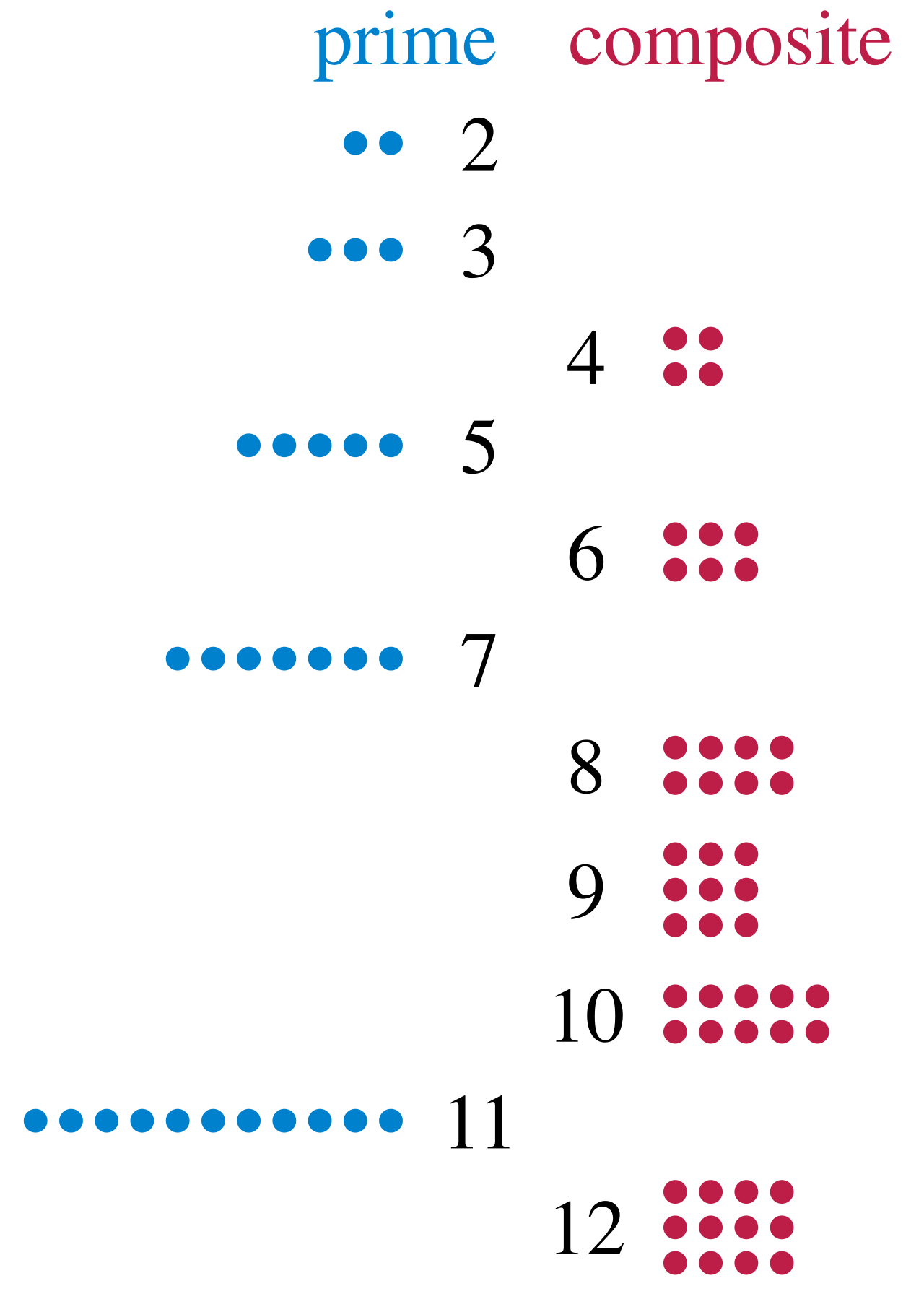
Prime number
The Intrinsic Nature of Prime Numbers
Prime numbers are integers greater than 1 that are only divisible by 1 and themselves. This fundamental definition underpins their unique status in mathematics. Unlike composite numbers, which can be decomposed into smaller integer factors, primes are irreducible.
The sequence begins 2, 3, 5, 7, 11, 13, 17, 19, and so on. The number 1 is explicitly excluded from being prime by definition, as it only has one divisor. The number 2 holds a special place as the only even prime number; all other even numbers are divisible by 2, rendering them composite.
The distribution of prime numbers, while seemingly erratic, follows certain statistical patterns that have fascinated mathematicians for millennia.
A Legacy of Prime Exploration
The fascination with prime numbers dates back to antiquity. Euclid's proof of the infinitude of primes, presented in his 'Elements' around 300 BCE, is a cornerstone of number theory. His elegant argument, often presented by contradiction, demonstrates that for any finite list of prime numbers, one can always construct a new prime number not on the list. This discovery established primes as fundamental and inexhaustible.
Over centuries, mathematicians like Fermat, Mersenne, and Riemann have explored their properties, leading to conjectures and theorems like the Prime Number Theorem, which describes their asymptotic distribution, and the Riemann Hypothesis, which remains one of mathematics' greatest unsolved problems.
The Fundamental Theorem of Arithmetic and Its Implications
The bedrock of number theory is the Fundamental Theorem of Arithmetic. This theorem asserts that every integer greater than 1 is either a prime number itself or can be represented as a unique product of prime numbers, disregarding the order of the factors. This uniqueness is profound; it means primes are the ultimate building blocks, akin to atoms in chemistry.
For instance, the prime factorization of 72 is 2³ × 3². No other combination of primes will yield 72. This principle is not just an abstract concept; it forms the basis for algorithms used in computational number theory and has practical implications in fields like data encryption.
Prime Numbers
In the modern digital age, prime numbers are indispensable for ensuring online security through cryptography. Public-key cryptography systems, such as RSA (Rivest–Shamir–Adleman), rely heavily on the computational difficulty of factoring large composite numbers into their prime factors. The security of these systems hinges on the fact that while multiplying two very large prime numbers together is computationally feasible, determining those original primes from their product is exceedingly difficult for even the most powerful computers.
This asymmetry is the foundation for secure online transactions, encrypted communications, and digital signatures, making prime numbers the silent guardians of our digital lives.
The Quest for Primes
The search for prime numbers has evolved from theoretical curiosity to a computational endeavor. Mathematicians and computer scientists actively seek new, larger prime numbers, not just for theoretical exploration but also for testing the limits of computing power and for their use in cryptography. Projects like the Great Internet Mersenne Prime Search (GIMPS) leverage distributed computing to find these colossal primes.
The discovery of new record-breaking primes, often Mersenne primes (primes of the form 2ⁿ - 1), garners significant attention and pushes the boundaries of computational mathematics, demonstrating the enduring relevance and mystery of these fundamental numbers.
Go deeper
Frequently Asked Questions
What is a prime number?+
Why is 2 special among prime numbers?+
How do prime numbers help keep our online stuff safe?+
Who proved there are infinitely many prime numbers?+
What is the Fundamental Theorem of Arithmetic?+
Based on content from Wikipedia · Licensed under CC BY-SA 4.0