

Poisson distribution
Images
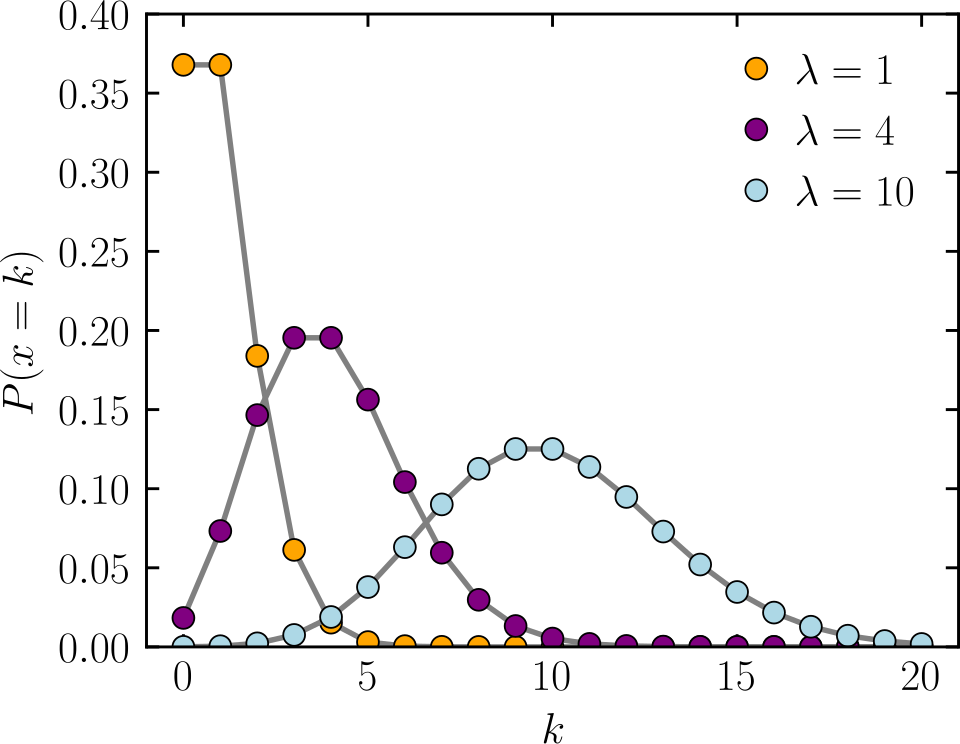
Poisson distribution
Key Facts
What's a Poisson Distribution?
Have you ever wondered how many ladybugs might land on a leaf in one minute, or how many shooting stars you might see in an hour? A Poisson distribution is like a special math tool that helps us guess these kinds of things! It's used for counting how often something happens when it's kind of rare and happens randomly.
Think of it as counting unexpected visitors at your birthday party. It helps us understand the chances of seeing a certain number of events, like finding a shiny pebble on the beach.
Who Invented This Number Trick?
This cool math idea was named after a smart French mathematician named Siméon Denis Poisson. He lived a long, long time ago, from 1781 to 1840. He was like a detective for numbers, trying to figure out patterns in how things happen.
He used this idea to study things like how many people might get hurt in the army each year. It’s amazing that a math idea from so long ago can still help us today with all sorts of puzzles!
Why Is This Math So Neat?
This math trick is super useful because it helps us make smart guesses about the future! Imagine you're a baker, and you want to know how many cookies might get accidentally broken when you ship them. The Poisson distribution can help you figure out the chances.
It’s also used by scientists to count things like the number of calls a busy phone line gets in a minute, or how many tiny errors might be in a long book. It helps us prepare for the unexpected!
Counting Random Events!
So, how does it work? It helps us understand events that happen randomly, one after another, over a certain time or space. For example, if you're watching a busy ant hill, the Poisson distribution can help guess how many ants might cross a certain line in a minute.
It's not about predicting exactly what will happen, but about understanding the chances. It’s like knowing that it’s possible to get three red candies in a handful of ten, but it’s not guaranteed.
Based on content from Wikipedia · Licensed under CC BY-SA 4.0