

The Tiny Secret of Everything: Planck's Constant!
Images

File:Electronic Processes Involving Light.png




The Genesis of Quantum Theory
The year 1900 marked a paradigm shift in physics with Max Planck's introduction of the Planck constant, denoted as 'h'. While investigating the spectral distribution of black-body radiation, Planck encountered a discrepancy with classical physics. To reconcile theoretical predictions with experimental data, he postulated that energy is not emitted or absorbed continuously, but in discrete packets, or 'quanta.' The energy (E) of a quantum was proportional to its frequency (ν), with the Planck constant serving as the constant of proportionality: E = hν.
This revolutionary concept, initially viewed as a mathematical trick, laid the groundwork for quantum mechanics. Planck himself referred to 'h' as the 'quantum of action,' highlighting its role in the fundamental units of physical processes. This departure from classical continuity was the first step towards a completely new understanding of the physical world at its smallest scales.
Einstein's Elaboration and the Nobel Recognition
While Planck introduced the constant, it was Albert Einstein who, in 1905, boldly associated the quantum of energy directly with the electromagnetic wave itself, proposing the existence of photons. This solidified the concept of light quanta and provided a powerful explanation for the photoelectric effect, where light striking a metal surface ejects electrons. Einstein's work demonstrated that Planck's constant was not merely an arbitrary parameter but a fundamental aspect of light's dual wave-particle nature.
This profound insight into the quantum nature of light, building directly upon Planck's discovery, earned Max Planck the Nobel Prize in Physics in 1918, recognizing his pivotal role in ushering in the quantum era and fundamentally altering the trajectory of physics.
The Ubiquitous Role of 'h' in Modern Physics
Planck's constant is far more than a historical curiosity; it is a cornerstone of modern physics, permeating numerous fundamental equations. In quantum mechanics, 'h' quantifies the relationship between energy and frequency (E=hν) and momentum and wavelength (p=h/λ). Its closely related counterpart, the reduced Planck constant (ℏ = h/2π), is frequently used in equations involving angular momentum and angular frequency, simplifying many expressions in quantum field theory and particle physics.
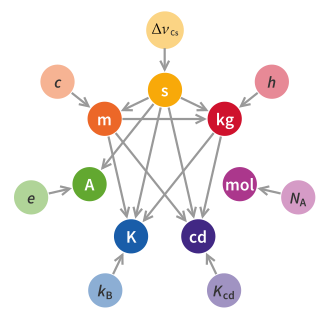
The constant is also integral to defining fundamental SI units. Since 2019, the kilogram is defined such that the Planck constant has an exact value of 6.62607015 × 10^-34 J⋅Hz⁻¹, making it a metrological anchor. This ensures the stability and universality of our measurement system, directly linking our macroscopic world to the quantum realm.
Implications and the Fabric of Reality
The incredibly small magnitude of Planck's constant (approximately 6.626 x 10^-34 J⋅s) explains why quantum effects are not apparent in our everyday macroscopic world. However, at the atomic and subatomic levels, 'h' dictates phenomena such as electron energy levels in atoms, the behavior of semiconductors, the operation of lasers, and the stability of matter itself. The concept of quantization, enabled by Planck's constant, implies that certain physical properties are fundamentally discrete, not continuous.
This has profound philosophical implications, suggesting that reality at its most basic level is granular. The reduced Planck constant (ℏ), with its value of approximately 1.054571817 x 10^-34 J⋅s, is often preferred in theoretical calculations due to its simpler relationship with angular quantities, further underscoring the constant's central role in describing the rotational and oscillatory aspects of quantum systems.
Go deeper
Frequently Asked Questions
What is Planck's constant and why is it important?+
How did Max Planck discover the idea of energy quanta?+
Why did Albert Einstein use Planck's constant in his work?+
What is the reduced Planck constant and when is it used?+
How does Planck's constant help us measure everyday objects?+
Based on content from Wikipedia · Licensed under CC BY-SA 4.0