

Photovoltaic power station
Images
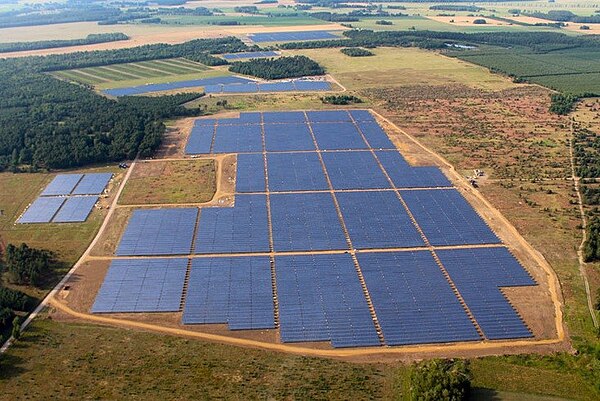
Photovoltaic power station
Defining the Utility-Scale PV Landscape
Photovoltaic power stations, also known as solar parks or solar farms, represent the pinnacle of large-scale solar energy generation. These are not merely collections of solar panels; they are sophisticated, grid-connected photovoltaic systems engineered for the specific purpose of supplying merchant power at the utility level. This distinguishes them fundamentally from distributed generation systems, such as rooftop solar installations, which primarily serve local loads.
Utility-scale PV projects are designed to integrate seamlessly into the broader electricity network, contributing significant capacity to meet regional or national demand. Their development is a complex undertaking involving land acquisition, engineering, procurement, construction, and ongoing operation and maintenance. The term 'utility-scale' itself signifies a project's capacity and its role in the power supply chain, often measured in megawatts (MW) or gigawatts (GW), and sometimes specified in MWp (megawatt-peak) or MWAC (megawatt-alternating current) depending on regional standards and the stage of power conversion.
Evolution of Solar Farms
The journey of photovoltaic power stations from experimental concepts to dominant energy infrastructure is a story of technological advancement and economic viability. Early solar installations were often small-scale and prohibitively expensive. However, breakthroughs in semiconductor physics and manufacturing processes, coupled with supportive government policies like feed-in tariffs and tax credits, dramatically reduced the levelized cost of electricity (LCOE) from PV systems throughout the 2010s.
This economic shift enabled the construction of increasingly larger facilities. Initially, ownership was dominated by independent power producers, but there's a growing trend towards community and utility-owned projects, reflecting broader market integration. The capacity of the world's largest operating stations has surged past 1 gigawatt, and by the end of 2019, thousands of solar farms exceeded 4 MWAC, collectively contributing over 220 GWAC to global capacity.
This rapid scaling underscores the maturation of PV technology and its competitive positioning against conventional energy sources.
The Environmental Imperative and Societal Impact
The significance of photovoltaic power stations extends far beyond their electrical output; they are pivotal in addressing the urgent global challenge of climate change. By harnessing solar energy, these facilities provide a clean, renewable alternative to fossil fuels, thereby reducing greenhouse gas emissions and mitigating air pollution. This transition is critical for meeting international climate targets and fostering sustainable development.
Furthermore, the expansion of solar farms can stimulate economic growth through job creation in manufacturing, installation, and maintenance sectors. While land use is a consideration, innovative approaches like agrivoltaics (combining agriculture and solar power) and siting on degraded lands are emerging. The decentralized nature of solar energy also offers potential for enhanced energy security and resilience, reducing dependence on volatile global fuel markets and complex supply chains.
Under the Hood
At the heart of every photovoltaic power station lies the photovoltaic cell, typically constructed from semiconductor materials like silicon. The fundamental principle is the photovoltaic effect: when photons from sunlight strike the semiconductor material, they transfer their energy to electrons, exciting them from their atomic orbits. This creates electron-hole pairs.
An internal electric field within the cell, created by the junction of differently doped semiconductor layers (a p-n junction), directs these charge carriers. Electrons are swept to the n-type side, and holes to the p-type side, establishing a voltage difference. When an external circuit is connected, these electrons flow through it, generating a direct current (DC).
In a large-scale power station, thousands or millions of these cells are interconnected to form solar panels (modules), which are then further aggregated into arrays. These arrays are connected to inverters, which convert the DC electricity into alternating current (AC) suitable for grid integration. Transformers then step up the voltage for efficient transmission over long distances.
Global Deployment and Future Trajectories
The geographical distribution of photovoltaic power stations reflects a global commitment to solar energy. Leading nations in installed capacity include China, the United States, Japan, Germany, and India, with significant growth also seen in Australia, Brazil, and across Europe. Project development varies, from massive utility-scale installations exceeding 1 GWp to smaller, community-owned projects.
The industry is continuously innovating, focusing on increasing panel efficiency, improving inverter technology, developing advanced energy storage solutions to address intermittency, and optimizing balance-of-system components. As grid parity becomes more widespread and energy storage costs decline, PV power stations are poised to become an even more dominant force in the global energy mix, playing an indispensable role in decarbonization efforts and shaping the future of energy infrastructure.
See also
Frequently Asked Questions
What is a photovoltaic power station?+
How do photovoltaic power stations help the planet?+
Why are photovoltaic power stations bigger than rooftop solar?+
Where can a photovoltaic power station be built?+
How do people get money to build a photovoltaic power station?+
Based on content from Wikipedia · Licensed under CC BY-SA 4.0