

Photogram: Pictures Made With Light!
Images
Photogram


The Genesis and Definition of the Photogram
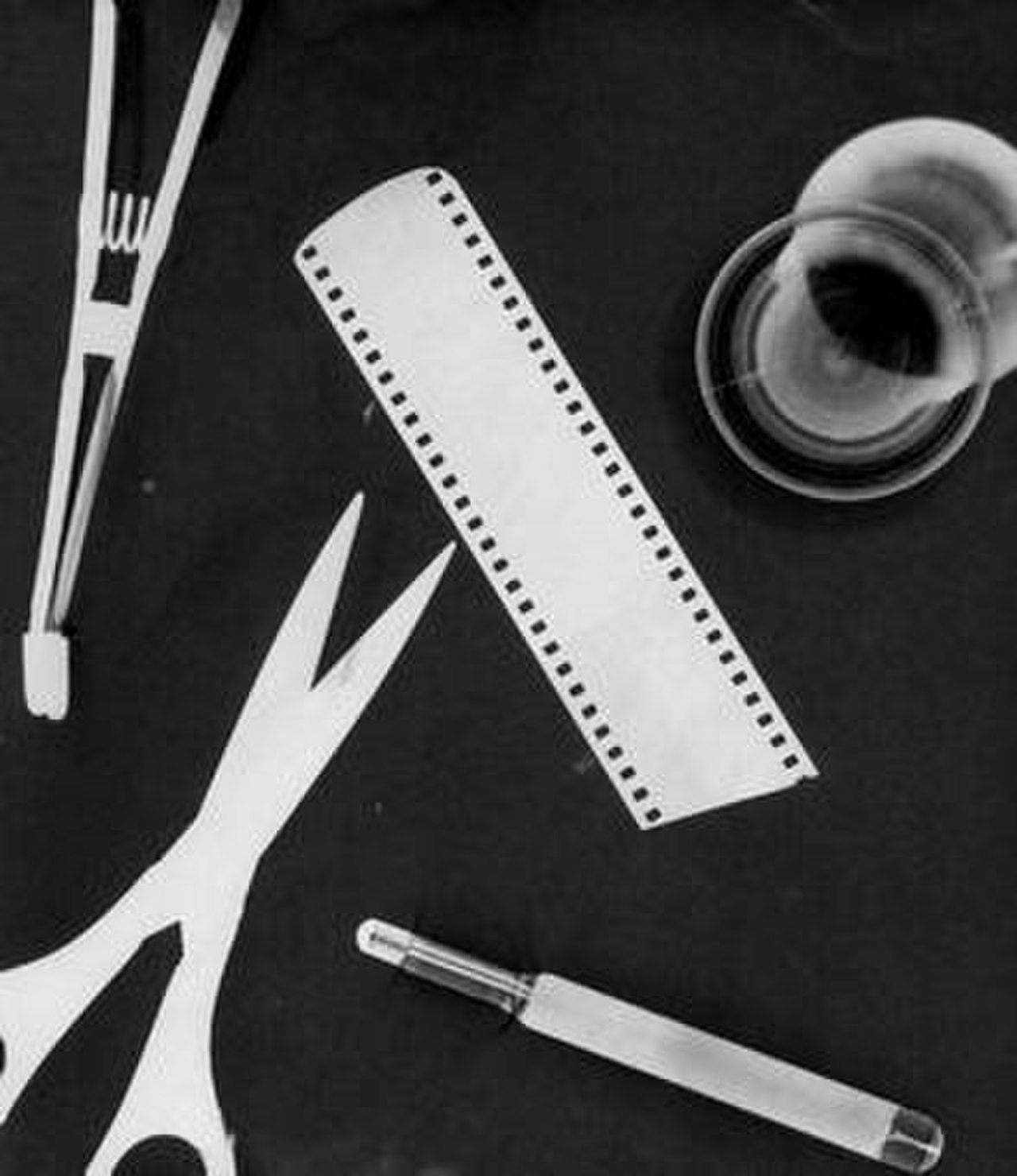
A photogram is a photographic image produced without a camera by placing objects directly onto the surface of a light-sensitive material, such as photographic paper, and then exposing it to light. This fundamental definition highlights a departure from traditional photographic processes that rely on lenses and apertures to capture light reflected from a subject. The resulting image is typically a negative shadow print, where the intensity and distribution of light exposure dictate the tonal variations.
Areas of the paper that receive no light remain unexposed and appear white (or the base color of the paper) after development. Conversely, areas fully exposed to light become black. Objects with varying degrees of transparency or translucency create intermediate shades of gray, offering a nuanced representation of their form and material properties.
This technique is often referred to as cameraless photography, emphasizing its unique methodology.
The Scientific and Artistic Mechanics of Photogram Creation
The creation of a photogram is a direct application of photochemical principles. Photographic paper contains silver halide crystals, which undergo a chemical change when struck by photons (light particles). This latent image is then made visible through a developing process.
In a photogram, the objects act as physical masks, selectively blocking or filtering light from reaching the paper. Opaque objects create sharp, dark silhouettes, while translucent or semi-transparent objects allow a portion of the light to pass through, resulting in a gradient of tones. The intensity and duration of the light exposure are critical variables, influencing the overall contrast and detail of the final image.
The term 'photogram' itself is derived from the Greek words 'phos' (light) and 'gramma' (something drawn or written), aptly describing the process of drawing with light.
Pioneers and Evolution of Cameraless Imaging
While the basic principle of creating shadow images has existed for centuries, the deliberate artistic use of photograms gained prominence in the early 20th century, coinciding with the rise of experimental photography. Artists sought to break free from representational constraints and explore new visual languages. Man Ray, a key figure in Dada and Surrealism, is widely credited with popularizing the technique through his 'rayographs' in the 1920s.
These works often featured abstract arrangements of everyday objects, revealing their forms in unexpected ways. Contemporaries like László Moholy-Nagy, a Bauhaus artist, utilized photograms to explore light, space, and material. Christian Schad created 'Schadographs,' and other notable artists such as Imogen Cunningham and even Pablo Picasso experimented with this medium, each contributing to its artistic evolution and demonstrating its versatility.
Broader Implications
The photogram's influence extends beyond the realm of fine art. Its core principle of imaging without a direct optical lens has found significant applications in scientific and medical fields. Shadowgraphy, for instance, is a technique used to visualize flow patterns in transparent media, such as air or water, by detecting variations in refractive index caused by density changes.
These variations are visualized as shadows or light distortions. Perhaps the most profound connection is to medical radiography, commonly known as X-rays. X-rays pass through the body, and the differential absorption of this radiation by tissues and bones creates a shadow image on a detector, a sophisticated form of cameraless imaging.
This demonstrates how a seemingly simple artistic technique can underpin critical diagnostic tools, highlighting the interconnectedness of creative exploration and scientific advancement.
Go deeper
Frequently Asked Questions
What is a photogram?+
How do you make a photogram?+
Why do some parts of a photogram look black or white?+
Who made famous photograms in the 1920s?+
Can photograms be used in science or medicine?+
Based on content from Wikipedia · Licensed under CC BY-SA 4.0