

Periodization of Ancient Egypt
Images

Bronze Thoth Statue, Late Period



The Scholarly Construction of Egyptian Chronology
The 3,000-year history of ancient Egypt presents a monumental challenge for historical analysis. To render this vast epoch comprehensible, scholars have developed a system of periodization, dividing the timeline into manageable segments. The most widely adopted framework consists of three major 'Kingdoms' – the Old, Middle, and New Kingdoms – interspersed with 'Intermediate Periods,' and bookended by an Early Period and a Late Period.
This structure is not an ancient Egyptian invention but a modern scholarly construct, primarily developed in the 19th and 20th centuries, building upon earlier attempts to organize Egyptian history. It serves as a crucial interpretive lens, allowing historians to identify overarching trends, shifts in political power, cultural developments, and societal changes across millennia.
Manetho's Legacy
The bedrock of Egyptian periodization remains the work of Manetho, a Hellenistic Egyptian priest who lived during the Ptolemaic period (3rd century BC). His Aegyptiaca (History of Egypt) is now lost but survives in fragments quoted by later historians like Josephus and Eusebius. Manetho's most enduring contribution was his division of the pharaonic rulers into thirty dynasties.
This dynastic scheme, while containing inaccuracies and later revisions, provided the first systematic, albeit king-list focused, chronological framework. Modern scholars utilize Manetho's dynasties as building blocks, but they have expanded upon his work by grouping these dynasties into broader periods based on distinct political, social, and cultural characteristics, recognizing that dynasties could overlap or rule concurrently in different regions.
The Kingdoms
The three Kingdoms represent the apexes of unified Egyptian statehood and cultural achievement. The Old Kingdom (c. 2686–2181 BC) is synonymous with the pyramid-building age, a testament to centralized authority, sophisticated administration, and monumental architectural ambition. The Middle Kingdom (c. 2055–1650 BC) emerged from a period of disunity, characterized by a resurgence of centralized power, expansionist policies, flourishing literature, and refined artistic styles.
It marked a period of consolidation and cultural refinement. The New Kingdom (c. 1550–1070 BC) stands as Egypt's imperial era, defined by military expansion, vast wealth accumulation, extensive diplomatic relations, and the construction of colossal temples and tombs, featuring iconic rulers like Hatshepsut, Akhenaten, Tutankhamun, and Ramses II.
Intermediate Periods
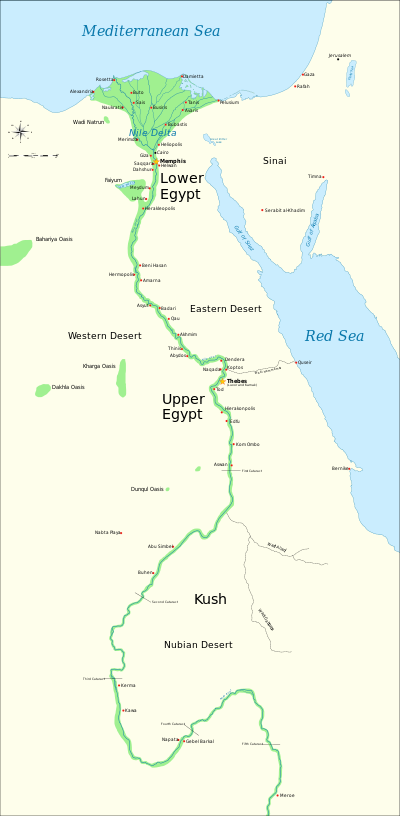
The Intermediate Periods are not merely 'dark ages' but crucial phases of transition, fragmentation, and adaptation. The First Intermediate Period (c. 2181–2055 BC) saw the collapse of central authority, leading to regional power bases and internal strife. The Second Intermediate Period (c. 1650–1550 BC) is notable for the Hyksos rule in Lower Egypt, introducing new technologies and foreign influence, while Upper Egypt maintained a separate Egyptian dynasty.
The Third Intermediate Period (c. 1070–664 BC) and the subsequent Late Period (c. 664–332 BC) witnessed further political division, foreign invasions (Libyan, Nubian, Assyrian, Persian), and a struggle to maintain Egyptian sovereignty. These periods underscore the cyclical nature of Egyptian history, demonstrating resilience and the eventual re-establishment of unified rule, often incorporating lessons learned from previous instability.
Beyond the Kingdoms
The periodization extends beyond the three main Kingdoms. The Early Dynastic Period (c. 3100–2686 BC) covers the unification of Upper and Lower Egypt and the establishment of the first dynasties, laying the groundwork for the Old Kingdom. This era saw the development of hieroglyphic writing and early state formation.
The Late Period (c. 664–332 BC), following the Third Intermediate Period, encompasses the final centuries of native Egyptian rule, punctuated by periods of foreign domination (Assyrian, Persian) and brief resurgences of independence, culminating in the conquest by Alexander the Great. Understanding these bookend periods is vital for appreciating the full arc of ancient Egyptian civilization, from its nascent stages to its eventual incorporation into larger empires.
See also
Frequently Asked Questions
What are the main parts of ancient Egypt's history called?+
Why do historians call the Old Kingdom the "pyramid-building age"?+
Who first organized Egyptian rulers into dynasties?+
What happened during the First Intermediate Period?+
Who were some famous kings of the New Kingdom?+
Based on content from Wikipedia · Licensed under CC BY-SA 4.0