

Percussion Instruments: The Beat Makers!
Images
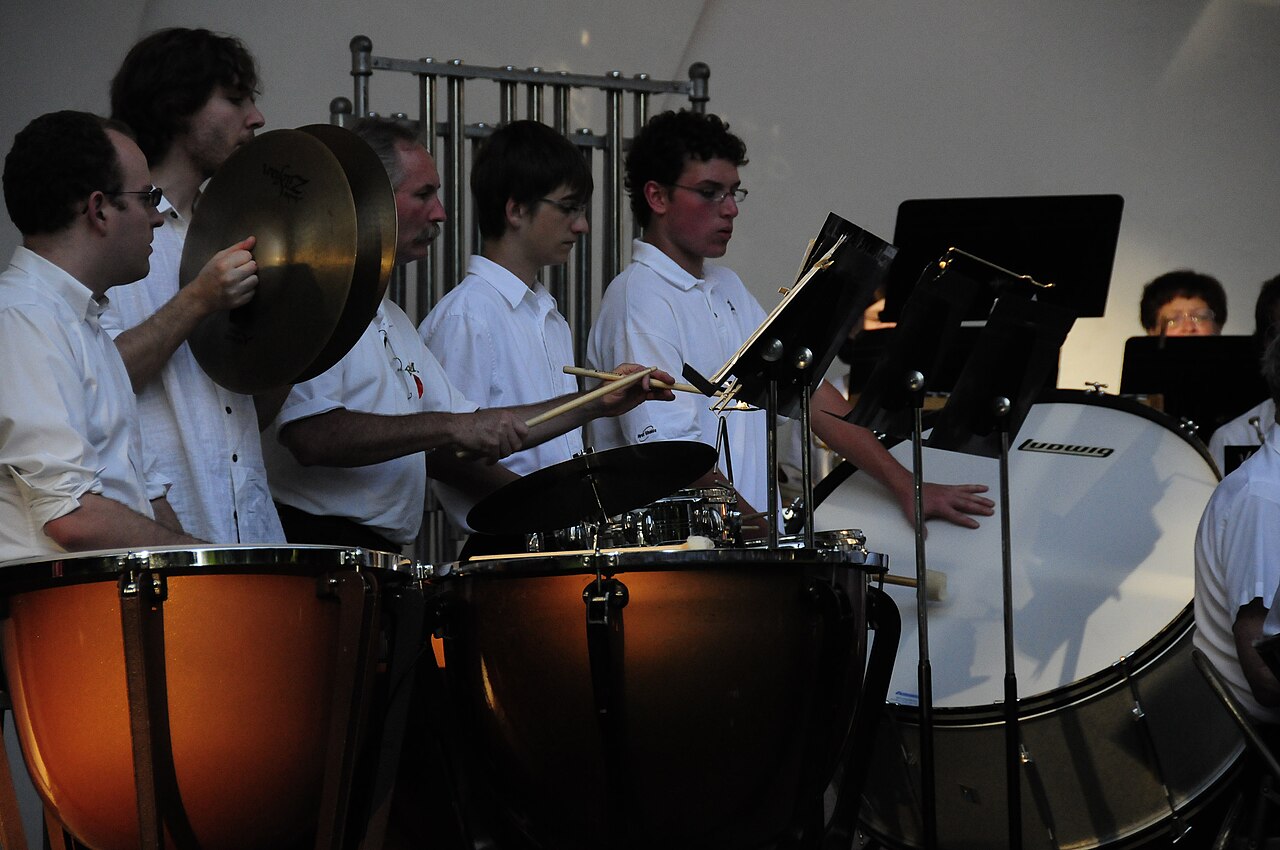
Percussion instrument
The Expansive Spectrum of Percussive Sound Production
Percussion instruments constitute one of the largest and most diverse families in music, defined by their method of sound generation: striking, scraping, or shaking. This broad definition encompasses instruments that can be further categorized by their ability to produce definite pitches (melodic percussion like marimbas, vibraphones, and tuned drums) or indefinite pitches (rhythmic percussion like snare drums, bass drums, and cymbals). The materials used-wood, metal, plastic, animal hides, and even water-significantly influence the timbre, sustain, and dynamic range of the sound.
Modern percussion also includes electronic instruments and found objects, pushing the boundaries of what constitutes a percussion instrument. Their adaptability makes them crucial for establishing rhythmic foundations, delivering melodic lines, adding harmonic color, and creating complex textural layers within any musical composition.
From Primal Rhythms to Orchestral Sophistication
The origins of percussion are deeply intertwined with the earliest human activities, predating even spoken language. Initial sound production likely involved natural objects like stones and sticks, evolving into rudimentary drums crafted from gourds or hollowed logs, often used for signaling, ritual, and communal bonding. Ancient civilizations, from Mesopotamia and Egypt to China and the Americas, developed sophisticated percussion ensembles for religious ceremonies, military functions, and entertainment.
The Bronze Age brought advancements with the creation of metal gongs and cymbals, while the medieval and Renaissance periods saw the integration of more varied drums into European music. The development of the modern orchestra in the 18th and 19th centuries led to the formal inclusion and standardization of instruments like timpani, bass drum, and snare drum, transforming percussion from a purely rhythmic element to a vital component of orchestral color and dramatic expression.
The Indispensable Role
Percussion instruments are the bedrock of musical structure and expression, serving multiple critical functions. Foremost is their role in establishing and maintaining rhythm, providing the temporal framework that organizes musical events and propels the listener forward. Beyond rhythm, melodic percussion instruments are capable of carrying complex melodies and harmonies, often contributing unique timbres not found elsewhere.
They are also essential for dynamic contrast and accentuation, capable of delivering powerful climaxes or subtle rhythmic nuances that shape the emotional arc of a piece. In contemporary music, percussionists are often tasked with creating innovative soundscapes, utilizing extended techniques and a vast array of instruments to expand the sonic palette. Their ability to evoke primal energy, delicate textures, and dramatic tension makes them indispensable to virtually every genre of music.
The Physics of Impact
The generation of sound in percussion instruments is fundamentally a process of mechanical excitation leading to vibration. When an instrument is struck, scraped, or shaken, kinetic energy is transferred, causing its constituent parts to oscillate. The characteristics of this vibration-its frequency, amplitude, and decay-determine the perceived sound.
For pitched percussion, factors like the length, tension, and mass of the vibrating element (e.g., a marimba bar, a timpani head) dictate the fundamental frequency, or pitch. For unpitched instruments, the sound is a complex mixture of frequencies, often referred to as noise, influenced by the material's properties and the impact point. Resonance, facilitated by the instrument's body or air column, amplifies these vibrations, projecting the sound. Understanding these principles allows for the design and manipulation of instruments to achieve specific sonic outcomes.
Global Rhythms and Modern Innovations
Percussion instruments are a universal language, deeply embedded in the cultural fabric of societies worldwide. From the intricate polyrhythms of West African drumming ensembles and the vibrant syncopations of Latin American music (salsa, samba, bossa nova) to the meditative Gamelan orchestras of Indonesia and the driving beats of Indian classical music, percussion defines regional musical identities. In Western music, the evolution from orchestral percussion to the ubiquitous drum kit in jazz, rock, and pop has cemented its place as a dominant force.
Contemporary composers continue to explore new sonic territories, incorporating electronic percussion, found objects, and avant-garde techniques to challenge traditional notions. The ongoing innovation and cross-cultural exchange ensure that percussion remains a dynamic and evolving cornerstone of global music.
Go deeper
Frequently Asked Questions
What are percussion instruments and how do they make sound?+
Why do percussion instruments come in different materials like wood, metal, and even water?+
How did people first use percussion instruments in ancient times?+
What is the difference between melodic and rhythmic percussion instruments?+
Why are percussion instruments important in an orchestra?+
Based on content from Wikipedia · Licensed under CC BY-SA 4.0