

Passenger Pigeon
Images

Passenger pigeon




Key Facts
Who Were the Passenger Pigeons?
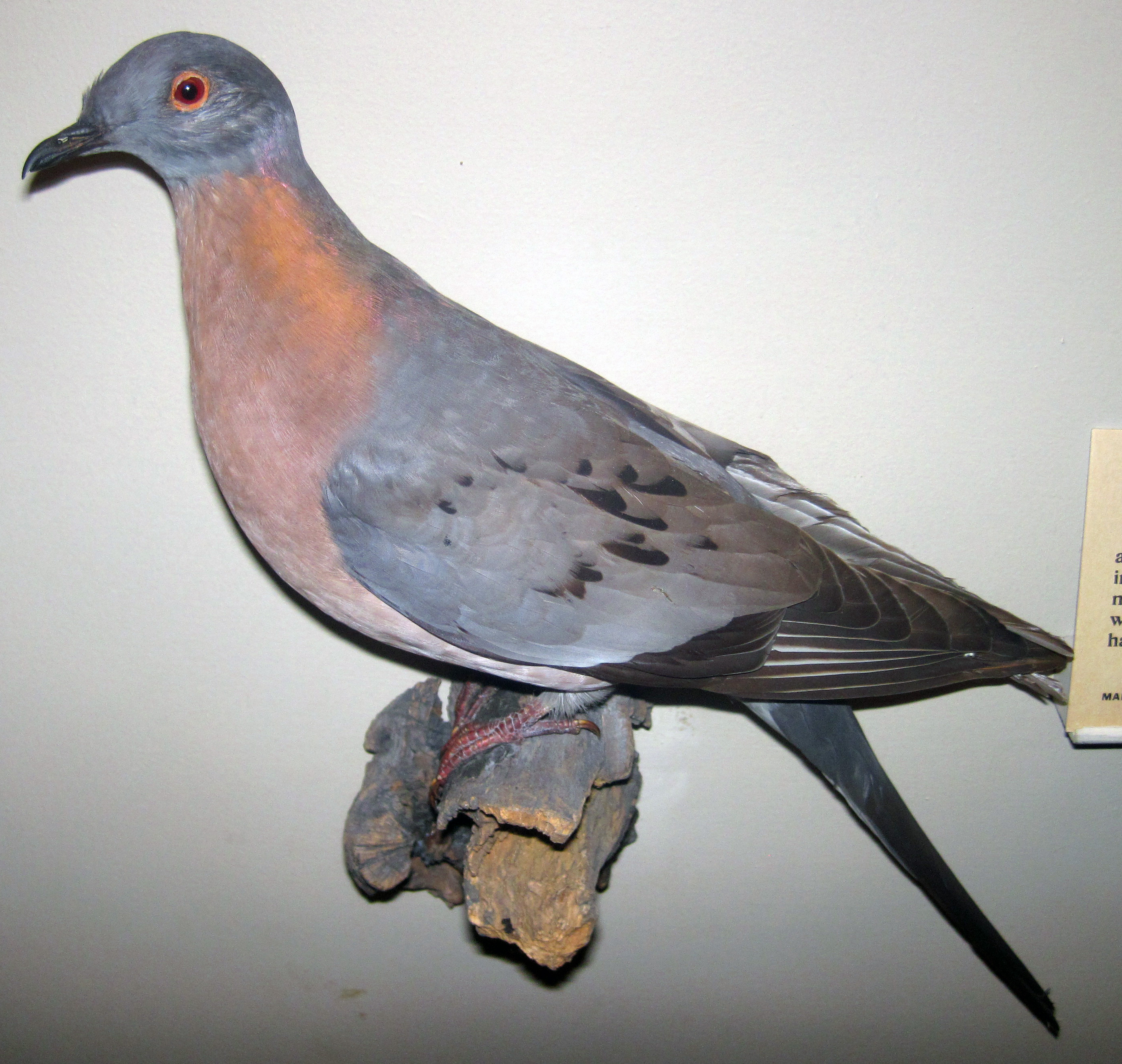
Passenger pigeons were once the most common birds in North America! They were beautiful birds with long tails and colorful feathers, like a rainbow. They flew in huge groups, called flocks, that were so big they could block out the sun for hours!
Imagine a cloud of birds bigger than your whole town! They loved to eat nuts and seeds, especially acorns and beechnuts, which they found on the forest floor. These birds were truly a wonder of nature!
A Sky Full of Birds!
These pigeons were famous for their enormous flocks. Sometimes, these flocks had over a billion birds! That's more people than live in many countries!
When they flew together, it sounded like thunder, and the sky would turn dark for miles. They nested together in huge colonies, sometimes covering hundreds of square miles of forest. It was like a giant, noisy bird city!
They ate so many nuts that they helped spread seeds, which is important for forests.
What Happened to Them?
Sadly, these amazing birds are no longer with us. People used to hunt them a lot for food, and they also cut down the forests where the pigeons lived and nested. Because the pigeons lived in such huge groups, it was easy for hunters to find and catch them.
In just a few years, their numbers dropped very, very quickly. The last Passenger Pigeon, named Martha, died in a zoo in 1914. It's a sad story, but it teaches us to protect animals.
Why We Remember Them
The Passenger Pigeon is a reminder of how important it is to take care of nature and all its creatures. They show us that even the most common animals can disappear if we are not careful. Learning about them helps us understand how to protect animals that are in danger today.
We can all help by learning about wildlife and making sure their homes are safe. It's important to remember the Passenger Pigeon and its incredible story.
Based on content from Wikipedia · Licensed under CC BY-SA 4.0