

Parliament Hill, London
Images

1897. //5/2c/201/1f - PARLIAMENT HILL, LONDON 1987




Geomorphological Significance and Urban Context
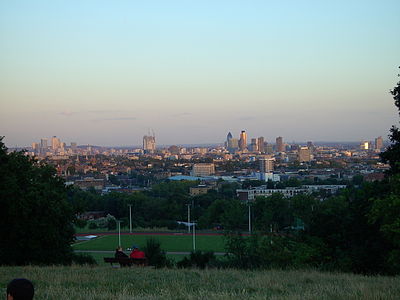
Parliament Hill, situated in the southeastern quadrant of Hampstead Heath, represents a significant natural landform within the urban fabric of north-west London. Rising to a height of 98 meters (322 feet), it is not merely a geographical feature but a crucial vantage point that frames the sprawling metropolis. The hill's topography, characterized by open parkland, provides a stark contrast to the dense urban development that surrounds it.
This elevated position offers an unparalleled perspective on the city's spatial organization, allowing observers to trace the historical expansion and contemporary patterns of London's growth. The heath itself, as a protected area, acts as a vital ecological and recreational lung for the city, preserving a natural landscape amidst intense human activity. The hill's prominence within this landscape makes it a focal point for understanding the interplay between natural geography and urban morphology.
Historical Resonance and Civic Symbolism
The appellation 'Parliament Hill' is intrinsically linked to its visual connection with the Houses of Parliament, located approximately 10.1 kilometers (6.25 miles) to the south in the City of Westminster. This geographical alignment has imbued the hill with historical and civic symbolism. For centuries, this viewpoint has allowed citizens to symbolically orient themselves towards the seat of national governance.
While urban expansion has inevitably led to some visual obstruction, the enduring ability to perceive the Houses of Parliament from this height reinforces the hill's role as a place of civic awareness and historical continuity. It serves as a tangible link between the natural landscape and the political heart of the nation, fostering a sense of place and belonging for those who frequent it. The hill has witnessed countless historical moments, serving as a backdrop for public gatherings and reflections.
The Hill as a Socio-Cultural Nexus
Beyond its geographical and historical attributes, Parliament Hill functions as a significant socio-cultural nexus for Londoners. Its status as an accessible, open public space ensures its widespread use for recreation, leisure, and social interaction. The hill is a democratic space, welcoming individuals from all walks of life, fostering a sense of shared community and collective experience.
Whether for kite-flying on a breezy afternoon, enjoying panoramic sunset views, or simply seeking respite from urban pressures, the hill provides a versatile environment that caters to diverse needs. Its role in promoting physical and mental well-being, by offering opportunities for exercise and connection with nature, underscores its importance in the urban public realm. The hill is a testament to the enduring human need for open spaces and natural beauty within densely populated environments.
Urban Development and Evolving Vistas
The view from Parliament Hill is a dynamic representation of London's continuous urban evolution. The skyline, a complex tapestry of historical and contemporary architecture, is perpetually reshaped by new construction and development projects. This constant flux means that the vista from the hill is never static, offering a unique opportunity to observe the city's ongoing transformation.
The partial obscuring of the Houses of Parliament by newer buildings is a micro-example of this broader urban dynamism. It highlights the challenges and opportunities presented by managing urban growth while preserving historical sightlines and access to natural vistas. Parliament Hill, therefore, serves not only as a place of aesthetic appreciation but also as a site for contemplating the forces that shape modern cities and the enduring value of elevated perspectives in understanding them.
Preservation and Future Relevance
The continued existence and accessibility of Parliament Hill are crucial for maintaining the quality of life in London. As urban density increases, the preservation of large, open green spaces like Hampstead Heath, and specifically Parliament Hill, becomes paramount. These areas provide essential ecological services, contribute to biodiversity, and offer invaluable recreational and psychological benefits to the urban population.
The hill's role in civic identity, historical connection, and providing a vital natural counterpoint to the built environment ensures its ongoing relevance. Future urban planning must consider the strategic importance of such elevated viewpoints and green lungs, recognizing their irreplaceable contribution to a sustainable and livable city. The hill stands as a symbol of the balance between development and preservation.
See also
Frequently Asked Questions
What is Parliament Hill in London?+
Why can you see the Houses of Parliament from Parliament Hill?+
What can people do on Parliament Hill?+
How tall is Parliament Hill?+
Why is Parliament Hill important for Londoners?+
Based on content from Wikipedia · Licensed under CC BY-SA 4.0