

Paper machine
Images
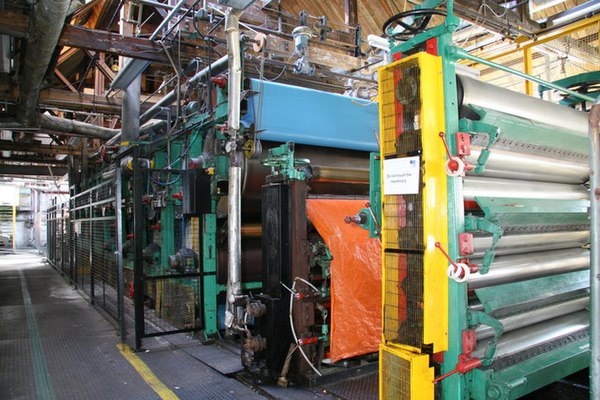
Paper machine


Genesis of the Automated Paper Mill
The paper machine represents a monumental leap from artisanal papermaking to industrial-scale production, fundamentally altering the accessibility and dissemination of information. Prior to its invention, paper was a luxury, painstakingly crafted sheet by sheet, a process incapable of meeting the burgeoning demands of a society increasingly reliant on written communication and record-keeping. The pivotal moment arrived in 1799 with Louis-Nicolas Robert's invention in France, a precursor to the more refined and widely adopted Fourdrinier machine, patented by Henry and Sealy Fourdrinier in Britain in 1806.
This innovation wasn't merely an improvement; it was a paradigm shift. By mechanizing the process of forming, draining, pressing, and drying a continuous sheet of paper, the Fourdrinier principle enabled unprecedented production volumes and speeds. This technological breakthrough directly fueled the growth of literacy, journalism, and commerce, making paper an indispensable commodity rather than a scarce resource.
The efficiency and scale introduced by these machines laid the groundwork for the modern information age.
The Intricate Mechanics of Continuous Papermaking
At its core, the modern paper machine is a sophisticated engineering feat designed for high-speed, continuous operation. The process begins with the headbox, which uniformly distributes a dilute suspension of pulp fibers (typically wood pulp) and water onto a moving, finely woven synthetic fabric known as the forming fabric or wire. As this slurry travels along the wire, gravity and vacuum systems rapidly dewater it, allowing the fibers to interlock and form a nascent paper web.
This wet mat then enters the press section, where a series of heavy rollers mechanically squeeze out a significant portion of the remaining water, consolidating the sheet and increasing its strength. The final stage is the drying section, a long series of steam-heated cylinders over which the paper web travels. This section evaporates the residual moisture, rendering the paper dry and stable.
The entire process occurs on a machine that can be hundreds of meters long, operating at speeds that can exceed 2,000 meters per minute, transforming a watery pulp suspension into a finished paper product in a continuous flow.
The Indispensable Role of Paper Machines in Modern Society
The impact of paper machines extends far beyond simply producing paper; they are foundational to global communication, commerce, and countless industries. The ability to produce vast quantities of paper affordably and efficiently underpins the entire publishing industry, from books and newspapers to magazines and packaging. Without these machines, the widespread dissemination of knowledge, news, and cultural content would be severely hampered.
Furthermore, paper machines are critical for the production of paperboard, a thicker, more rigid form of paper essential for packaging and shipping goods worldwide. This versatility means that paper machines are indirectly responsible for the safe transport of nearly everything we purchase. Their output is integral to administrative functions, education, hygiene products, and even specialized industrial applications, making them a cornerstone of the global economy and infrastructure.
Evolution and Future Trajectories of Papermaking Technology
While the fundamental principles of the Fourdrinier machine remain dominant, paper machine technology has undergone continuous refinement to enhance efficiency, reduce environmental impact, and adapt to new fiber sources and product demands. Innovations have focused on improving dewatering technologies, developing more durable and efficient forming fabrics, optimizing press and drying sections for energy savings, and implementing advanced control systems for consistent quality.
The industry is also exploring alternative fiber sources and recycling technologies to promote sustainability. The sheer scale of modern paper machines is awe-inspiring; some can be over 100 meters long, requiring massive industrial facilities to house them. Their operational speeds are staggering, producing paper at rates that were unimaginable just a few centuries ago.
The paper machine, therefore, stands as a testament to sustained engineering innovation, adapting to meet the evolving needs of society while remaining a critical piece of industrial infrastructure.
See also
Frequently Asked Questions
What is a paper machine?+
How does a paper machine make paper so fast?+
Why were paper machines important for books and newspapers?+
Where does the paper go after it leaves the machine?+
Who invented the first paper machine?+
Based on content from Wikipedia · Licensed under CC BY-SA 4.0