

Outline of Dinosaurs
Images

Colorado National Monument
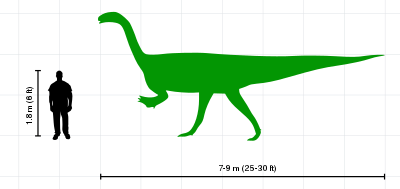


The Epoch of Dinosauria
The superorder Dinosauria represents a remarkably successful and diverse clade of terrestrial vertebrates that dominated Earth's ecosystems for over 160 million years. Their reign commenced in the late Triassic period, approximately 230 million years ago, and concluded with the Cretaceous–Paleogene (K-Pg) extinction event at the close of the Mesozoic Era, about 66 million years ago.
During this vast span, dinosaurs diversified into an astonishing array of forms, occupying nearly every terrestrial ecological niche. From the immense sauropods like Argentinosaurus, whose sheer mass rivaled that of entire modern mammal communities, to the agile, predatory theropods such as Velociraptor, their adaptations were extraordinary. Fossil evidence, unearthed globally, continues to reveal the complexity of their physiology, social behaviors, and reproductive strategies, painting a picture of a vibrant and dynamic prehistoric world that profoundly shaped the planet's biosphere.
Avian Origins
One of the most significant evolutionary narratives emerging from the study of dinosaurs is the origin of birds. Within the theropod lineage, particularly among maniraptoran dinosaurs during the Jurassic period, a series of adaptations occurred that laid the groundwork for avian flight. The development of feathers, initially hypothesized for thermoregulation or display, gradually became more specialized for aerodynamic purposes.
Skeletal modifications, such as the fusion of bones, the development of a keeled sternum for flight muscle attachment, and changes in the respiratory system, were crucial. This evolutionary trajectory demonstrates a clear lineage, with modern birds being direct descendants of these feathered theropods. The survival of this avian lineage through the K-Pg extinction event underscores the remarkable resilience and adaptive capacity inherent in this specific dinosaur group.
The K-Pg Extinction
The end of the Mesozoic Era was marked by the Cretaceous–Paleogene (K-Pg) extinction event, a pivotal moment in Earth's history that led to the demise of all non-avian dinosaurs. Scientific consensus points to a catastrophic asteroid impact in the Yucatán Peninsula, coupled with widespread volcanic activity, as the primary drivers of this mass extinction. These events triggered global environmental upheaval, including prolonged darkness, drastic temperature fluctuations, and widespread ecological collapse.
The non-avian dinosaurs, despite their long-standing dominance, were unable to cope with the rapid and severe changes to their food chains and habitats. This event dramatically reshaped the planet's biodiversity, paving the way for the subsequent rise of mammals and the diversification of the surviving avian dinosaurs.
Paleontological Significance and Modern Relevance
The study of dinosaurs offers invaluable insights into evolutionary processes, paleoclimatology, and paleoecology. By analyzing fossil records, paleontologists reconstruct ancient environments, track the spread and diversification of life forms, and understand the mechanisms of extinction and adaptation. The dinosaur-to-bird transition, in particular, provides a compelling case study in macroevolutionary change.
Furthermore, understanding past extinction events, like the K-Pg, offers critical context for contemporary conservation efforts and our understanding of anthropogenic impacts on biodiversity. The enduring fascination with dinosaurs also serves as a powerful tool for science education, inspiring curiosity and engaging the public with the deep history of life on Earth and the ongoing scientific endeavor to unravel its mysteries.
The Legacy of Dinosauria
The superorder Dinosauria, encompassing a vast array of extinct terrestrial vertebrates, left an indelible mark on Earth's history. Their 160-million-year reign, characterized by incredible diversity and ecological dominance, ended abruptly for most lineages with the K-Pg extinction event. However, the evolutionary narrative did not conclude entirely.
A specific group of feathered theropod dinosaurs, originating in the Jurassic period, successfully navigated the cataclysm. These avian dinosaurs represent a direct, unbroken lineage to the birds that inhabit our planet today. Therefore, the study of dinosaurs is intrinsically linked to ornithology, highlighting a continuous evolutionary thread from ancient giants to the vibrant birdlife we observe.
This enduring legacy underscores the dynamic nature of life and the profound interconnectedness of all species across geological time.
See also
Frequently Asked Questions
What were dinosaurs and how long did they live?+
Why did dinosaurs disappear?+
How are birds related to dinosaurs?+
What kinds of dinosaurs lived on land?+
Where can we find dinosaur fossils?+
Based on content from Wikipedia · Licensed under CC BY-SA 4.0