

Osman I
Images
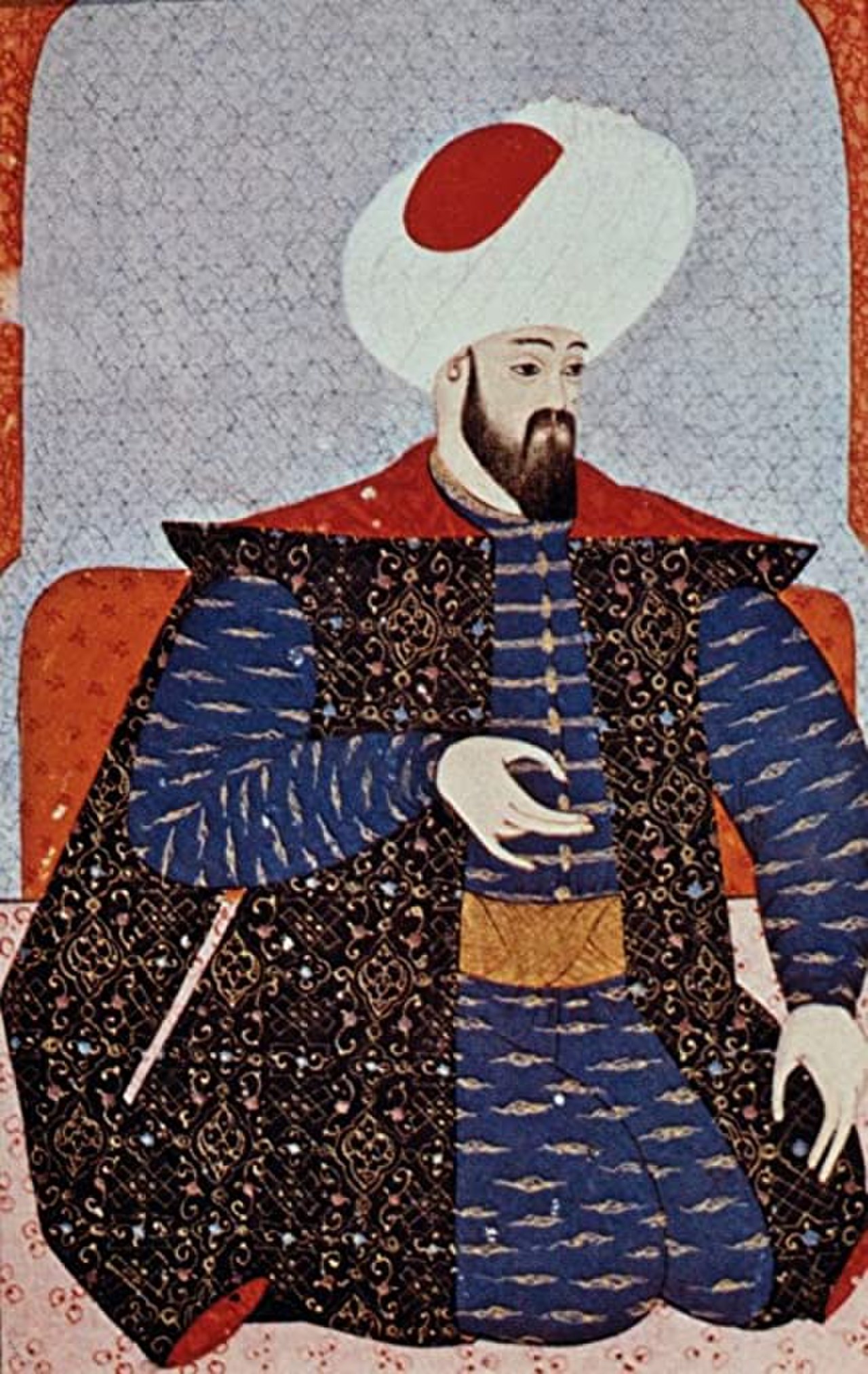
Osman I
The Enigmatic Founder
Osman I, the eponymous founder of the Ottoman Empire, remains a figure shrouded in historical ambiguity. Born circa 1258, his reign as the leader of a small Turkoman principality, or beylik, in northwestern Anatolia marked the genesis of a state that would eventually span continents and endure for over six centuries. The scarcity of contemporary written sources from Osman's lifetime presents a significant challenge for historians.
No documents from his rule have survived, and the earliest comprehensive Ottoman histories were compiled more than a century after his death. This temporal gap has led to a complex interplay between verifiable fact and later embellishment, prompting some scholars to describe the period of his life as a historical 'black hole.' Later Ottoman tradition posits his ancestry from the Kayı tribe of Oghuz Turks, a narrative that scholars often view as a dynastic legitimization strategy rather than historical certainty.
Nevertheless, the figure of Osman Ghazi, the 'warrior for the faith,' emerged as a potent symbol of leadership, courage, and expansionist ambition, crucial for forging a unified identity among disparate Turkoman groups.
Strategic Crucible
Osman's beylik occupied a strategically vital position in Bithynia, on the frontier of the declining Byzantine Empire. This geographical advantage was paramount to his principality's early success and subsequent expansion. While numerous other Turkoman beyliks emerged in Anatolia during the late 13th century following the Seljuk collapse, Osman's territory was uniquely situated to exploit the vulnerabilities of its powerful, albeit weakening, neighbor.
The Byzantine Empire, beset by internal strife and external pressures, provided a fertile ground for Osman's nascent state to grow through raiding and conquest. This frontier dynamic, characterized by a constant push and pull between the established empire and the expanding principality, was instrumental in shaping the early Ottoman military ethos and administrative structures. Osman's leadership capitalized on this environment, fostering a loyal following and laying the groundwork for the systematic absorption of Byzantine territories that would define his successors' reigns.
The Enduring Significance
The ultimate significance of Osman I lies not merely in his personal achievements, but in his role as the progenitor of an empire that profoundly reshaped the geopolitical, cultural, and religious landscape of three continents. The Ottoman Empire, born from his modest principality, evolved into a major world power, a nexus of trade and culture connecting Europe and Asia, and a dominant force in Mediterranean and Middle Eastern affairs for centuries.
Its longevity, spanning from the late 13th century to 1922, is a testament to the robust foundations laid during its formative years under Osman and his immediate successors. The empire's administrative, legal, and military systems, its architectural marvels, and its diverse cultural synthesis are enduring legacies that continue to be studied and appreciated. Osman's initial actions set in motion a historical trajectory that influenced the development of numerous modern nation-states and left an indelible mark on global history.
The 'How It Works'
The growth of Osman's beylik into a formidable state was a complex process driven by several key factors. Militarily, Osman and his followers were adept at ghaza, or holy war, a concept that attracted warriors and provided a religious justification for expansion into non-Muslim territories. His principality benefited from the influx of nomadic Turkoman groups seeking new opportunities and land.
Administratively, while details are scarce, Osman likely established a rudimentary system of governance that provided order and attracted loyalty. He was skilled in forging alliances and incorporating conquered populations, often through pragmatic policies rather than outright subjugation. The weakening of the Byzantine Empire created a power vacuum that Osman's principality was well-positioned to fill.
This gradual expansion, characterized by a blend of military prowess, strategic alliances, and effective governance, established the core principles that would guide Ottoman state-building for centuries.
Osman's Echoes
While Osman I lived over 700 years ago, the impact of his actions resonates even today. The Ottoman Empire's vast territorial reach and long duration meant it left a deep cultural and political imprint on regions spanning from the Balkans to North Africa and the Middle East. Many modern borders and national identities in these areas were shaped, directly or indirectly, by the Ottoman presence.
The cultural heritage, including architectural styles, culinary traditions, and linguistic influences, is still evident. Furthermore, the study of Osman and the early Ottoman state offers valuable insights into state formation, frontier dynamics, and the complex interactions between different cultures and religions. Understanding Osman's role is key to comprehending the historical development of a significant portion of the world and its ongoing geopolitical complexities.
See also
Frequently Asked Questions
Who was Osman I?+
When did Osman I live?+
Why is Osman I important?+
Where did Osman I's land start?+
How did Osman I grow his power?+
Based on content from Wikipedia · Licensed under CC BY-SA 4.0