

Who Gets to Be the Boss? The Order of Succession!
Images

Order of succession (Primogeniture) in European monarchies


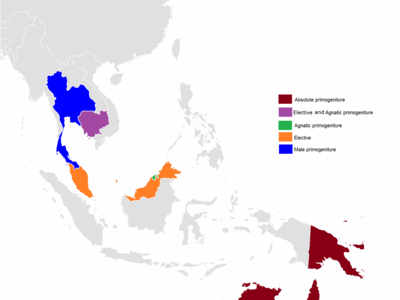

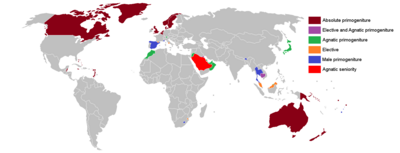
Defining the Order of Succession
The order of succession is a fundamental legal and constitutional principle that establishes a defined sequence of individuals eligible to assume a high office, most notably the head of state, upon its vacancy. This vacancy can arise from various circumstances, including death, resignation, impeachment, or incapacitation. The primary purpose of a succession order is to guarantee governmental continuity and prevent the disruption of state functions.
It operates as a pre-established mechanism to avoid power vacuums, succession crises, and potential political instability that could arise from an undefined or contested transition. The legitimacy of a successor is derived from their position within this established order, whether determined by hereditary rights or legislative decree, thereby reinforcing the rule of law.
Evolution of Succession
The concept of succession has evolved significantly throughout history. Early forms of succession were predominantly hereditary, rooted in tribal customs and monarchical traditions where lineage dictated the right to rule. Primogeniture, the system where the eldest son inherits, was a common method to ensure a clear, albeit often inequitable, line of succession. As political thought developed, particularly with the rise of republics and constitutional monarchies, succession began to be codified through statutes and constitutional law.
This shift moved away from absolute hereditary claims towards systems that might incorporate election, appointment, or a combination of factors, often prioritizing merit or specific governmental roles. The Enlightenment and subsequent democratic revolutions further propelled the idea of succession being governed by law rather than divine right or pure bloodline.
The Indispensable Role of Succession in Governance
The importance of a well-defined order of succession cannot be overstated in the context of stable governance. It provides predictability and reassurance to citizens and international bodies alike, signaling that the state's operations will continue regardless of personal circumstances affecting the incumbent leader. This continuity is vital for national security, economic policy, and diplomatic relations.
In times of crisis, a clear succession plan allows for swift and decisive leadership, preventing paralysis. Furthermore, it can mitigate the risk of internal power struggles or external interference that might exploit a leadership vacuum. The very existence of a succession order is a testament to a society's commitment to order and the rule of law over arbitrary power.
Mechanisms of Succession
Succession can be regulated through two primary means: descent and statute. Succession by descent, or hereditary succession, follows established family lines, typically from parent to child. This is most commonly seen in monarchies.
Succession by statute, on the other hand, is determined by laws enacted by a legislative body. This is prevalent in republics, where the order might stipulate that the vice president succeeds the president, followed by other high-ranking elected officials or appointed figures in a specific order. The United States presidential line of succession, for example, is detailed in federal law.
The choice between these methods reflects a nation's political philosophy and historical development, balancing tradition with principles of representation and governance.
Contemporary Implications and Related Concepts
In modern political science, the order of succession remains a critical area of study, particularly concerning presidential systems, parliamentary governments, and constitutional monarchies. Related concepts include the doctrine of necessity, which might allow for extraordinary measures during a succession crisis, and the principle of legitimacy, which ensures that the successor is recognized as the rightful holder of the office. The effectiveness of a succession order can be tested by unforeseen events, such as multiple individuals in the line of succession being incapacitated simultaneously, prompting discussions about contingency planning and constitutional reform.
The digital age also introduces new considerations, such as the security of succession protocols in the face of cyber threats. Ultimately, the order of succession is a dynamic element of political structure, constantly adapting to societal changes while retaining its core function of ensuring stable leadership.
See also
Frequently Asked Questions
What is the order of succession?+
Why do we need an order of succession?+
How did the idea of succession change over time?+
Who usually comes next in the U.S. presidential line of succession?+
What happens if a leader can’t do their job?+
Based on content from Wikipedia · Licensed under CC BY-SA 4.0