

Opossum: Nature's Amazing Survivor!
Images

Opossum


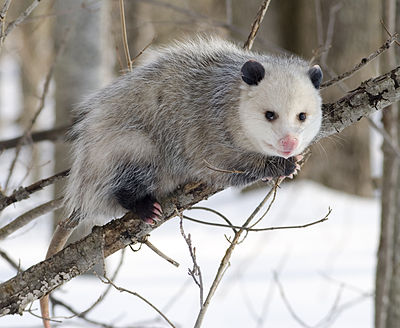


The Sole Survivor
The opossum represents a remarkable evolutionary anomaly in North America, being the only extant marsupial on the continent. Its lineage traces back to ancient Gondwanan ancestors, making its continued presence a testament to its adaptability. Unlike placental mammals, opossums give birth to altricial young, known as joeys, which are born in an embryonic state after a very short gestation period.
These joeys, often numbering between 15 and 25, are minuscule, weighing less than a gram, and must instinctively navigate to the mother's pouch. Inside, they attach to teats and undergo prolonged development, a process that can take up to 70 days. This reproductive strategy, while vulnerable in early stages, allows for rapid population recovery and highlights a distinct evolutionary path compared to other North American mammals.
Their existence provides invaluable insights into marsupial biology and evolutionary history.
A Sophisticated Survival Strategy
The opossum's most famous defense mechanism, thanatosis, or 'playing dead,' is a complex involuntary reflex rather than a conscious act. When faced with a perceived threat, the opossum enters a catatonic state, characterized by a slowed heart rate, reduced respiration, and muscle rigidity. It often falls onto its side, with its tongue lolling out and eyes glazed over, sometimes emitting a foul-smelling secretion from anal glands that mimics the odor of decay.
This elaborate performance can last from several minutes to over four hours, effectively deterring predators such as canids, felids, and raptors that typically avoid carrion. This sophisticated deception is a highly effective survival tool, allowing opossums to persist in environments with numerous predators. The physiological changes involved are profound, demonstrating a remarkable biological response to extreme stress.
Ecological Engineer
As an omnivore, the opossum is an ecological generalist, playing a significant role in various ecosystems through its diverse diet. Its food sources are extensive, encompassing invertebrates like insects and earthworms, fruits, seeds, fungi, small vertebrates (rodents, birds, reptiles), and carrion. This broad dietary range allows opossums to thrive in habitats ranging from dense forests and swamps to agricultural lands and urban landscapes.
Their scavenging behavior contributes to nutrient cycling and disease control by consuming carcasses. Notably, opossums are significant predators of ticks, consuming thousands per season, which can help mitigate the spread of tick-borne diseases like Lyme disease in their habitats. They also prey on venomous snakes, demonstrating a remarkable resistance to their toxins, further underscoring their ecological importance.
Adaptability and Resilience
The opossum's scientific classification, Didelphimorphia, encompasses a wide array of species, but the Virginia opossum (Didelphis virginiana) is the most widely recognized in North America. Its habitat is remarkably broad, extending from southern Canada down to Costa Rica, demonstrating exceptional adaptability. Opossums are primarily nocturnal, utilizing their keen senses of smell and hearing to locate food and avoid predators under the cover of darkness.
Their prehensile tail serves as a fifth limb, aiding in arboreal locomotion and stability, particularly when foraging for food in trees. Despite a relatively short lifespan in the wild, typically one to two years, their high reproductive potential and ability to exploit diverse food resources and habitats ensure their continued success and resilience in a changing world. Their conservation status is 'Least Concern,' reflecting their robust populations across their range.
See also
Frequently Asked Questions
What does an opossum do when it feels scared?+
How do baby opossums grow in their mom's pouch?+
What kinds of food does an opossum eat?+
How do opossums help keep us healthy?+
Where can you find opossums in North America?+
Based on content from Wikipedia · Licensed under CC BY-SA 4.0