

Ohm: The Tiny Hero of Electricity!
Images
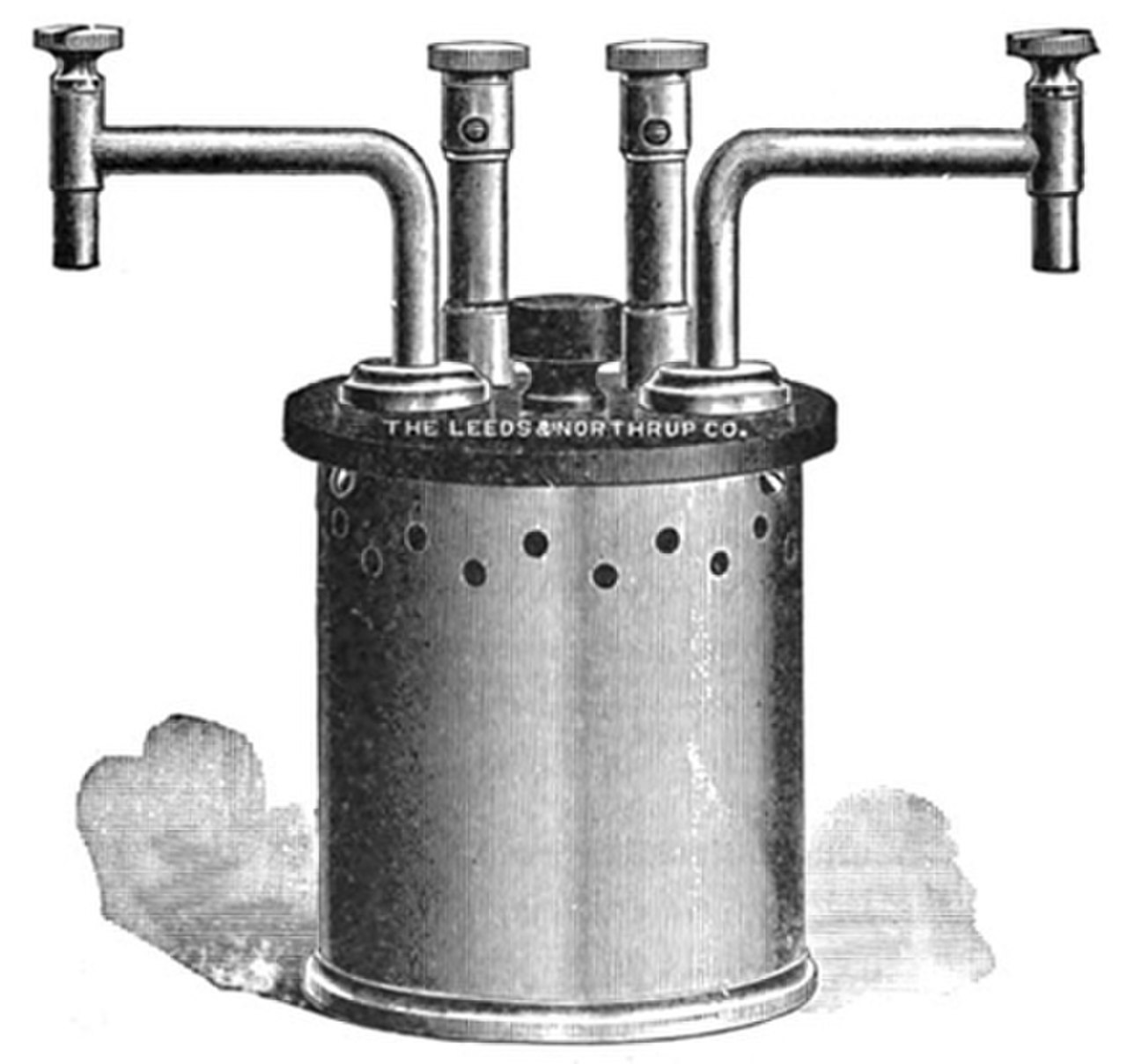
Ohm


Defining the Ohm
The Ohm (symbol Ω) is the internationally recognized unit of electrical resistance within the International System of Units (SI). It quantifies the opposition a material presents to the flow of electric current. Fundamentally, one Ohm is defined as the electrical resistance between two points of a conductor when a constant and uniform electric current of one ampere, applied to these points, produces a voltage difference of one volt across the points.
This definition is directly derived from Ohm's Law (V = IR), where V is voltage, I is current, and R is resistance. The SI system has evolved; following the 2019 redefinition of base units, the Ohm is now precisely defined in terms of fundamental physical constants, ensuring its stability and accuracy independent of any physical artifact. This rigorous definition is vital for scientific research, engineering design, and the calibration of electrical measurement instruments worldwide.
From Telegraphy to SI
The need for a standardized unit of electrical resistance emerged alongside the practical applications of electricity, particularly in the burgeoning field of telegraphy during the mid-19th century. Early telegraph systems required consistent electrical properties for reliable communication. Various empirical units were developed, but a unified standard was necessary.
In 1861, the British Association for the Advancement of Science proposed a unit derived from existing units of mass, length, and time, aiming for a convenient scale for practical use. This led to the establishment of the Ohm as a formal unit. The unit's name honors Georg Ohm, whose meticulous experimental work in the 1820s laid the theoretical foundation for understanding electrical resistance.
His law established the quantitative relationship between voltage, current, and resistance, making the concept of a resistance unit scientifically meaningful. The SI system later adopted and refined this unit, culminating in its current precise definition tied to fundamental constants.
The Indispensable Role of Ohms in Modern Technology and Safety
Electrical resistance, measured in Ohms, is not merely a theoretical concept; it is a critical parameter that dictates the behavior and functionality of virtually all electrical and electronic systems. In power transmission, conductors are chosen for their low resistance to minimize energy dissipation as heat (I²R losses), thereby improving efficiency. Conversely, resistive elements with specific Ohm values are intentionally used in devices like heaters, toasters, and incandescent light bulbs to generate heat or light.
In electronics, resistors are fundamental components, precisely engineered to control current flow, divide voltages, and set operating points for transistors and integrated circuits. The precise measurement and control of resistance are paramount for device performance, reliability, and, crucially, safety. Understanding Ohms allows engineers to design circuits that operate within safe temperature limits and prevent overcurrent conditions that could lead to equipment failure or fire hazards.
The Microscopic Origins of Resistance
At the atomic level, electrical resistance arises from the interaction between charge carriers (typically electrons) and the lattice structure of the conducting material. As electrons are driven through a conductor by an applied voltage, they undergo collisions with the vibrating atoms of the material. These collisions scatter the electrons, impeding their directed motion and converting some of their kinetic energy into thermal energy (heat).
The frequency and nature of these collisions depend on the material's composition, its atomic structure, and its temperature. Metals like copper and silver have a high density of free electrons and relatively weak interactions, resulting in low resistance. Insulators, such as glass or polymers, have electrons tightly bound to atoms, with very few free charge carriers, leading to extremely high resistance.
Semiconductors exhibit intermediate resistance, which can be significantly altered by doping or temperature changes, forming the basis of modern semiconductor electronics.
Beyond Simple Resistance
While the Ohm is the fundamental unit of resistance, its application extends to more complex electrical phenomena. Concepts like impedance, which includes resistance along with reactance (opposition due to capacitance and inductance), are crucial in AC (alternating current) circuits. Impedance is also measured in Ohms.
Furthermore, the study of superconductivity, where materials exhibit zero electrical resistance below a critical temperature, highlights the importance of resistance by its complete absence. In advanced fields like nanotechnology, researchers are exploring materials with unique resistive properties at the nanoscale, potentially leading to new forms of computing and sensing. The precise definition and measurement of the Ohm remain foundational, enabling innovation across diverse scientific and technological domains, from quantum computing to advanced materials science.
See also
Frequently Asked Questions
What is an Ohm and why is it important for electricity?+
How did the Ohm get its name?+
Why do we need a standard unit like the Ohm?+
How does the Ohm help keep our homes and gadgets safe?+
What happens when a material has a high or low resistance?+
Based on content from Wikipedia · Licensed under CC BY-SA 4.0